VAT registration in Slovakia enables foreign companies to legally trade, meet tax obligations, and build trust in the Slovak market. This guide details the triggers, process, and compliance steps for successful VAT registration in Slovakia.
Why Non-Resident Firms Must Register for VAT in Slovakia
VAT registration in Slovakia is mandatory for non-resident businesses regardless of turnover when engaging in VAT-liable activities, such as selling goods, providing services, or acquiring goods from other EU states, within Slovakia.
Failure to register can lead to heavy fines, blocked refunds, and refusal by local partners or marketplaces to engage. VAT registration for non-resident businesses in Slovakia ensures legal compliance, access to input-tax deductions or refunds, and smooth cross-border operations.
When Does a Foreign Business Need to Register? Key Triggers
Foreign companies must complete VAT registration in Slovakia as soon as they engage in any taxable activity within Slovak territory, even without a physical presence. Here are some key triggers that obligate VAT registration in Slovakia:
- Importing goods into Slovakia from outside the EU: Bringing goods into Slovakia from non-EU countries obligates the importer to register for VAT.
- Buying and selling goods in Slovakia: Non-resident businesses supplying goods locally (except when the domestic reverse charge applies) must register.
- Selling goods from Slovakia to foreign customers: Delivering goods from Slovakia to customers abroad creates a VAT obligation.
- Intra-community acquisitions: Purchasing goods in Slovakia from another EU member state (cross-border B2B transactions) requires VAT registration.
- Holding inventory in Slovakia: Storing goods in warehouses, distribution centers, or under consignment arrangements establishes a taxable presence.
Country-Specific Examples
Here are two scenarios illustrating when VAT registration in Slovakia becomes mandatory:
- Germany: A German e-commerce company holding stock in a Slovak warehouse must complete VAT registration in Slovakia before fulfilling any local orders.
- Czech Republic: A Czech supplier acquiring goods in Slovakia from Austria must register for Slovak VAT due to intra-community acquisition rules.
Note: For a detailed overview of obligations and procedures, businesses should consult a reliable Slovakia VAT registration guide issued by the government to ensure full compliance.
Registration Thresholds & Nexus Tests
VAT registration in Slovakia kicks in under clearly defined conditions, both for resident and foreign businesses. If a Slovak-established business exceeds €50,000 in annual turnover within a calendar year, it becomes a VAT payer starting January 1 of the following year. Alternatively, if a higher threshold of €62,500 is crossed in annual turnover, VAT registration becomes effective immediately.
In contrast, VAT registration for foreign companies in Slovakia has a nil threshold. VAT registration in Slovakia must occur as soon as they begin any taxable activity, even if it’s a single transaction.
Digital Services
Foreign businesses providing digital services, like apps, e-books, or streaming, to Slovak consumers must register once EU-wide B2C sales exceed €10,000 annually. In this instance, companies can register in Slovakia or use the EU OSS scheme for simplified reporting.
Intra-Community Acquisitions
Foreign businesses acquiring goods in Slovakia from other EU member states must register for VAT if the total annual purchases exceed €14,000. This ensures VAT is accounted for on cross-border transactions and allows the company to claim input tax deductions.
Low-Value Imports
Slovakia applies VAT on all imports, with no exemption for low-value goods. However, for consignments up to €150, sellers can use the IOSS scheme to charge VAT at checkout, avoiding separate Slovak registration.
One platform to simplify global tax and compliance
See why high-growth companies trust Commenda
Slovakia VAT Number Format Explained
VAT registration in Slovakia requires understanding the structure of the VAT identification number. The Slovak VAT number, also known as Identifikačné číslo pre daň z pridanej hodnoty, is standardized to ensure smooth cross-border transactions and compliance with EU regulations.
| Element | Description |
| Country code prefix | SK, denoting Slovakia |
| Numerical aspect | A 10-digit unique number assigned to the business |
Sample VAT numbers for different company types:
- Standard business: SK1234567890
- Foreign branch: SK0987654321
- Government entity: SK0001234567
Accurate use of the Slovak VAT number is essential for VAT reporting, claiming input-tax deductions, and verifying compliance through the EU VAT Information Exchange System (VIES).
Common mistakes with Slovak VAT numbers include omitting digits, such as writing SK123456789 instead of SK1234567890. Some businesses mistakenly use an incorrect country code instead of SK. Errors can also occur when copying or transcribing the number, and some confuse the VAT number with other company identifiers, like the registration number.
Is a Local Tax Agent or Fiscal Representative Required?
When it comes to non-resident tax registration in Slovakia, businesses do not always need to appoint a local tax agent or fiscal representative for VAT registration in Slovakia. However, they may choose to do so for ease of compliance. If appointed, the representative may assume joint liability for VAT obligations. Some jurisdictions may require a bank guarantee or bond to secure tax payments, though this varies by country.
Special Schemes & Simplifications
Slovakia offers several VAT schemes and simplifications to support businesses in managing their VAT obligations more effectively. These schemes are designed to ease compliance and improve cash flow. Key examples include:
- Import VAT Deferment: From 1 July 2025, VAT-registered businesses in Slovakia can defer VAT payment on imports until their VAT return is filed, enhancing cash flow management.
- Simplified E-Services Scheme: Under the EU’s OSS regime, businesses providing digital services to Slovak consumers can register in one EU member state, simplifying VAT reporting.
- Small-Business Exemption: Effective from 1 January 2025, businesses with annual EU-wide turnover not exceeding €100,000 may qualify for VAT exemption in Slovakia, reducing administrative burdens.
- Consignment Stock Arrangements: The EU VAT Directive provides a simplification for businesses storing goods in Slovakia for future sale, allowing VAT registration in the home country and deferring VAT obligations until goods are sold.
Step-by-Step: How to Register for VAT in Slovakia
VAT registration in Slovakia is mandatory for any taxable activity. Following these steps ensures compliance and smooth operations:
1. Check VAT Threshold: Non-resident businesses must register immediately; there is no minimum turnover threshold.
2. Gather Required Documents: Prepare a completed VAT form, proof of foreign VAT registration (if any), company registration extract, representative passport, and business bank details.
3. Create a Government Account: Register on the Slovak Financial Administration portal (Finančná správa) to access the VAT application.
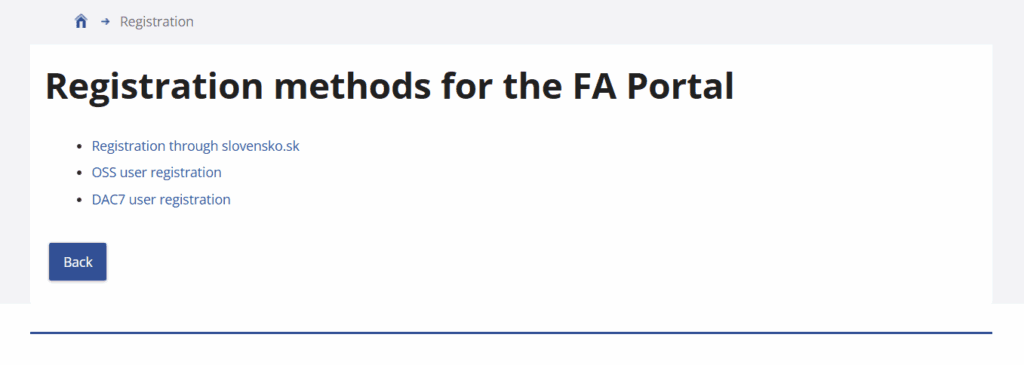
4. Submit Application: Send the completed form and documents online, by mail, or in person to the local tax office.
5. Pay Any Applicable Fees: There are currently no registration fees for non-resident businesses.
6. Receive VAT Registration Number: Wait for the Bratislava Tax Office to process your application and send you your VAT tax ID number.
Required Documents Checklist
When registering for VAT in Slovakia, non-resident businesses must submit specific documents to the Bratislava Tax Office. Ensure you have the following prepared:
- VAT Registration Certificate: Proof of VAT registration in your home country (if applicable).
- Trade Register Extract: A certified extract from your national trade register, translated into Slovak by an official translator.
- Company Representative’s Passport: Identification document of the person representing your company.
- Proof of Business Activity: Evidence such as sales records or contracts demonstrating taxable activities in Slovakia.
- Bank Account Details: Information on both foreign and Slovak bank accounts used for business purposes.
Processing Time & Government Fees
When you register for VAT online in Slovakia, the typical processing time is up to 4 weeks. Upon approval, you’ll receive your VAT registration number.
Currently, there are no government fees for VAT registration in Slovakia. However, failure to comply with VAT obligations or late VAT payments can result in penalties and interest charges.
Post-Registration Obligations
After completing VAT registration in Slovakia, businesses must adhere to several ongoing compliance requirements. Here are some important ones to keep in mind:
- VAT Returns: Submit monthly VAT returns within 25 days of the end of each calendar month.
- Intrastat Reporting: Mandatory for VAT-registered businesses involved in intra-EU trade, with thresholds set at €1,000,000 for dispatches and arrivals of goods.
- EC Sales List (ESL): File monthly or quarterly, depending on the value of intra-EU supplies, with penalties for non-compliance.
- Fiscalization Compliance: Utilize certified POS systems for real-time reporting of in-person sales via the e-Kasa system.
- Invoice Issuance: Issue VAT-compliant invoices within 15 days of the taxable supply.
- Record Keeping: Maintain records for 10 years, or 20 years for transactions involving immovable property.
Claiming Input-Tax Credits & Refunds as a Non-Resident
Non-resident businesses can reclaim VAT on Slovak business expenses if they meet eligibility criteria and submit the required documentation. Following these points ensures a smooth refund process:
- Eligibility: EU businesses must be VAT-registered in their home country and have no Slovak establishment; non-EU businesses must not be VAT-registered in Slovakia.
- Documentation: Include original invoices or import documents, proof of VAT registration in the home country, and a completed refund application form.
- Refund Timelines: Applications are submitted by 30 June of the following year; refunds are typically processed within 4 months.
- Rejection Reasons: Claims may be denied for incomplete documents, non-deductible VAT, or non-business use of goods/services.
Penalties for Late Registration or Non-Compliance
Failure to comply with VAT obligations in Slovakia can result in significant penalties. Here’s an overview of some important fees:
- Late VAT Registration: Penalties range from €60 to €20,000 for failing to register within the prescribed period.
- Late VAT Return Submission: Fines range from €30 to €16,000. If a return is not submitted after a reminder, the penalty can increase to €32,000.
- Late Payment of VAT: Interest is charged at 15% per annum or four times the European Central Bank’s base rate, whichever is higher.
- Incorrect VAT Returns: Penalties depend on the timing and nature of the correction, ranging from 3% to 10% of the underpaid VAT.
Deregistration & VAT Number Changes
Deregistering for VAT in Slovakia is a formal process that requires careful attention to timing and compliance. Failure to follow proper procedures can result in penalties or complications. Here’s a brief overview of the steps:
- When to Cancel: Deregistration is mandatory if taxable turnover falls below €49,790 within a 12-month period.
- Deadline: The exact deadline for submitting may vary based on individual circumstances and should be confirmed with the Slovak Financial Administration.
- Online Cancellation: Deregistration can be processed electronically through the Slovak Tax Administration’s portal.
- Final VAT Return: A final VAT return must be filed within 25 days of the end of the last tax period.
Properly managing VAT deregistration ensures compliance and prevents potential issues with the Slovak tax authorities.
Conclusion
Understanding VAT registration in Slovakia is crucial for any foreign business entering the Slovak market. Whether registering due to taxable activities, voluntarily, or managing deregistration, adhering to local rules and deadlines helps avoid penalties.
VAT compliance can be complex for non-resident companies, but Commenda simplifies the process. Our experienced team assists foreign businesses with VAT registration for non-resident businesses in Slovakia and ongoing compliance, ensuring all obligations are met efficiently.
Focus on expanding your business in Slovakia while we manage your VAT responsibilities. Book a free demo with Commenda today to see how we can support your growth.
About the author

Sam is a seasoned expert in sales tax, leading Commenda's effort to build the worlds most comprehensive database of global tax rules and business regulations. At Silverhaze Partners, he worked in early-stage venture capital, where he saw firsthand how tax complexity and regulatory friction hold back startups from scaling internationally. That experience now powers his work at Commenda-bringing clarity, precision, and real-world insight to one of the most frustrating parts of doing business globally.
Disclaimer: Commenda and its affiliates do not provide tax, accounting, or legal advice. This material has been prepared for informational purposes only, and is not intended to provide or be relied on for tax, accounting, or legal advice. You should consult your own tax, accounting, and legal advisors before engaging in any related activities or transactions.