Corporate Tax and Financial Accounting Software
Books closed.
Filed on time.
No surprises.
Fully-managed corporate income tax filings and financial reporting across every subsidiary, in 70+ countries and integrated with your ERP.
Trusted by global businesses

































The quarter ends.
The scramble begins.
For most finance teams running international subsidiaries, the close process isn't a system — it's a recurring emergency. Different deadlines, different local formats, different advisors who send invoices without warning. And every quarter, someone has to hold it all together manually.
Every country is a different engagement
Local accountants, local formats, local timelines — none of which talk to each other or your ERP. Reconciling them is its own part-time job.
Surprise invoices, opaque scope
Big Four and local advisory firms bill on engagement letters no one re-reads. The invoice arrives after the work. The scope was never clear to begin with.
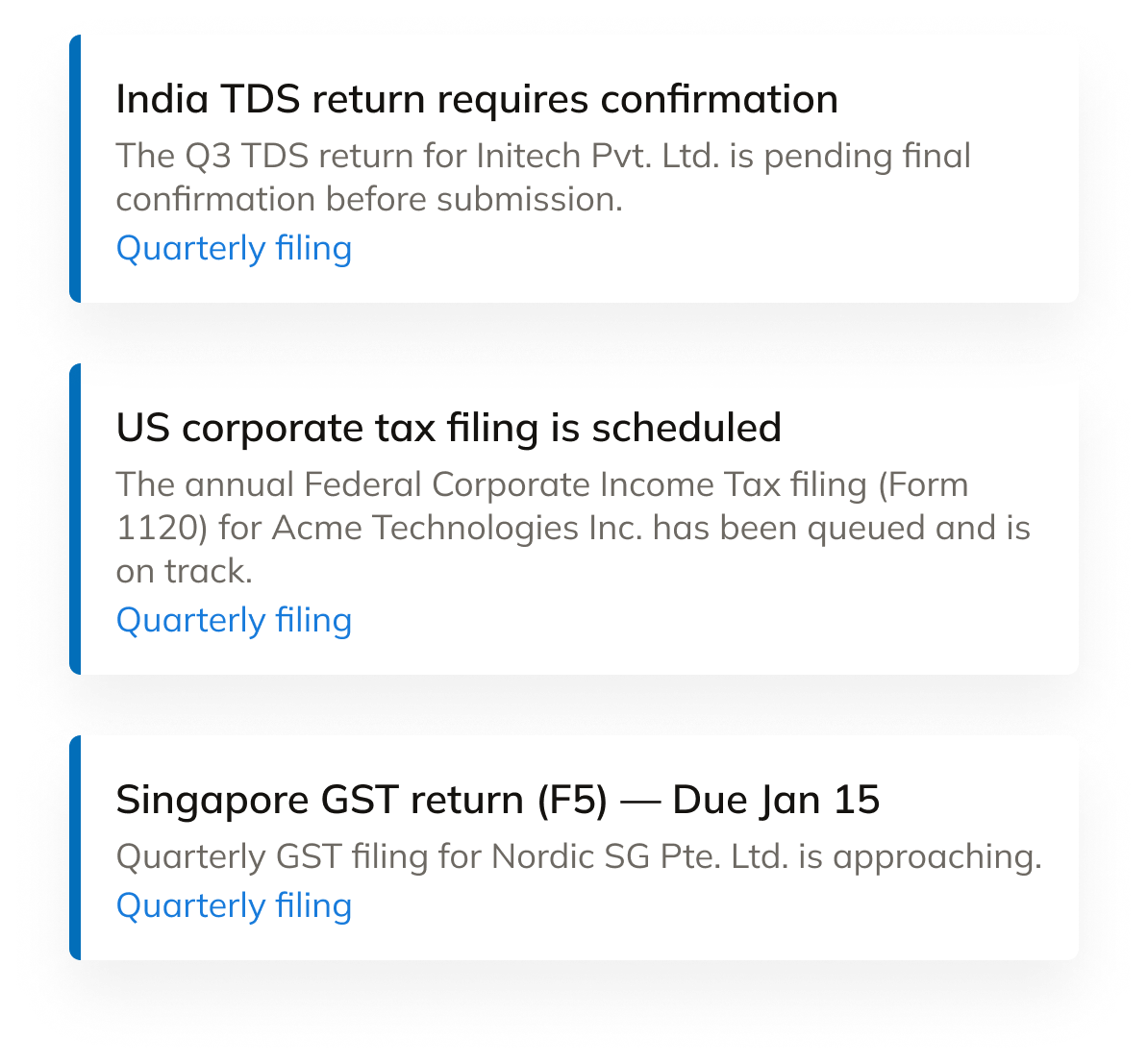
Deadlines tracked in calendars, not software
Corporate income tax due dates, estimated payments, extension requests — tracked in someone's Outlook or a shared spreadsheet that's two updates behind.
Reporting not connected to anything
Your books are in NetSuite. Your tax prep is in email. Your local filings are with advisors in three time zones. Nothing flows. Everything is re-entered.
What Commenda does
Fully managed. Fully integrated.
No quarterly fire drills.
Commenda's tax and accounting product wraps expert local professionals, a structured close workflow, and deep ERP integration into a single managed service so your team reviews and approves, rather than coordinates and chases.
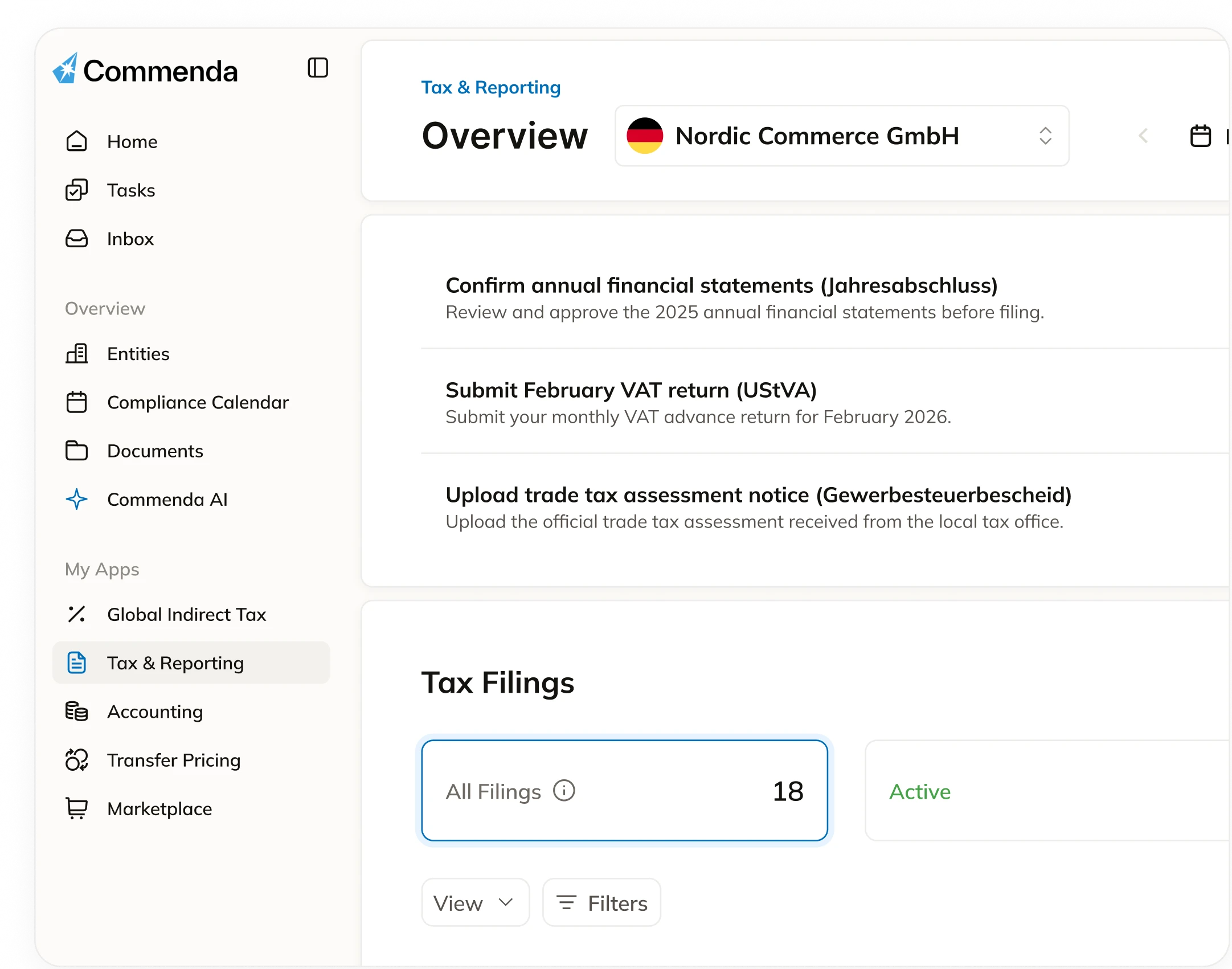
01 — Corporate Income Tax
File in 70+ countries. Same deadline, every time.
Commenda manages your corporate income tax filings across every jurisdiction your entities operate in.
- Jurisdiction-specific return preparation in local-required formats
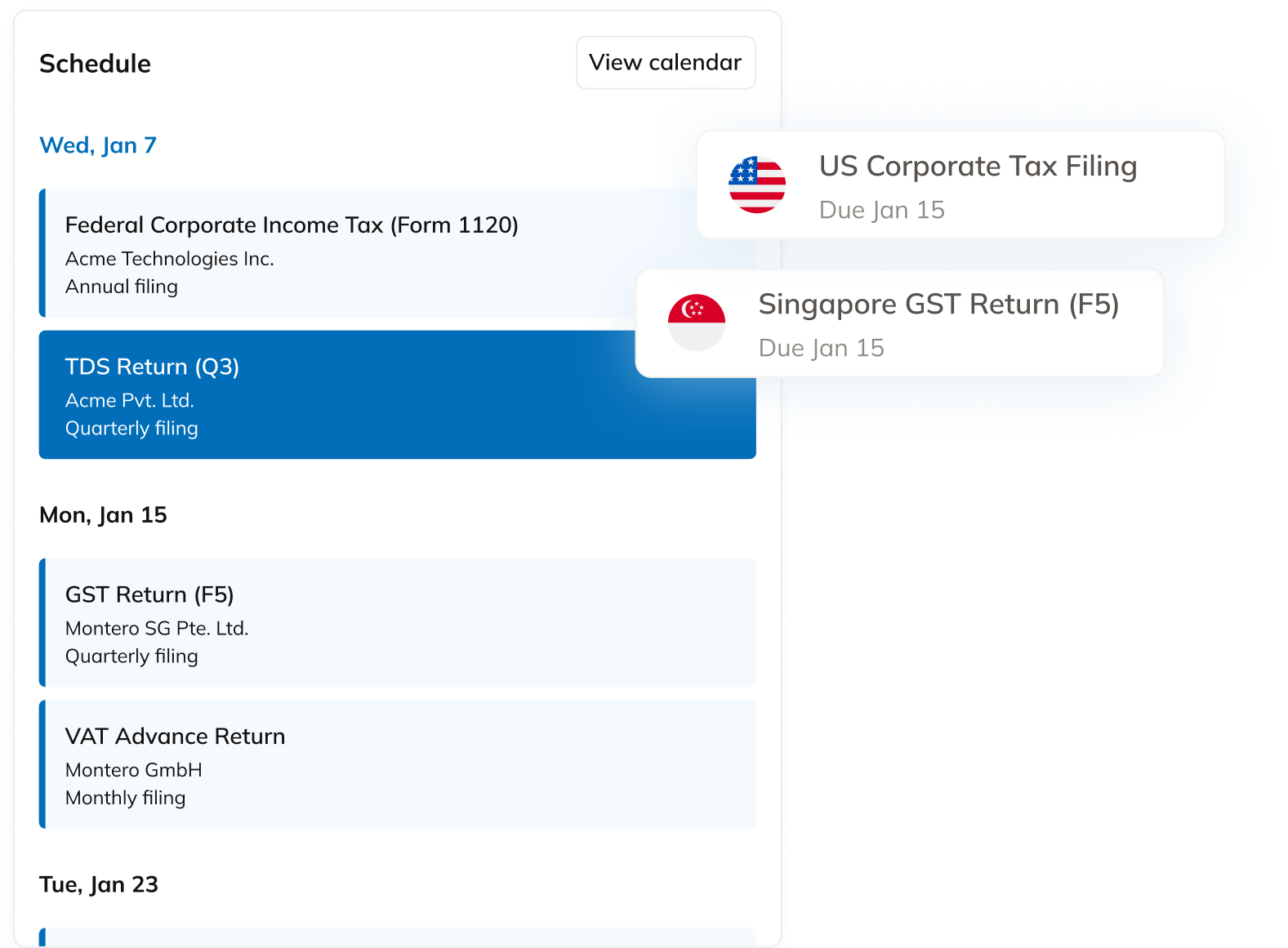
- Proactive deadline tracking — no calendar reminders needed
- Extension requests filed automatically where beneficial
- Estimated tax and provisional payment management
- Confirmation and filing receipts documented in your audit trail
02 — Financial Reporting
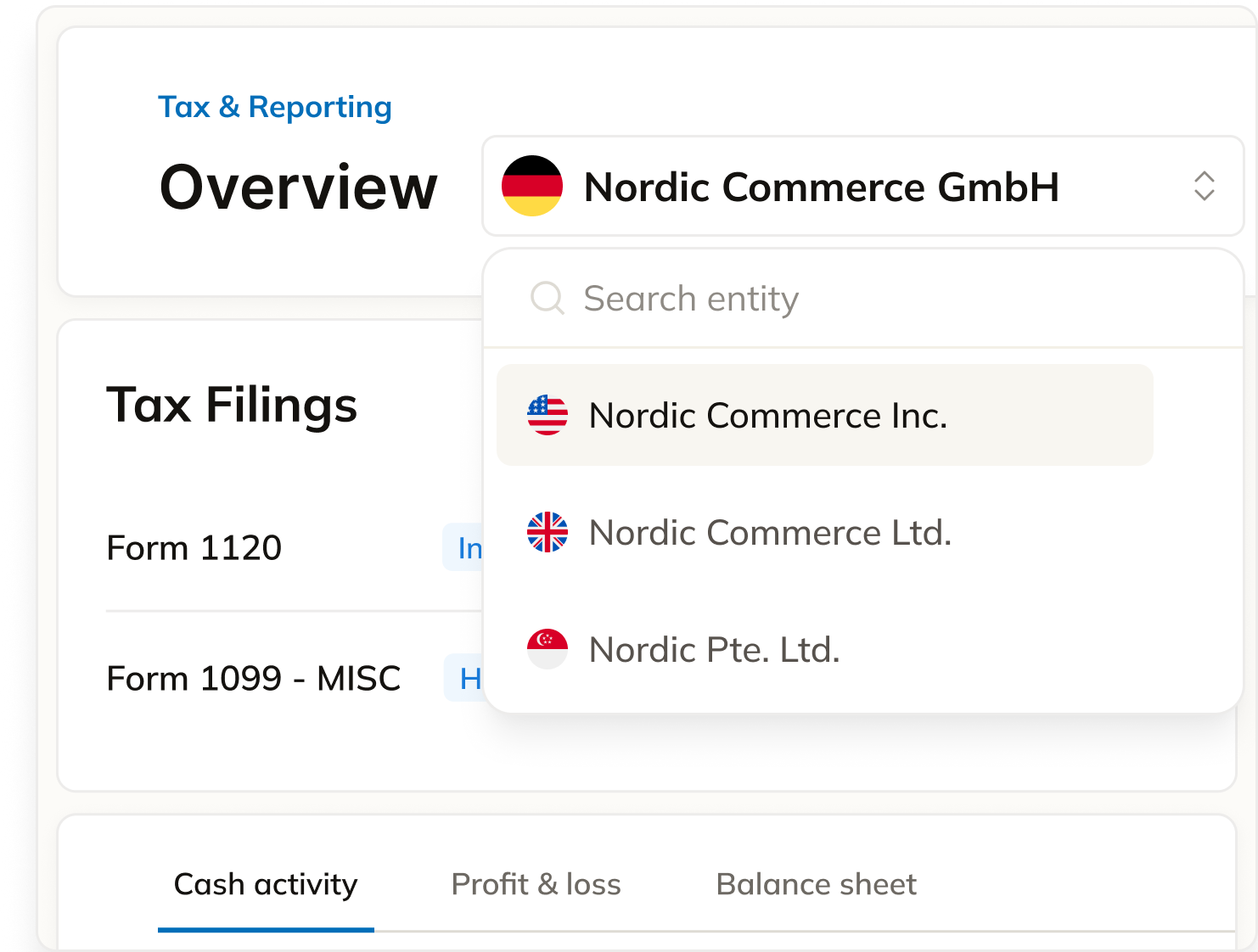
Close every subsidiary. On time. Every quarter.
Commenda handles subsidiary accounting and financial statement preparation across every entity to local statutory standards.
- Statutory financial statements prepared per local requirements
- Local GAAP and IFRS compliance, jurisdiction by jurisdiction
- Monthly, quarterly, and annual close support per entity
- Group consolidation support and intercompany eliminations
- Local filing of accounts where required (Companies House, etc.)
03 — ERP Integration
Your data flows. Nothing gets re-entered.
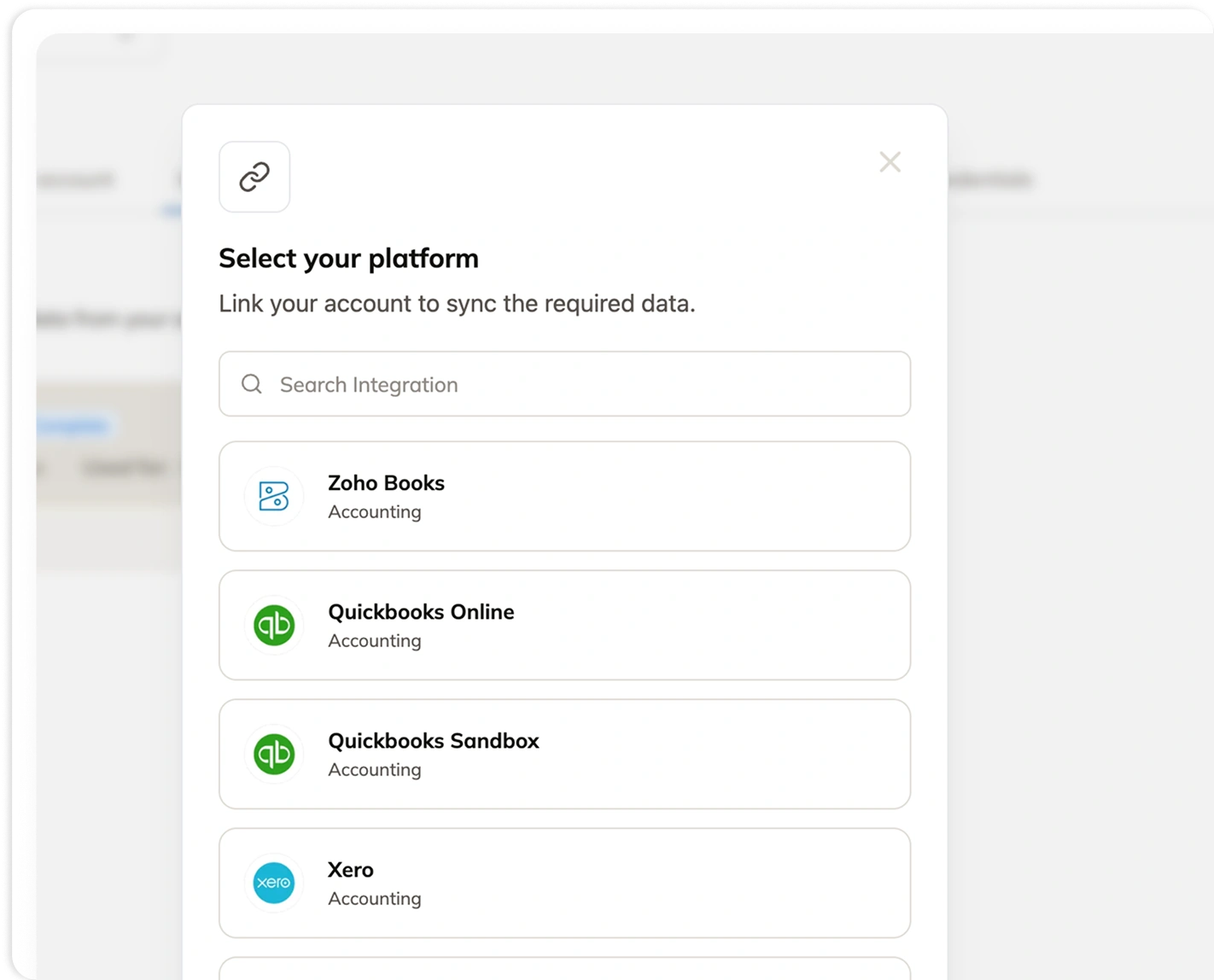
Commenda integrates directly with your ERP. Trial balance data feeds into tax prep automatically. Filing confirmations sync back.
- Native integrations with NetSuite, Xero, QuickBooks, Sage Intacct
- Trial balance pulls direct from source with no manual extraction
- Filing confirmations and tax liabilities sync back to your ERP
- Intercompany transactions flagged for transfer pricing alignment
- REST API available for custom stack integrations
04 — Audit Readiness
Audit season. Not audit panic.
Every filing, every set of accounts, every supporting schedule — documented, versioned, and accessible in one place.
- All filings stored with reference numbers & submission confirmations
- Supporting workpapers linked to the relevant filing
- Auditor-ready read-only access and no credential sharing required
- Version history on all financial statements and returns
- Tax position documentation aligned with transfer pricing records
What Commenda is — and isn't.
The Big Four give you advisors. Commenda gives you a system. Both have their place but most of what you're paying advisory rates for should be in software.
Big Four / Local advisors
Expertise on demand. Everything else, improvised.
- Deadline tracking in email chains and calendar invites
- New engagement letter for every new entity or country
- Advisory rates for routine compliance work
- Filings happen — you find out when you ask
- Documents in partner portals you don't control
- No ERP integration; data re-entered manually
- Unpredictable scope, unpredictable bills
Commenda
A managed service that runs like software.
- Compliance calendar built, tracked, and confirmed automatically
- Single relationship covers all 70+ countries and one contract
- Transparent platform pricing; no hourly billing
- Filing confirmations sent to you; nothing to chase
- All documents in your centralized vault, forever
- Native ERP integration. Data flows in both directions
- Predictable scope, predictable cost, every month
Commenda by the numbers
- 70+
- Supported countries, globally
- ~14
- Days to live compliance calendar
- 100%
- Local filing obligations covered
- 100+
- ERP integrations supported
From the field
Trusted by businesses across the globe


“The platform works exactly the way I need it to. I have one team member who manages all of our exemption certificates, and that functionality has been particularly efficient for us. It allows him to handle everything seamlessly, making the handoff significantly easier.”
VP of Finance, TRX





Integrations
Explore 100+ tax and accounting integrations
Commenda fetches the profit and loss, balance sheet, and cash flow statements from your accounting software and brings every entity together in one place. The monthly close runs on your system of record rather than on manual exports.
Explore tax and accounting integrations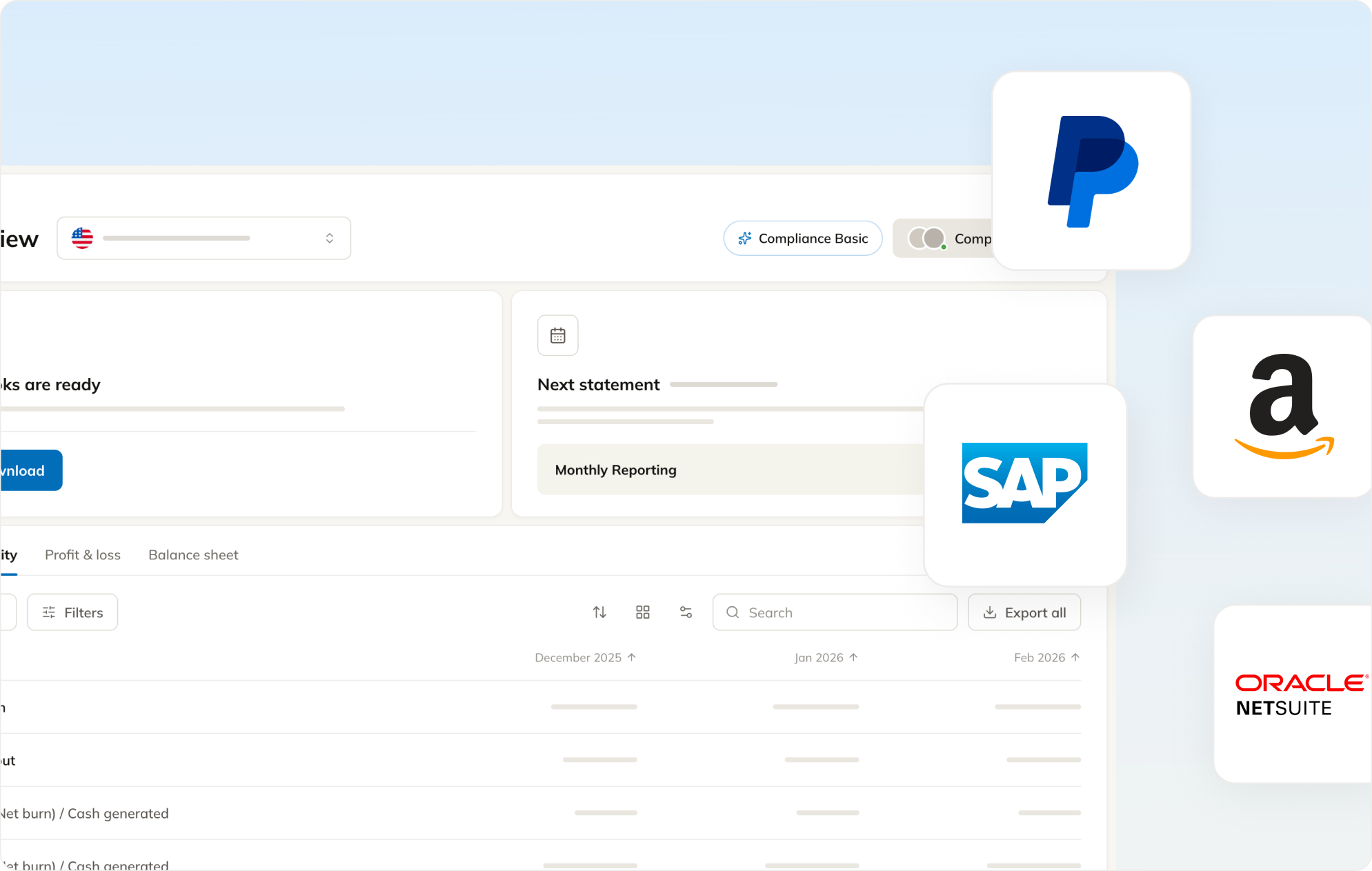
Questions finance teams ask us.
Yes — catch-up and cleanup is a routine starting point. We reconcile from the source statements, fix misclassifications, rebuild the fixed asset register where it's drifted from the books, and produce the closing entries that get the year actually closed. It's a one-time intensive effort, after which a regular monthly close runs smoothly. Closing a prior year for investor reporting is something we frequently prioritise first so that funding conversations aren't stuck.
Typically your US entity owes: a federal return (Form 1120 for a C-Corp), Form 5472 if it has foreign-related-party transactions, state filings, an annual report and franchise tax (e.g. Delaware's, due March 1 with a minimum amount regardless of profit), and potentially FBAR depending on accounts. Foreign ownership adds reporting that domestic-only companies don't have, and missed filings — especially Form 5472, which carries penalties in the tens of thousands — get expensive fast. We map the complete set for your structure and bring lapsed filings back to good standing.
Both are valid; the trade-off is which side carries the US compliance. As a disregarded entity, the LLC's profits flow to the foreign parent, and the foreign parent itself has to register and file US tax — added complexity for an overseas owner. Electing C-Corp treatment (via Form 8832) means the US LLC pays the 21% federal corporate rate on its own profits, files its own return, and the foreign parent generally isn't pulled into US filing simply by owning it. For foreign-owned structures the C-Corp election is usually the cleaner path — we'll prepare a written comparison for your specific facts before you commit.
Yes. The cash-to-accrual transition is something we handle as part of onboarding or year-end — we set up revenue recognition for deferred and subscription revenue, expense accruals, prepaids, and receivables, and apply the new basis consistently across the year so reporting holds together. For companies moving to US GAAP from a local standard, the same process aligns prior balances and reclassifies items that were treated differently before. The point is a consistent baseline going forward, not a one-off fix that drifts.
For a US-only setup with standard volume, QuickBooks Online is the common default. For international structures with multi-currency, Xero usually handles things more gracefully — QuickBooks charges extra for multi-currency features that Xero includes. For new or small entities without an existing system, Puzzle (our bookkeeping tool) gives you clean books with bank and payment integrations from day one, and you can migrate to QuickBooks, NetSuite, or Xero as you scale. We integrate natively with all of these — trial balances pull automatically, filing confirmations sync back — so the close runs from your system of record rather than manual exports.
The quarterly scramble
is optional.
Book a 30-minute call. We'll review your current tax and accounting setup across your entities and show you exactly what Commenda would replace — and what it would cost.

