Do business in Germany. Without the mess.
Europe's largest economy demands precise setup. Commenda handles GmbH incorporation, notarization, Handelsregister registration, and ongoing compliance so your team can focus on the market, not the paperwork.

Trusted by global businesses

































Why Germany
Why Germany is worth the setup
Germany is the third-largest economy globally and the largest in Europe, with a manufacturing base, industrial supply chain, and consumer market that no serious European expansion can ignore. The regulatory environment is demanding: notarized incorporation, Gewerbesteuer on top of corporate tax, mandatory Bundesanzeiger filings. Get it right at formation and compliance is manageable. Get it wrong and remediation is expensive. Commenda sets up your entity correctly from day one and handles every filing obligation through the platform.
See how incorporation works- #3Global GDP rankingGermany is the world's third-largest economy and the dominant market in the EU.
- 28-33%Effective corporate tax rateCombined corporate income tax (15%) plus solidarity surcharge and Gewerbesteuer (trade tax), which varies by municipality.
- 3-5 weeksTypical incorporation timelineGmbH formation requires notarization by a German Notar and Handelsregister filing, with registration typically completed in 3 to 5 weeks.
- €25,000GmbH minimum share capitalHalf (€12,500) must be paid in at formation. The UG alternative requires only €1 but carries additional restrictions.
Product Suite
One platform
Every jurisdiction, no gaps
Built for finance teams running international operations without a dedicated compliance function. This is the infrastructure you should have had from day one.
- Learn more
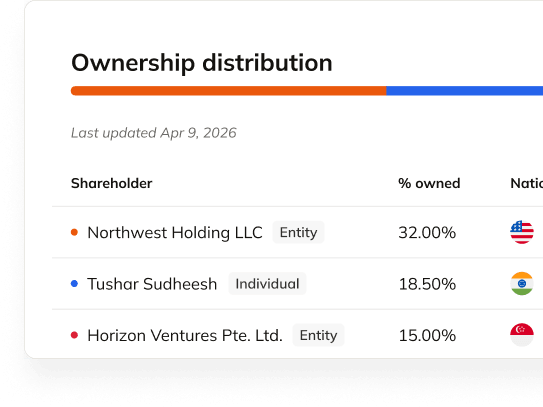
Entity Management
Formation, maintenance, and oversight for subsidiaries across 70+ countries.
- Learn more
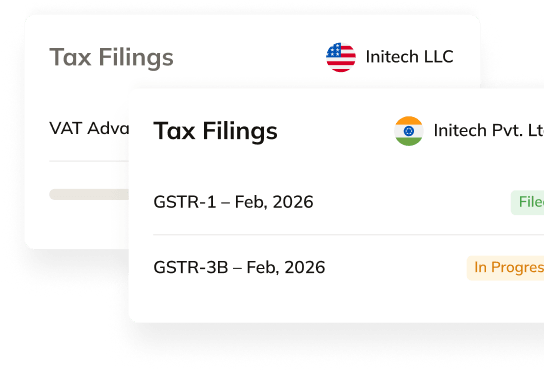
Global Indirect Tax
VAT, GST, and sales tax obligations tracked, filed, and confirmed.
- Learn more
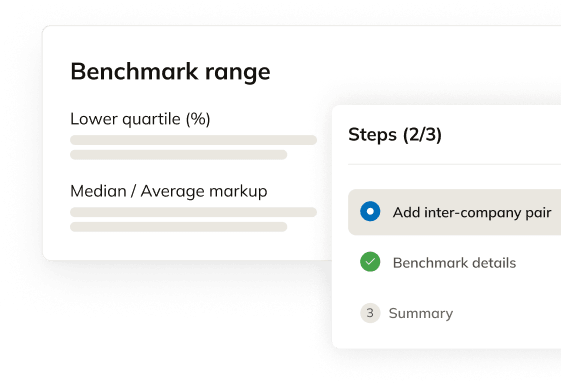
Transfer Pricing
Intercompany policy, documentation, and filing, built to OECD standards.
- Learn more
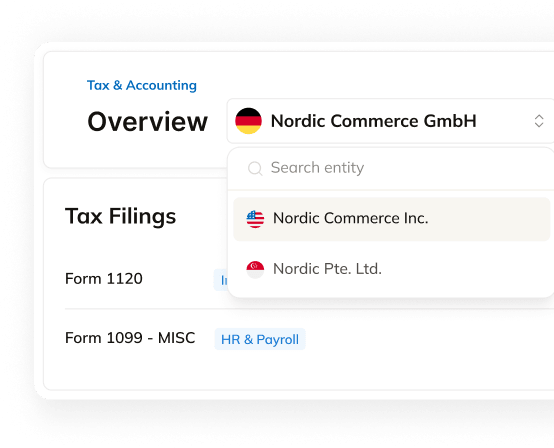
Tax & Accounting
Consolidated financial reporting and local corporate tax filings. One audit trail.
Entity types
Choose the right structure for your business
Recommended
GmbH (Gesellschaft mit beschränkter Haftung)
The GmbH is Germany's standard private limited liability company and the default choice for foreign subsidiaries. It offers liability protection, creditor recognition, and broad operational flexibility. Formation requires notarization and Handelsregister registration.
Benefits
- Shareholder liability limited to capital contributions
- No German residency requirement for directors or shareholders
- Widely recognized by German banks, suppliers, and government authorities
- Can be 100% foreign-owned with a single shareholder
- Access to Germany's extensive double taxation treaty network (90+ countries)
Key considerations
- Minimum share capital of €25,000, with €12,500 paid in at formation
- Notarization by a German Notar required for incorporation documents
- Annual financials must be filed with the Bundesanzeiger (Federal Gazette)
- Gewerbesteuer (trade tax) applies in addition to corporate income tax, rate varies by municipality
- Registered business address in Germany required at all times
How it works
From kickoff to open for business in Germany
Incorporating in a new country means unfamiliar filings, local requirements, and moving parts across multiple vendors.
We handle all of it so you don't have to.
Day 1
Onboarding
Your details submitted once. Entity name checked, documents collected, filings kicked off. No back-and-forth.
Days 1–3
Entity confirmed
Incorporation done. Formation documents, company number, and registered address live in your Commenda dashboard.
Week 1–2
Tax setup
Tax registrations filed, banking guidance underway. Compliance calendar set for your jurisdiction.
Week 2
Open for business
You're operational in a new market. Without a single trip to a government office.

G2 Reviews
Rated by the teams using it
Scores from finance and legal leads handling compliance globally.
Entity Management
#1 Ranked9.6/ 10Set up your entity and keep it in good standing. Filings, records, and renewals tracked in one place.
Corporate Tax & Compliance
Top Rated9.1/ 10Every tax deadline on one calendar. Corporate returns and statutory filings handled without the back-and-forth.
Sales Tax & VAT/GST
Commenda Leads9.4/ 10Handle VAT, GST, and sales tax in every country you operate in, and manage it all in one place.
Germany resources
Everything you need for your Germany operations
Detailed guides on tax, compliance, and business structure in Germany.
- Incorporation
How to Incorporate in Germany
Step-by-step guide to GmbH formation: notarization, Handelsregister registration, registered address, and post-formation tax enrollment.
Read guide - Corporate Tax
Germany Corporate Tax Guide
Understand Germany's combined tax burden: 15% corporate income tax, solidarity surcharge, and Gewerbesteuer obligations by municipality.
Read guide - Indirect Tax
Germany VAT Guide
VAT registration thresholds, standard 19% rate, reduced 7% rate, and recurring filing obligations for German entities.
Read guide - Compliance
Germany Compliance Calendar
Annual filing deadlines for Bundesanzeiger, corporate tax returns, trade tax, and VAT in Germany.
Read guide - Transfer Pricing
Transfer Pricing in Germany
Germany's strict transfer pricing documentation requirements under AStG and OECD guidelines for intercompany transactions.
Read guide
FAQ
Common questions
No. There is no German residency requirement for GmbH directors or shareholders. Foreign nationals and foreign-incorporated entities can own and manage a German GmbH. A German registered business address is required, but physical presence in Germany is not.
German law requires that GmbH formation documents, including the articles of association and shareholder list, be notarized by a licensed German Notar. This is a legal requirement, not optional. Commenda coordinates notarization as part of the incorporation process, including remote options where available.
The Gewerbesteuer is a municipal trade tax levied on business income. The rate varies by municipality, typically resulting in an effective rate of 7 to 17%. Combined with the 15% corporate income tax and 5.5% solidarity surcharge on that amount, the total effective tax burden on German profits typically falls between 28% and 33%. The exact rate depends on where your entity is registered.
A German GmbH must file annual financial statements with the Bundesanzeiger (Federal Gazette), submit a corporate income tax return and trade tax return, file VAT returns (typically quarterly or monthly), and maintain the Handelsregister entry with accurate information. Commenda manages all of these obligations through the platform.
Most GmbH incorporations take 3 to 5 weeks from submission of complete documents to Handelsregister registration. The timeline depends on notary availability and processing time at the local court (Amtsgericht) responsible for the commercial register.
Yes. A UG (haftungsbeschränkt) requires only €1 in share capital. However, it must retain 25% of annual net profits until the capital reaches €25,000 for conversion to a full GmbH. The UG has the same compliance obligations as a GmbH and is perceived as less established by many German banks and enterprise customers. It is typically appropriate for early-stage ventures, not for foreign subsidiaries where credibility matters.
Join hundreds of international businesses growing fast with Commenda
Tell us where you're expanding and we'll scope the requirements, handle the filing, and keep your entity compliant, usually within 24 hours of kickoff.

