Sales tax and VAT software for SAP S/4HANA
S/4HANA determines tax with precision in the jurisdictions you configured, and in the United States its rates usually come from a tax partner you contract separately. Nothing in it registers you or watches a threshold. Commenda covers both from the same S/4HANA data, across all 50 states and 70+ countries.
Trusted by global businesses

































Monitor your global exposure
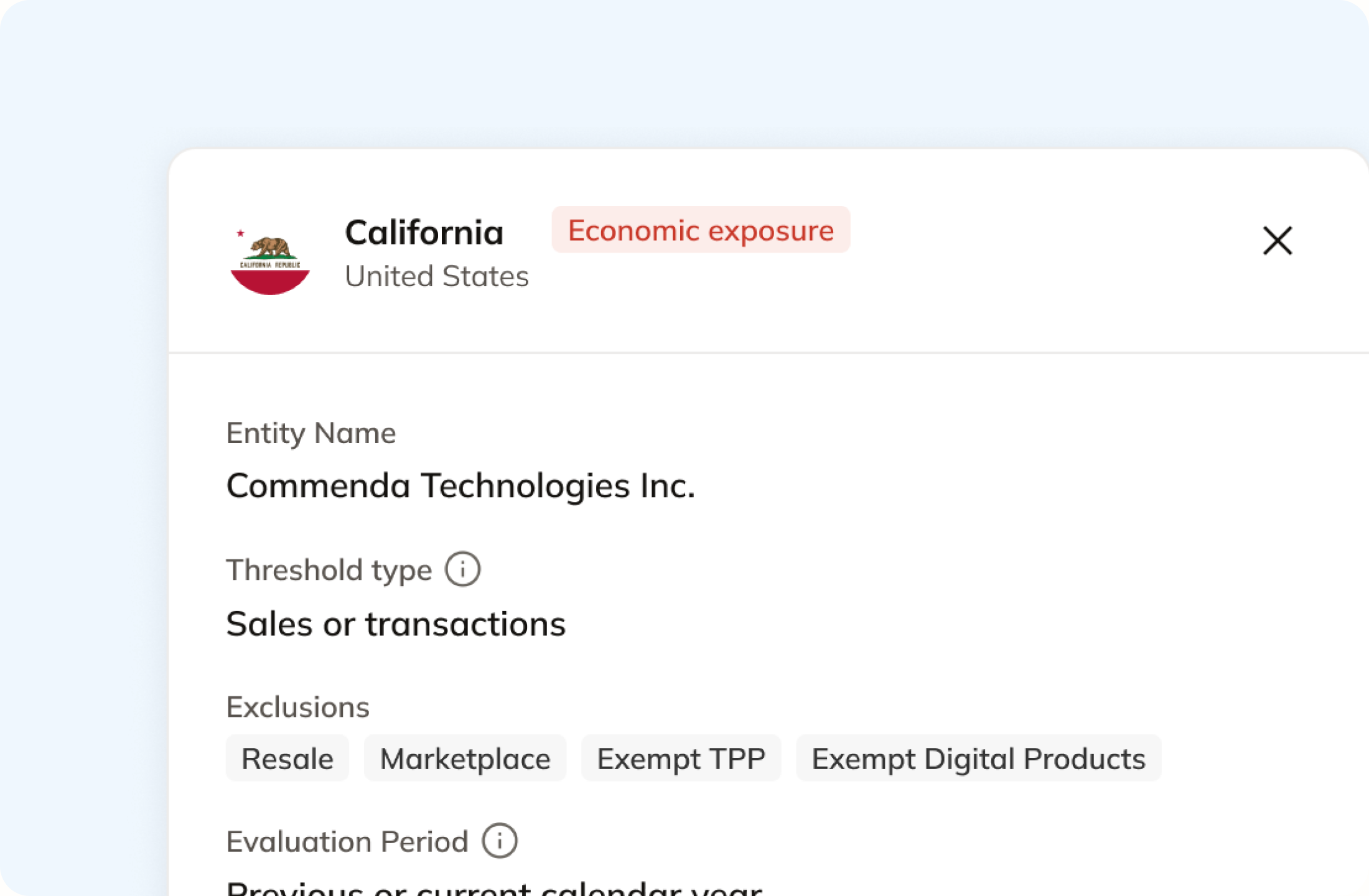
S/4HANA taxes the jurisdictions you set up. Commenda measures the same posted documents against economic and physical thresholds in all 50 states and 70+ countries, and notifies you at 80% of a registration threshold.
One vendor for the rate and the return
SAP's US external tax solution passes your addresses to a tax partner, which determines the jurisdiction and returns the rate. Commenda gives you the rate, the registration, and the filing from one place.
File the returns SAP hands you as a file
SAP Document and Reporting Compliance covers 60 countries and 594 compliance tasks. 267 of those tasks give you a file to submit yourself, and 125 are manual filing. Commenda files.
Coverage comparison
What S/4HANA handles, and what it hands back
S/4HANA ships two US tax procedures, one that you maintain and one that hands calculation to an external system, and which you are on changes most of the answers below. SAP's figures come from its Help Portal pages on the tax jurisdiction code, external sales and use tax calculation, tax jurisdiction information, tax calculation in sales, and the 594 supported compliance tasks, checked on July 30, 2026.
Registering to collect tax
- SAP S/4HANA
- Not handled. A tax jurisdiction is a code you configure and maintain
- Commenda
- Permits in all 50 states, EU VAT with OSS and IOSS, and GST across APAC and Canada
Filing your US sales tax returns
- SAP S/4HANA
- Partly. One task generates jurisdiction forms, and the format depends on the state
- Commenda
- Filed in all 50 states, amendments included
Filing outside the United States
- SAP S/4HANA
- Partly. 197 of its 594 tasks submit directly. The rest hand you a file
- Commenda
- Filed across 70+ countries from one platform
Remitting what you collected
- SAP S/4HANA
- Not documented. Its compliance tasks cover submission, not payment
- Commenda
- Tracked per jurisdiction, every filing
Knowing where you owe
- SAP S/4HANA
- Not handled. Tax follows the jurisdictions you configured, not the ones you crossed
- Commenda
- Economic and physical thresholds in 50 states and 70+ countries, with alerts before you cross
Exemption certificates
- SAP S/4HANA
- Not handled. Exemption is an indicator on the customer and material record
- Commenda
- Collected, validated, stored, and applied automatically where valid
Keeping US rates current
- SAP S/4HANA
- Partly. You enter the percentages yourself, or a tax partner returns them
- Commenda
- Maintained for every US jurisdiction, plus VAT and GST across 70+ countries
| SAP S/4HANA |  | |
|---|---|---|
| Registering to collect tax | Not handled. A tax jurisdiction is a code you configure and maintain | Permits in all 50 states, EU VAT with OSS and IOSS, and GST across APAC and Canada |
| Filing your US sales tax returns | Partly. One task generates jurisdiction forms, and the format depends on the state | Filed in all 50 states, amendments included |
| Filing outside the United States | Partly. 197 of its 594 tasks submit directly. The rest hand you a file | Filed across 70+ countries from one platform |
| Remitting what you collected | Not documented. Its compliance tasks cover submission, not payment | Tracked per jurisdiction, every filing |
| Knowing where you owe | Not handled. Tax follows the jurisdictions you configured, not the ones you crossed | Economic and physical thresholds in 50 states and 70+ countries, with alerts before you cross |
| Exemption certificates | Not handled. Exemption is an indicator on the customer and material record | Collected, validated, stored, and applied automatically where valid |
| Keeping US rates current | Partly. You enter the percentages yourself, or a tax partner returns them | Maintained for every US jurisdiction, plus VAT and GST across 70+ countries |
Calculate taxes globally on SAP S/4HANA using Commenda
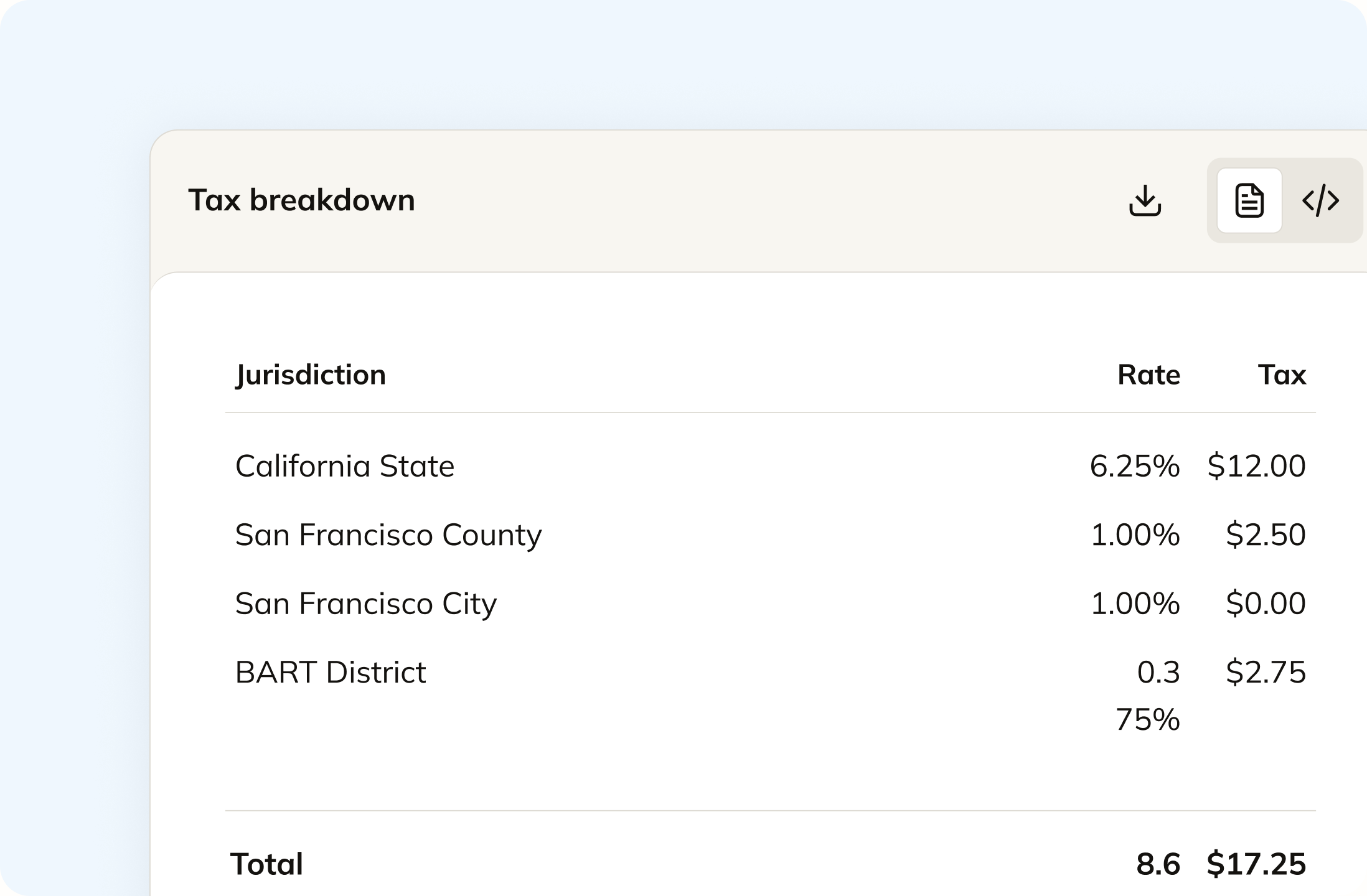
SAP counts more than 55,000 taxing jurisdictions in the United States. Commenda calculates the rate for the address on the document and shows the state, county, city, and district split behind the total. The figure that posts is the figure on the return, so nothing has to be reconciled at period close.
Track your global exposure from SAP S/4HANA
A tax jurisdiction in S/4HANA is configuration you maintain, so tax is determined where you set it up. Sales into a state you never configured are taxed at zero and counted nowhere. Commenda measures the same posted documents against economic and physical thresholds in all 50 states and 70+ countries, and tells you at 80%, before you cross.
Automatically remit transactions around the world
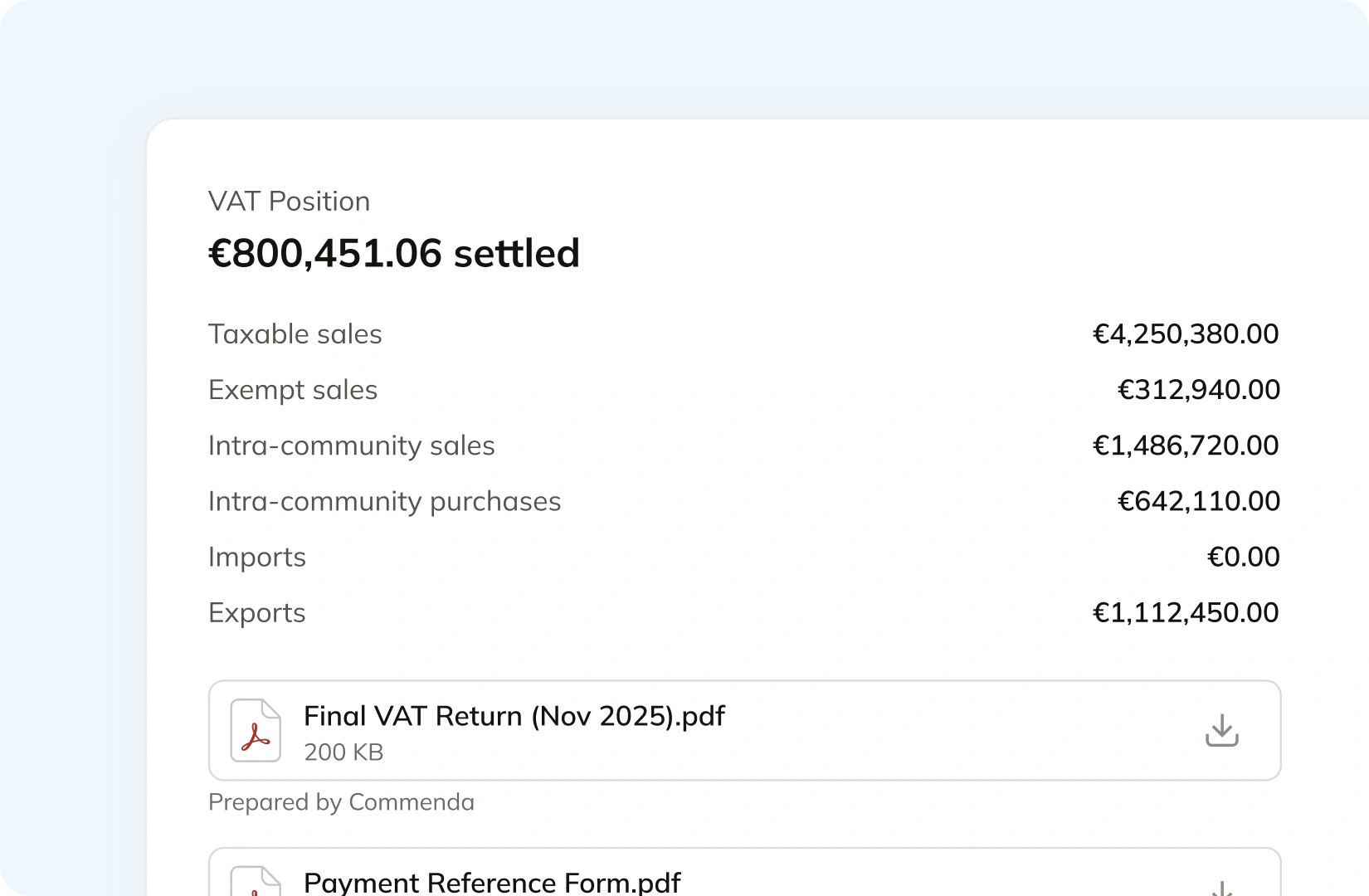
Most of what SAP Document and Reporting Compliance produces is a file you still have to submit. 267 of its 594 compliance tasks give you an electronic format to upload yourself, and 125 are manual filing. Commenda builds the return from your S/4HANA data and files it, across all 50 states plus EU VAT with OSS and GST in APAC and Canada, with amendments where a period needs correcting.
Manage your customers and exemptions in one place
In S/4HANA the jurisdiction for a sale is determined from indicators on the customer and the material record. That records the decision. The paperwork that has to survive an audit lives somewhere else. Commenda collects certificates through a portal that can carry your branding, validates each one at upload, applies it in the states where it is valid, and chases expiries.
Consolidation
Why S/4HANA does not know your total exposure
S/4HANA is the system of record for a group, and tax determination is one engine inside it. Filing one return still means knowing which states you crossed, which vendor holds the rate, and which revenue arrived already taxed. Commenda solves that.
Determination runs on the jurisdictions you configured
SAP counts more than 55,000 taxing jurisdictions in the United States, and under its internal procedure you enter the jurisdiction codes and their percentages yourself. The engine is precise about the jurisdictions it knows. It has nothing to say about the ones you never set up. Our nexus threshold guide lists what actually triggers a registration in each state.
The US answer usually comes from a second vendor
SAP's external solution for the United States passes your data to an external tax system that determines the jurisdictions, calculates the tax, and returns the result. SAP also retrieves jurisdiction codes from your tax partner whenever an address changes. That means your rate data, your audit trail, and your renewal all sit with a company that is not SAP.
SAP submits in some countries and prepares a file in most
Of the 594 compliance tasks SAP lists across 60 countries, 197 submit through a web service, 267 produce a file you upload, and 125 are manual filing. The UK VAT return goes straight to HMRC under Making Tax Digital. Six of the seven United States tasks are 1099 and 1042-S withholding reports.
One exposure figure across every company code
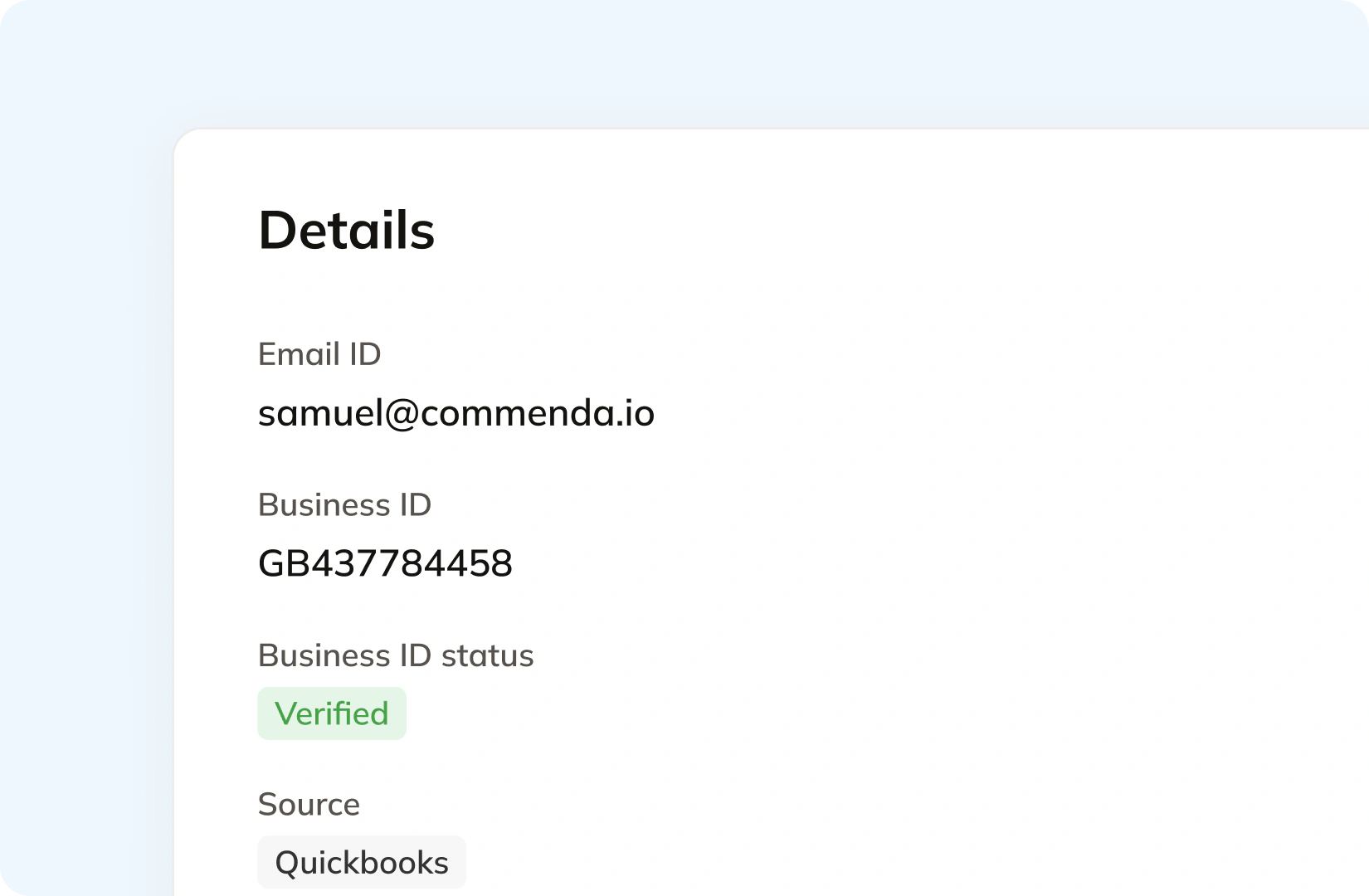
A group running S/4HANA usually runs several company codes in several countries, with a storefront or a billing platform feeding some of them. Commenda reads each source and consolidates into one ledger tagged by ship-to state, with the origin visible on every transaction, so tax a marketplace already collected stays separate from revenue that still needs it. 100+ integrations are supported, alongside a REST API and a mapped monthly CSV. What each entity actually owes shows up on one indirect tax dashboard.
What it takes
What global indirect tax takes in S/4HANA
SAP publishes no S/4HANA list price and asks you to request a quote, so there are no dollar figures here. What SAP does publish is what each capability depends on. The cost of growth in S/4HANA is the configuration you own, the partner your US rates come from, and the country content each return needs.
| What you need | What SAP S/4HANA requires | Source |
|---|---|---|
| A US tax rate on a document at all | One of two tax procedures. Under TAXUSJ you enter the jurisdiction codes and their tax percentages yourself. Under TAXUSX an external system holds both | Tax jurisdiction code |
| Jurisdiction codes for a new address | A tax partner. SAP retrieves them from your tax partner's tax solution when a company code, plant, customer, supplier, or cost centre is created or changed | Tax jurisdiction information |
| More than four jurisdiction levels | The external procedure. SAP handles four levels under TAXUSJ and six under TAXUSX, against the more than 55,000 US jurisdictions it counts | Tax jurisdiction code |
| Tax on a sales order | Condition records you created in advance. Tax is calculated inside the pricing procedure, and SAP's US external template only works once the UTXJ condition finds a record | Tax calculation in sales |
| Every US tax scenario covered | Not all of them. SAP states that certain tax scenarios are not currently supported by the US external tax solution, and points to a note for the list | External tax FAQ |
| A US sales and use tax form | One compliance task, and SAP notes the format and submission mode depend on the tax authority's requirements. The other six US tasks are 1099 and 1042-S reports | Supported compliance tasks |
| A localized return in another country | SAP Document and Reporting Compliance plus that country's content. It covers 60 countries and 594 compliance tasks, and 44 of those countries have at least one direct submission | Supported compliance tasks |
| Keeping local content current everywhere you trade | SAP's localization programme. It describes more than 1,000 local versions of SAP products, each maintained per country | SAP localization |
| What SAP charges for any of this | No published figure. SAP's pricing section asks you to request a quote, and a partner tax engine is a separate contract with that partner | SAP S/4HANA |
A US tax rate on a document at all
One of two tax procedures. Under TAXUSJ you enter the jurisdiction codes and their tax percentages yourself. Under TAXUSX an external system holds both
Tax jurisdiction codeJurisdiction codes for a new address
A tax partner. SAP retrieves them from your tax partner's tax solution when a company code, plant, customer, supplier, or cost centre is created or changed
Tax jurisdiction informationMore than four jurisdiction levels
The external procedure. SAP handles four levels under TAXUSJ and six under TAXUSX, against the more than 55,000 US jurisdictions it counts
Tax jurisdiction codeTax on a sales order
Condition records you created in advance. Tax is calculated inside the pricing procedure, and SAP's US external template only works once the UTXJ condition finds a record
Tax calculation in salesEvery US tax scenario covered
Not all of them. SAP states that certain tax scenarios are not currently supported by the US external tax solution, and points to a note for the list
External tax FAQA US sales and use tax form
One compliance task, and SAP notes the format and submission mode depend on the tax authority's requirements. The other six US tasks are 1099 and 1042-S reports
Supported compliance tasksA localized return in another country
SAP Document and Reporting Compliance plus that country's content. It covers 60 countries and 594 compliance tasks, and 44 of those countries have at least one direct submission
Supported compliance tasksKeeping local content current everywhere you trade
SAP's localization programme. It describes more than 1,000 local versions of SAP products, each maintained per country
SAP localizationWhat SAP charges for any of this
No published figure. SAP's pricing section asks you to request a quote, and a partner tax engine is a separate contract with that partner
SAP S/4HANA
Figures verified on July 30, 2026.
From the field
Trusted by businesses across the globe


“The platform works exactly the way I need it to. I have one team member who manages all of our exemption certificates, and that functionality has been particularly efficient for us. It allows him to handle everything seamlessly, making the handoff significantly easier.”
VP of Finance, TRX






Compare Commenda sales tax software with competitors
Vertex, Avalara, ONESOURCE, and Sovos all sell certified S/4HANA tax engines. We compare the alternatives on coverage, ratings, and real pricing, and we say where each one wins.
More sales tax resources
Guides from the Commenda team on jurisdiction rates, VAT, and audit exposure.
Frequently asked questions
Custom integration support for your business
Every S/4HANA landscape is configured differently, and those choices exist for good reasons. We map how yours works, including your company codes and which documents should be in scope, and build the integration to match.
Indirect Tax
Monitor nexus exposure, register, file, and remit sales tax and VAT in one platform. Commenda keeps you compliant across 100+ jurisdictions.
Explore the product
