Sales tax and VAT software for Paddle sellers
Paddle is the seller of record on the transactions it processes, and its own docs say you have zero sales tax liability on them. That is Paddle covered. It does not cover revenue that never touches Paddle, the periods before you moved, or the registrations your own entity triggers. Commenda covers those, across 50 states and 70+ countries.
Trusted by global businesses

































Paddle covers Paddle. We cover the rest
Paddle's developer docs state you have zero sales tax liability for any Paddle transaction. Commenda leaves that revenue alone and takes what sits outside it: a second processor, invoices your own entity raises, and the lines Paddle will not process.
Thresholds count your total activity
A registration threshold is measured on everything your entity sold into a state or country, across every channel. Commenda measures every source against economic and physical thresholds in all 50 states and 70+ countries, and notifies you at 80%.
Merchant of record is not retroactive
Paddle carries the tax from the day you started using it. The periods before that stay with you. Commenda reads your history, sizes the exposure, and files back periods under a voluntary disclosure agreement where one helps.
Coverage comparison
What does Paddle handle, and what stays with you?
Row one is the honest one. Paddle carries the tax on what it sells, and this page does not pretend otherwise. Its figures come from Paddle's own pages on taking on your tax responsibilities, the countries it charges tax for, supported countries, what you may not sell, and sales tax exemption, checked on July 30, 2026.
Sales tax and VAT on Paddle transactions
- Paddle
- Handled. Paddle is the seller of record and carries the liability
- Commenda
- Left alone. Paddle-processed revenue is excluded from what we calculate and file
Revenue that never touches Paddle
- Paddle
- Not handled. Paddle is the seller only on what it processes
- Commenda
- Read from every other source, then filed across 50 states and 70+ countries
Physical goods and pure consulting revenue
- Paddle
- Not handled. Its Acceptable Use Policy lists both as prohibited
- Commenda
- Calculated and filed like any other line of your revenue
Knowing where your entity owes
- Paddle
- Not handled. Its registrations cover Paddle's activity, not yours
- Commenda
- Economic and physical thresholds in 50 states and 70+ countries, with alerts at 80%
Registration from staff, an office, or stock
- Paddle
- Not handled. Physical presence never appears on a transaction
- Commenda
- Found by questionnaire, then registered in every state and country it triggers
Periods before you moved to Paddle
- Paddle
- Not handled. Being merchant of record now does not fix a prior period
- Commenda
- Back-period returns and voluntary disclosure agreements from your own history
Exemption certificates
- Paddle
- Partly. Your customer emails a certificate to Paddle's buyer support team
- Commenda
- Collected, validated, stored, and applied automatically where valid
| Paddle |  | |
|---|---|---|
| Sales tax and VAT on Paddle transactions | Handled. Paddle is the seller of record and carries the liability | Left alone. Paddle-processed revenue is excluded from what we calculate and file |
| Revenue that never touches Paddle | Not handled. Paddle is the seller only on what it processes | Read from every other source, then filed across 50 states and 70+ countries |
| Physical goods and pure consulting revenue | Not handled. Its Acceptable Use Policy lists both as prohibited | Calculated and filed like any other line of your revenue |
| Knowing where your entity owes | Not handled. Its registrations cover Paddle's activity, not yours | Economic and physical thresholds in 50 states and 70+ countries, with alerts at 80% |
| Registration from staff, an office, or stock | Not handled. Physical presence never appears on a transaction | Found by questionnaire, then registered in every state and country it triggers |
| Periods before you moved to Paddle | Not handled. Being merchant of record now does not fix a prior period | Back-period returns and voluntary disclosure agreements from your own history |
| Exemption certificates | Partly. Your customer emails a certificate to Paddle's buyer support team | Collected, validated, stored, and applied automatically where valid |
Calculate taxes globally on Paddle using Commenda
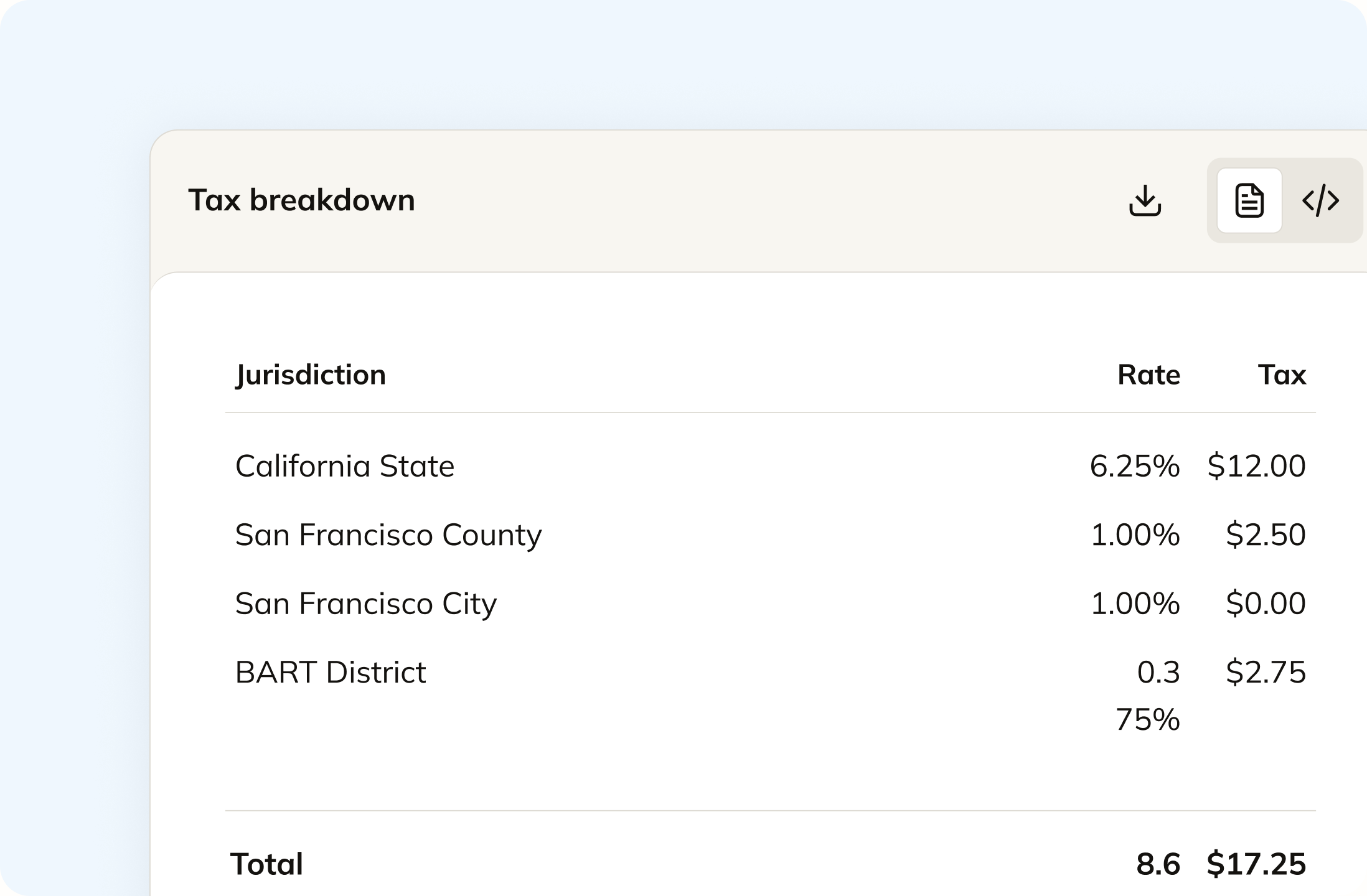
Paddle prohibits physical products and pure consulting, and it only sees what runs through its own checkout. Everything else is yours to calculate. Commenda applies the right rate by jurisdiction and product type on those transactions, and leaves Paddle-processed revenue untouched, so nothing is taxed twice. You set which sources are in scope, and that stays editable.
Track your global exposure from Paddle
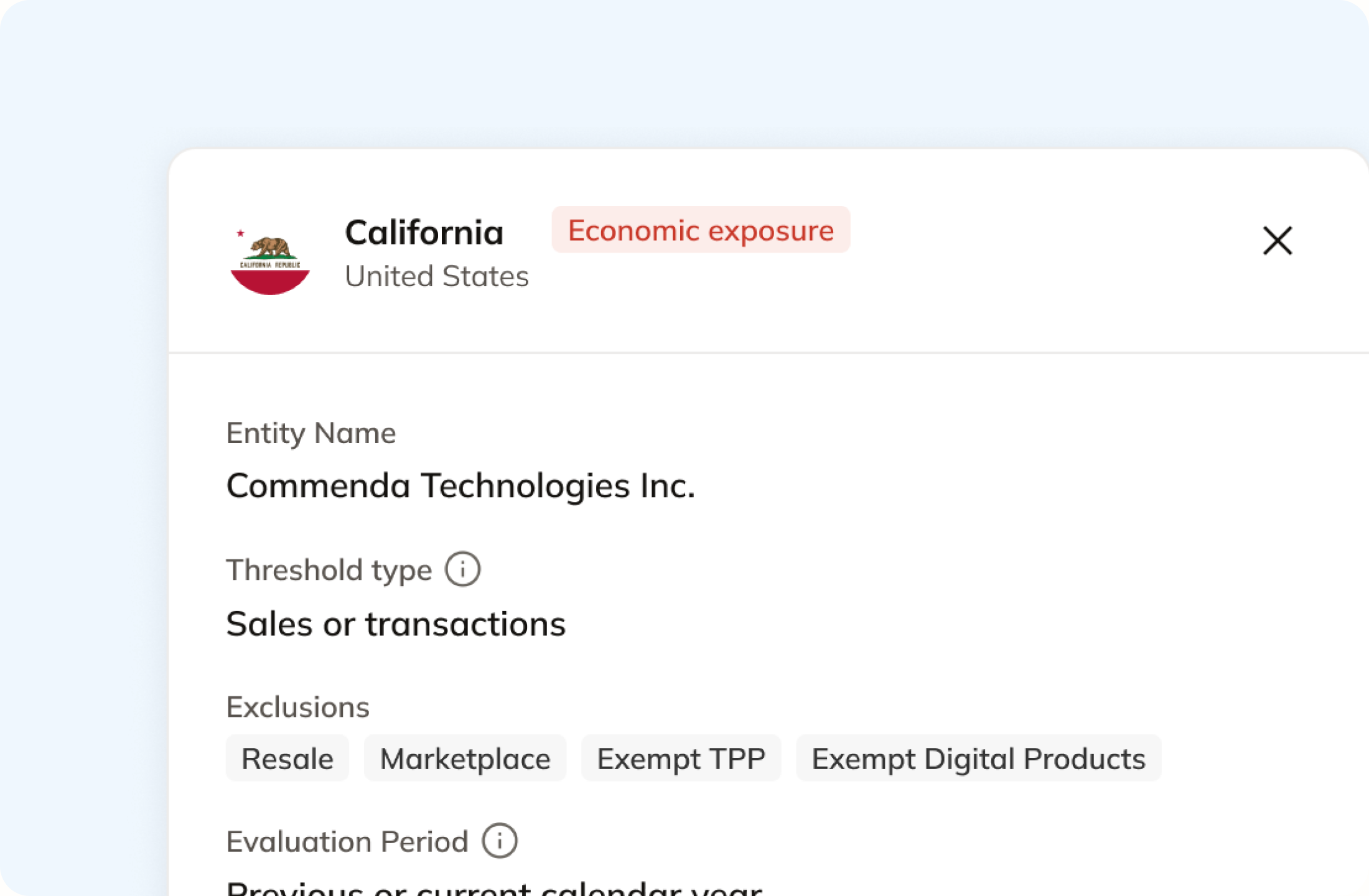
Paddle registers in its own name, in over 100 jurisdictions. Those registrations tell you nothing about where your entity owes. Commenda measures your total activity against economic and physical thresholds in all 50 states and 70+ countries, and notifies you at 80% of a threshold. A short questionnaire covers staff, offices, and stock, because physical presence never shows up on a transaction.
Automatically remit transactions around the world
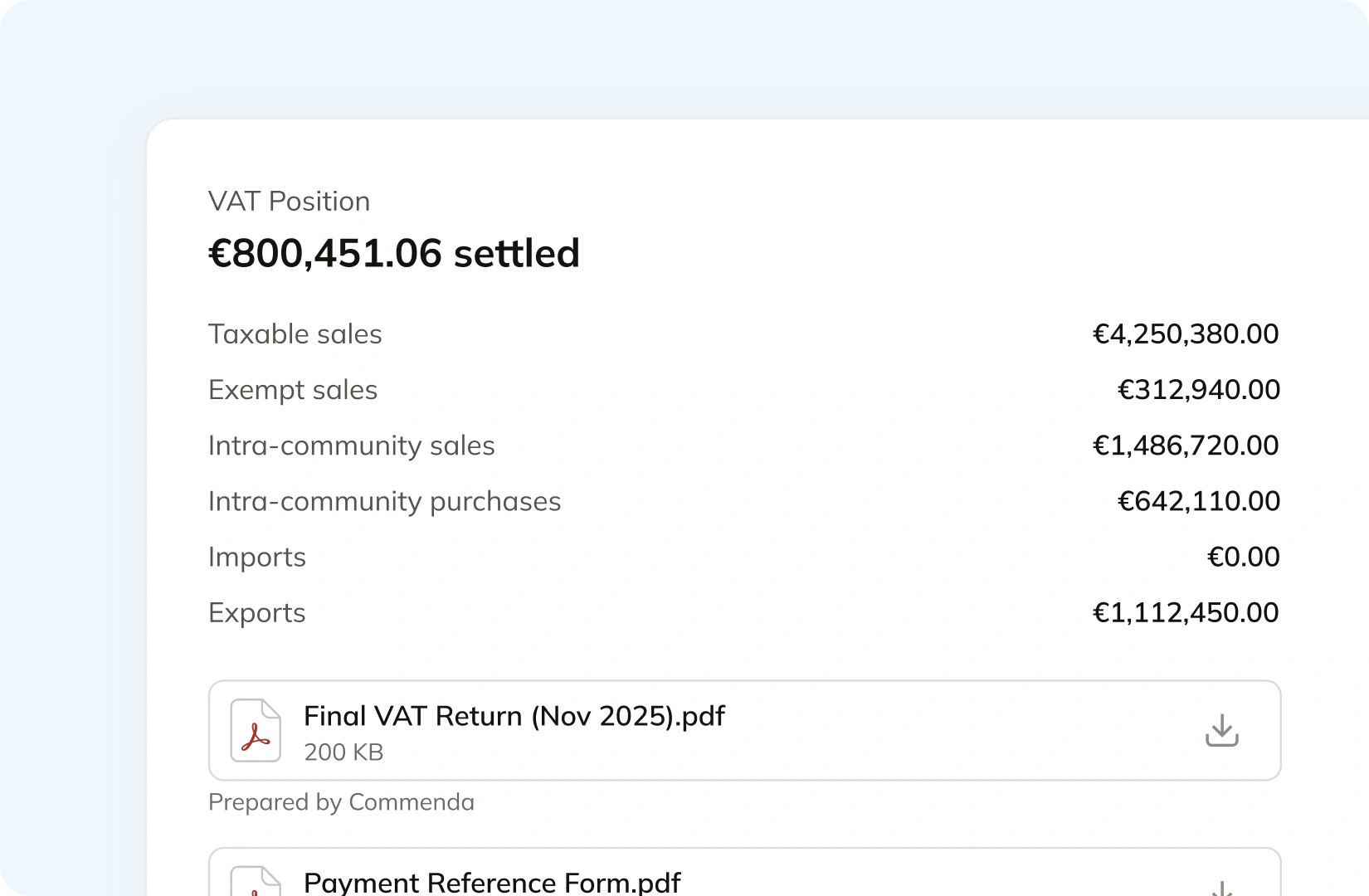
Some registrations are yours whatever Paddle does. A UK VAT number your accountant needs, an EU OSS registration for revenue you invoice directly, a state permit triggered by an office. Commenda builds those returns straight from your transaction data and files them across all 50 states and 70+ countries, with amendments where a period needs correcting.
Manage your customers and exemptions in one place
On Paddle, a tax-exempt buyer emails its certificate to Paddle's buyer support team, and on Paddle Classic the exemption arrives as a refund once the order is already paid. On your direct revenue, getting the certificate is your job. Commenda collects them through a self-service portal, validates each one on upload, applies it in the states where it is valid, and chases expiries.

Consolidation
Does merchant of record close your exposure?
Not on its own. Paddle carries the tax on Paddle sales. A finance lead still has to answer what else the company sold, where it has people and property, and what it owes for the periods before Paddle was the seller.
Paddle is one channel, and a threshold counts all of them
Most Paddle sellers are not Paddle-only. A second processor, a direct bank transfer from an enterprise buyer, or a marketplace listing all sit outside merchant of record, and Paddle's Acceptable Use Policy pushes some revenue out by design: physical products, anything needing physical delivery, and pure consulting or advisory work. Thresholds are measured on your entity's total activity in a jurisdiction. We have scoped a SaaS business running roughly a quarter of its revenue through Paddle and the rest through a card processor, and every dollar of the exposure sat in the other three quarters.
Merchant of record stops at your entity's own obligations
Paddle is precise about its own boundary. Its seller help centre says that for accounting and corporation tax purposes, not sales tax, you might need to export transaction-level data yourself. Your corporate income tax returns, your statutory accounts, your entity filings, and the transfer pricing between your own subsidiaries are all still yours. Commenda runs those on the same platform as indirect tax, so one set of numbers feeds all of them.
Physical presence is not a transaction, so no processor sees it
A remote employee, a leased office, or stock in a third-party warehouse can create a registration obligation on its own, whoever is merchant of record on the sales. It never appears in a payments feed. Our nexus threshold guide sets out the physical and economic tests state by state, and the same questionnaire that drives it feeds the registrations we then file.
One ledger behind every channel
Every source connects to one ledger, across 100+ supported integrations. Each transaction carries its origin, its product tax code, and any tax already collected, so Paddle-processed revenue stays separate from revenue that still needs tax applied. The result is one exposure figure per state and one return per period. If you only need a rate today, the sales tax rate calculator is free to use.
Scope boundary
Where does Paddle's tax coverage end?
Paddle publishes one price and bundles tax into it, so there is no tax tier to buy and no cost table worth building. The useful table is the boundary. Every row below is Paddle's own documented position on which side of the line something falls.
| Revenue or obligation | Where the indirect tax sits | Source |
|---|---|---|
| A SaaS subscription sold through Paddle Checkout | With Paddle. Its developer docs state you have zero sales tax liability for any Paddle transaction, and it sells into over 200 countries and territories | Supported countries |
| An enterprise deal invoiced through Paddle | With Paddle. A manually collected transaction carries payment terms and a purchase order number, and the customer pays Paddle by bank transfer | Paddle invoicing |
| The same deal invoiced by your own entity | With you. Paddle states it acts as a reseller of your product and is therefore the seller on record, which scopes it to the transactions it resells | How Paddle takes on VAT |
| Physical products, or anything needing physical delivery | With you. Paddle's Acceptable Use Policy lists them as prohibited, so that revenue is collected somewhere else and taxed by you | Acceptable Use Policy |
| Pure consulting, coaching, legal advice, or IT services | With you. Prohibited on Paddle unless the human service relates to a software offering, so those invoices sit outside merchant of record | Acceptable Use Policy |
| Revenue through a second processor or a direct bank transfer | With you. Paddle's liability statement is scoped to Paddle transactions, and this revenue still counts toward your entity's registration thresholds | Supported countries |
| The right rate for the type of product you sell | Shared. You pick from five taxable categories, and Standard Digital Goods applies to everything by default. A new category needs approval, and Paddle audits your site first | Taxable categories |
| An exemption certificate from a tax-exempt US buyer | With Paddle, after the order. Your customer emails the certificate to Paddle's buyer support team, and on Paddle Classic the exemption is issued as a refund | Sales tax exemption |
| A cross-border sale to a VAT-registered business | With Paddle, reverse charged. It states the buyer pays no VAT at purchase and becomes responsible for reporting that VAT in its own return | How Paddle handles VAT |
| VAT on the payout Paddle sends you | Reverse charged. Paddle states no tax is charged to Paddle, because the supply is taxable in the buyer's country and Paddle charges itself then reclaims it | VAT on payouts |
| Your corporate income tax and statutory accounts | With you. Paddle's help centre says that for accounting and corporation tax purposes, not sales tax, you might need to export transaction-level data yourself | Seller statements |
| What Paddle charges you for the tax work | Nothing extra. Global tax registration, filing, and remittance sit inside its published 5% plus 50 cents per Checkout transaction. Products under $10 need custom pricing | Paddle pricing |
A SaaS subscription sold through Paddle Checkout
With Paddle. Its developer docs state you have zero sales tax liability for any Paddle transaction, and it sells into over 200 countries and territories
Supported countriesAn enterprise deal invoiced through Paddle
With Paddle. A manually collected transaction carries payment terms and a purchase order number, and the customer pays Paddle by bank transfer
Paddle invoicingThe same deal invoiced by your own entity
With you. Paddle states it acts as a reseller of your product and is therefore the seller on record, which scopes it to the transactions it resells
How Paddle takes on VATPhysical products, or anything needing physical delivery
With you. Paddle's Acceptable Use Policy lists them as prohibited, so that revenue is collected somewhere else and taxed by you
Acceptable Use PolicyPure consulting, coaching, legal advice, or IT services
With you. Prohibited on Paddle unless the human service relates to a software offering, so those invoices sit outside merchant of record
Acceptable Use PolicyRevenue through a second processor or a direct bank transfer
With you. Paddle's liability statement is scoped to Paddle transactions, and this revenue still counts toward your entity's registration thresholds
Supported countriesThe right rate for the type of product you sell
Shared. You pick from five taxable categories, and Standard Digital Goods applies to everything by default. A new category needs approval, and Paddle audits your site first
Taxable categoriesAn exemption certificate from a tax-exempt US buyer
With Paddle, after the order. Your customer emails the certificate to Paddle's buyer support team, and on Paddle Classic the exemption is issued as a refund
Sales tax exemptionA cross-border sale to a VAT-registered business
With Paddle, reverse charged. It states the buyer pays no VAT at purchase and becomes responsible for reporting that VAT in its own return
How Paddle handles VATVAT on the payout Paddle sends you
Reverse charged. Paddle states no tax is charged to Paddle, because the supply is taxable in the buyer's country and Paddle charges itself then reclaims it
VAT on payoutsYour corporate income tax and statutory accounts
With you. Paddle's help centre says that for accounting and corporation tax purposes, not sales tax, you might need to export transaction-level data yourself
Seller statementsWhat Paddle charges you for the tax work
Nothing extra. Global tax registration, filing, and remittance sit inside its published 5% plus 50 cents per Checkout transaction. Products under $10 need custom pricing
Paddle pricing
Figures verified on July 30, 2026.
From the field
Trusted by businesses across the globe


“The platform works exactly the way I need it to. I have one team member who manages all of our exemption certificates, and that functionality has been particularly efficient for us. It allows him to handle everything seamlessly, making the handoff significantly easier.”
VP of Finance, TRX






Compare Commenda sales tax software with competitors
If Paddle is your only revenue source, a merchant of record is enough and you can stop here. We compare the alternatives for everyone else on coverage, ratings, and real pricing, and we say where each one wins.
More sales tax resources
Guides from the Commenda team on EU VAT for digital products, lookback periods, and back exposure.
Frequently asked questions
Custom integration support for your business
Paddle sellers rarely sell through Paddle alone. We map where your revenue actually comes from, which of it Paddle already covers, and what your own entity owes on the rest. No engineering work on your side.
Indirect Tax
Monitor nexus exposure, register, file, and remit sales tax and VAT in one platform. Commenda keeps you compliant across 100+ jurisdictions.
Explore the product
