Sales tax and VAT software for IFS Cloud
IFS Cloud handles VAT, sales tax, use tax and withholding through tax codes you maintain, and its own documentation sends you to Vertex or Avalara for US rates. It ships 22 country solutions, and the United States is not one of them. Commenda covers all 50 states and 70+ countries from the same IFS data.
Trusted by global businesses

































Calculate tax without a rate feed to buy
IFS documents login parameters for external tax systems like Vertex and Avalara, and sends part categories out to them for US rates. Commenda applies state, county, city and district rates itself.
Tax service, rental, and parts correctly
A technician working at a customer site, a machine on rent, and a spare part shipped from a hub are three different taxable events in most US states. Each is measured where it happened.
File in the US and 70+ countries
IFS ships 22 country solutions and the United States is not one of them. Commenda files across all 50 states, EU VAT with OSS, and GST in APAC and Canada.
Coverage comparison
What IFS Cloud handles, and what it hands back
IFS Cloud's figures come from its own technical documentation on tax control, external tax systems, tax reporting, transferring a return to a tax authority, customer tax information, and its country solutions, checked on July 30, 2026.
Registering to collect tax
- IFS Cloud
- Not handled. Tax liability is a code you define per country and customer address
- Commenda
- Permits in all 50 states, EU VAT with OSS and IOSS, and GST across APAC and Canada
US state and local sales tax rates
- IFS Cloud
- Not handled. Its docs send you to Vertex or Avalara for US rates
- Commenda
- Applied at the delivery address, down to district level, on every transaction
Sending the return to the authority
- IFS Cloud
- Partly. It builds the return. Transfer to authority is documented for one UK scheme
- Commenda
- Filed across 50 states and 70+ countries from one platform
Country coverage for statutory reporting
- IFS Cloud
- 22 country solutions. The United States is not one of them
- Commenda
- 70+ countries, including every EU member state
Knowing where you owe
- IFS Cloud
- Not handled. No nexus or economic threshold monitoring is documented
- Commenda
- Economic and physical thresholds in 50 states and 70+ countries, with alerts before you cross
Exemption certificates
- IFS Cloud
- Stored, not collected. IFS says the certificate field was added for an Italian VAT case
- Commenda
- Collected, validated, stored, and applied automatically where valid
Taxing service, labour and rental
- IFS Cloud
- Yours to configure. Tax structures and codes are basic data you maintain by hand
- Commenda
- Rated by what was supplied and where it happened, on the same ledger as goods
| IFS Cloud |  | |
|---|---|---|
| Registering to collect tax | Not handled. Tax liability is a code you define per country and customer address | Permits in all 50 states, EU VAT with OSS and IOSS, and GST across APAC and Canada |
| US state and local sales tax rates | Not handled. Its docs send you to Vertex or Avalara for US rates | Applied at the delivery address, down to district level, on every transaction |
| Sending the return to the authority | Partly. It builds the return. Transfer to authority is documented for one UK scheme | Filed across 50 states and 70+ countries from one platform |
| Country coverage for statutory reporting | 22 country solutions. The United States is not one of them | 70+ countries, including every EU member state |
| Knowing where you owe | Not handled. No nexus or economic threshold monitoring is documented | Economic and physical thresholds in 50 states and 70+ countries, with alerts before you cross |
| Exemption certificates | Stored, not collected. IFS says the certificate field was added for an Italian VAT case | Collected, validated, stored, and applied automatically where valid |
| Taxing service, labour and rental | Yours to configure. Tax structures and codes are basic data you maintain by hand | Rated by what was supplied and where it happened, on the same ledger as goods |
Calculate taxes globally on IFS Cloud using Commenda
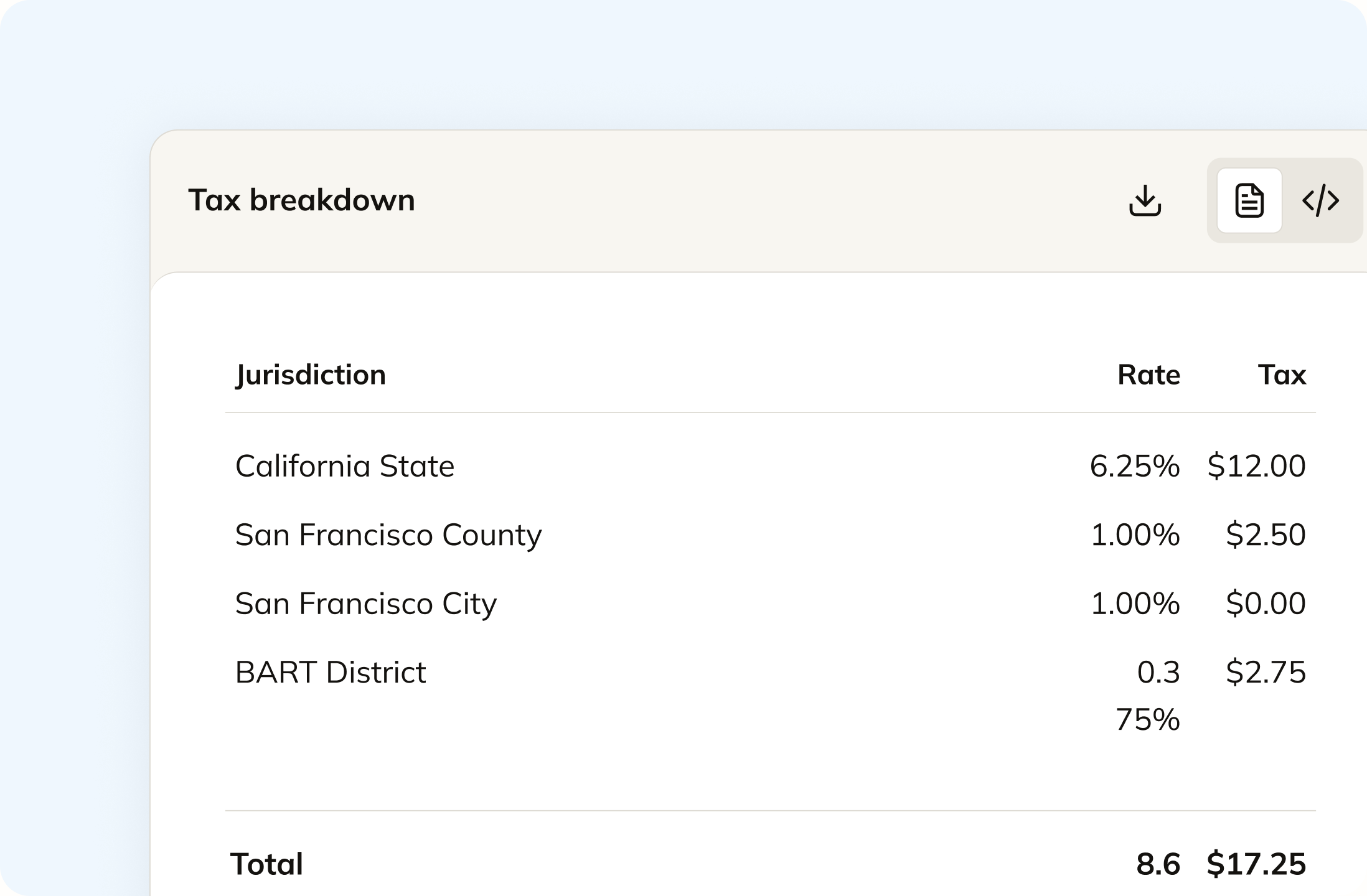
IFS holds the rate inside a tax code you create, and compound taxes need a tax calculation structure you build component by component. Commenda applies the US rate at the delivery address instead, split into state, county, city and district. The breakdown stays on the line, so an invoice and a return never disagree about what was charged.
Track your global exposure from IFS Cloud
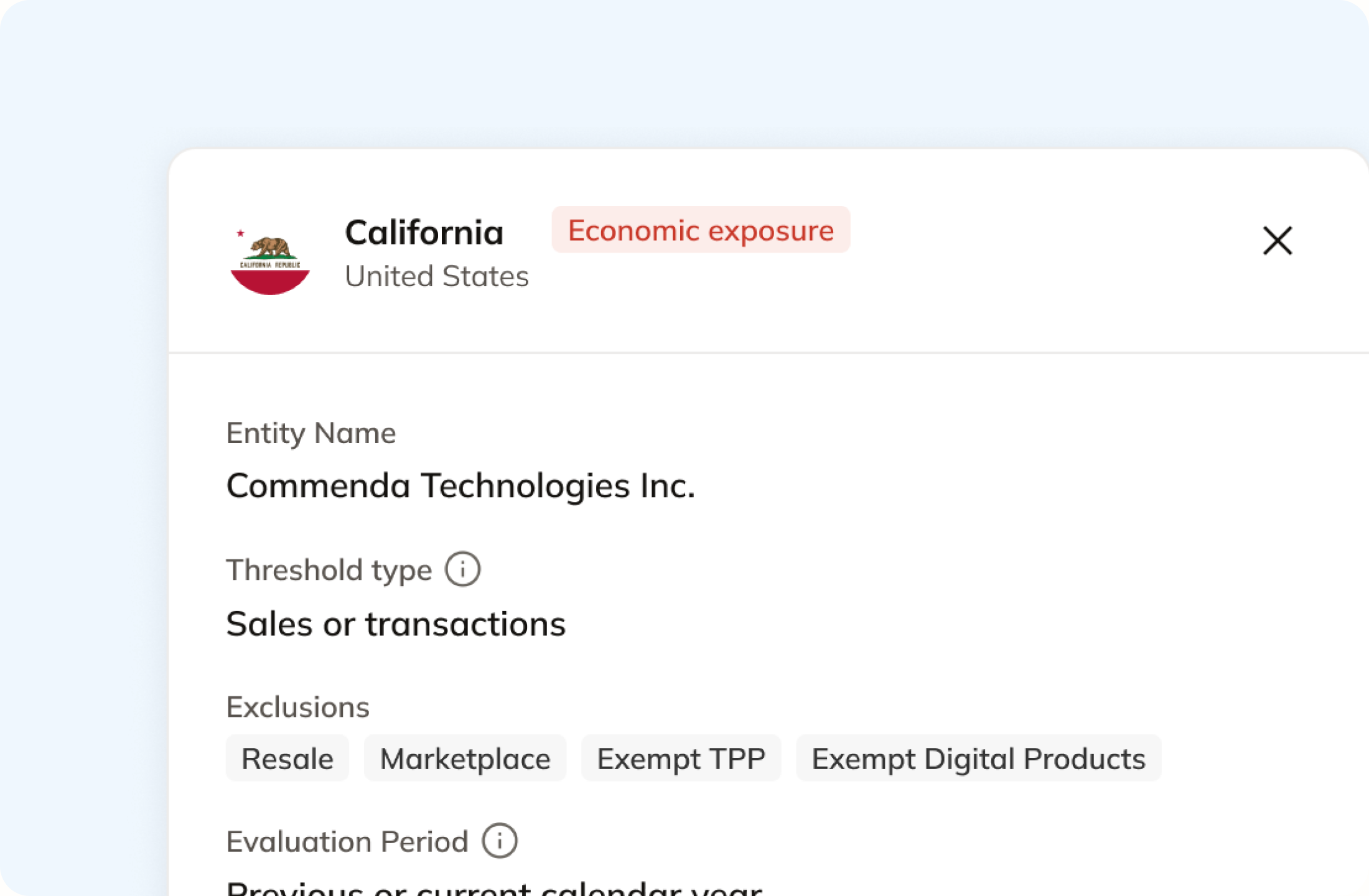
In IFS, tax liability is a code you attach to a customer address, so it knows tax only where you declared it. Commenda measures the same transactions against economic and physical thresholds in all 50 states and 70+ countries, and notifies you at 80% of a threshold. A short questionnaire covers field technicians and parts hubs, which create presence without appearing on an invoice.
Automatically remit transactions around the world
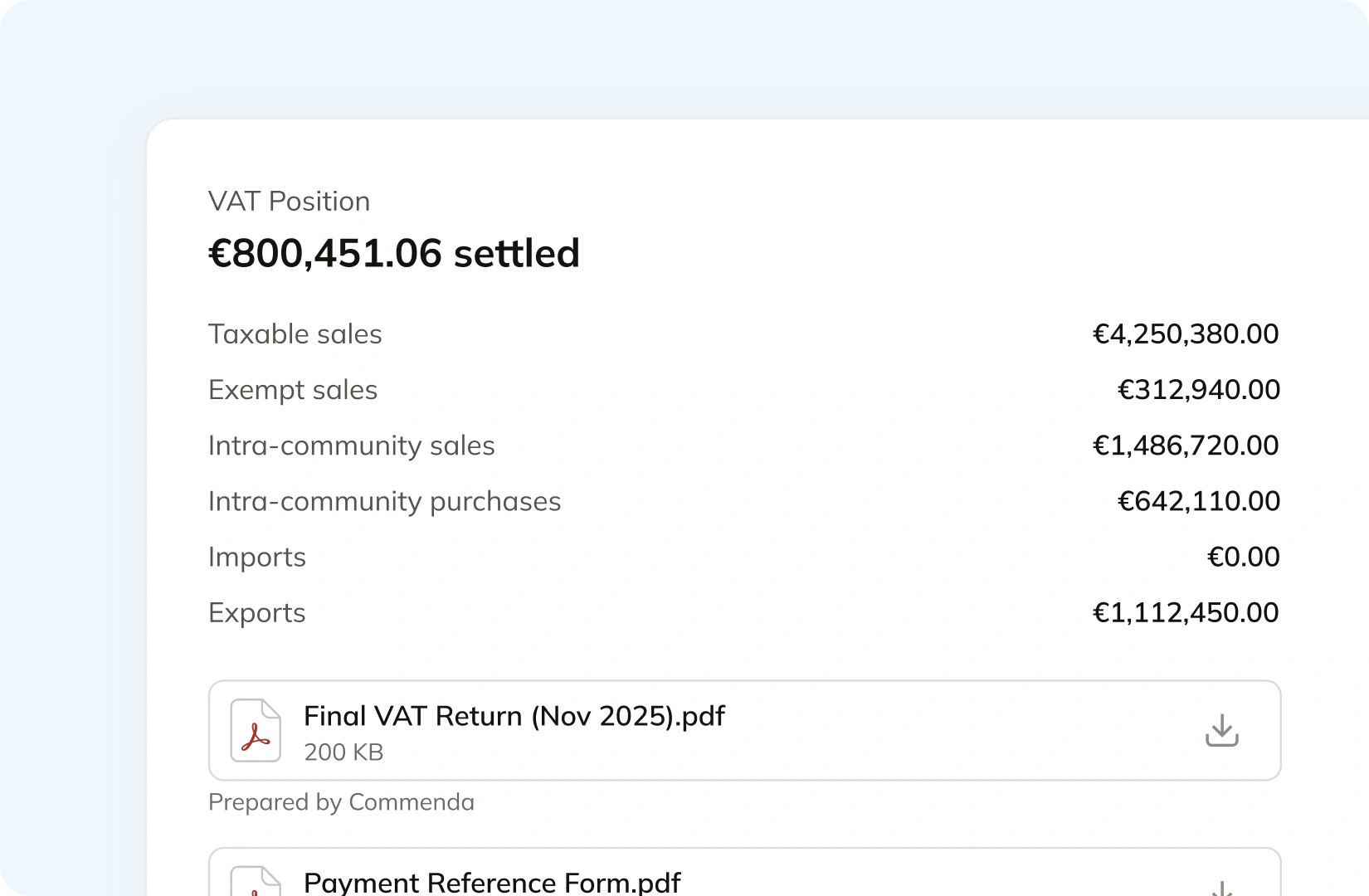
IFS builds the return, then hands it over. Its documented route to a tax authority is one UK scheme, and everything else leaves as a file for an external provider. Commenda builds the return from your IFS data and files it, across all 50 states plus EU VAT with OSS and GST in APAC and Canada, with amendments where a period needs correcting.
Manage your customers and exemptions in one place
IFS gives a delivery address a tax exempt field, and its documentation says that field was added for an Italian VAT case. A US manufacturing or resale exemption is a document your customer sends you, valid in some states and not others. Commenda collects them through a branded portal, validates each one on upload, applies it where valid, and chases expiries.
Consolidation
Why IFS Cloud does not know your total exposure
IFS runs businesses that manufacture, service and manage complex assets. Those businesses create taxable events that a storefront never does: a service visit, a rental, a part shipped from a hub. Commenda measures all of them.
IFS gives you a tax framework, and the rates are somebody else's job
IFS states that VAT and sales tax are not differentiated and that the user controls the basic data setup for retrieving tax information. For the United States it goes further and names the answer: its documentation covers login parameters for external tax systems like Vertex and Avalara, which return the tax percentages for order and invoice lines. The framework is real. The rate content is a dependency.
Your technicians create tax obligations that no order line shows
A field service business sends people to customer sites, holds spare parts in regional hubs, and puts machines out on rent. In the United States each of those can create a filing obligation on its own, separately from anything you sold, because physical presence is its own nexus test. Many states also tax repair and installation labour differently from the part fitted during the same visit. That distinction lives in a tax code someone has to maintain.
22 country solutions, and the one you need for the US is not there
IFS ships localizations for 22 countries. Norway gets SAF-T and VAT return functionality, Denmark gets SAF-T, and the UK gets the Construction Industry Scheme. The United States is not on the list. Even where a submission path exists, IFS's Transfer to Tax Authority documentation names one supporting template, the UK Construction Industry Scheme, and notes that until the HMRC integration is completed the transfer status stays pending.
One ledger behind every plant, entity and channel
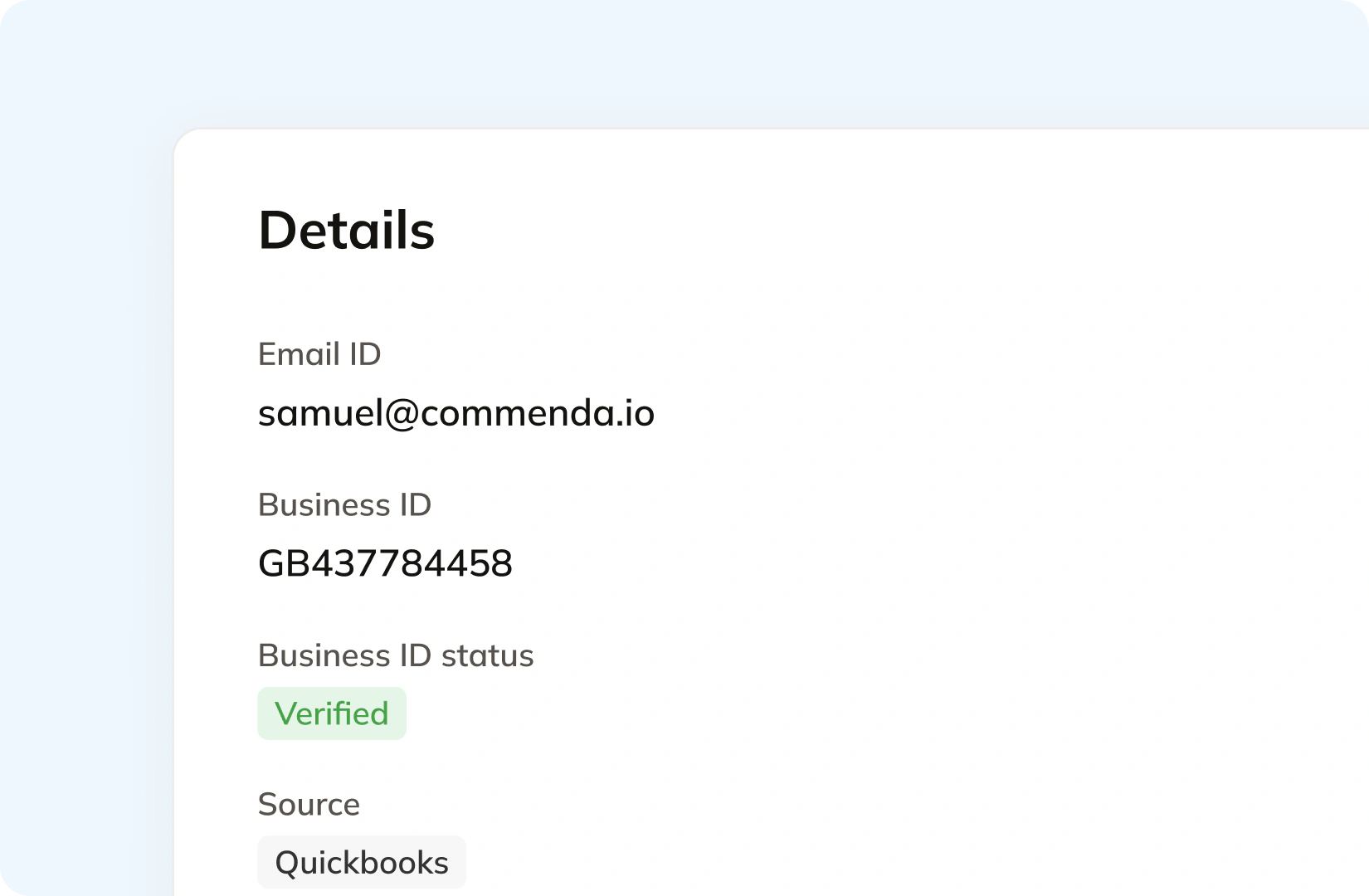
IFS says it operates in 90+ countries, and an asset-intensive business rarely runs one company in one of them. Every source connects to one ledger across 100+ supported integrations, and each transaction carries its origin, its product tax code, and any tax already collected. The result is one exposure figure per jurisdiction and one return per period, traceable back to the work order or invoice it came from.
What it takes
What global indirect tax takes in IFS Cloud
IFS publishes no list pricing, so there are no dollar figures here. What IFS does document, in detail, is what each capability depends on. Its tax framework covers VAT, sales tax, use tax and withholding. The rate content, the threshold monitoring and the filing are dependencies.
| What you need | What IFS Cloud requires | Source |
|---|---|---|
| US state and local sales tax rates | An external tax system. IFS documents login parameters for systems like Vertex and Avalara, which then return the tax percentages for order and invoice lines | External tax system parameters |
| The right rate on the right product | An external tax category per sales part, which IFS describes as categorising parts in Avalara or Vertex tax fetching logic for the US | External tax category |
| A US customer treated as exempt | An external tax use code passed out to Avalara or Vertex, where IFS says the rule marking a normally taxable customer exempt actually lives | External tax use code |
| State, county and city tax on one line | A tax calculation structure you build, one item per tax, each with its own base of net amount, selected other taxes, or both | Tax calculation structure |
| A rate that stays current | Your own basic data or your tax engine's. IFS states tax codes are created at company creation from the company template and can be added manually | IFS Tax Reporting |
| US state tax separated in reporting | A tax book per tax code and direction, and each combination can sit in only one book. IFS's own example is VAST, Virginia State Tax | Enter Tax Book |
| A localized statutory report | One of 22 country solutions. Norway covers SAF-T and VAT returns, Denmark covers SAF-T, and the UK covers the Construction Industry Scheme | Country solutions |
| A return sent to the tax authority from IFS | A tax template that supports authority integration, plus credentials on the tax office record. IFS documents this for the UK Construction Industry Scheme | Transfer to Tax Authority |
| Electronic tax reporting anywhere else | A generic JSON output pushed to an external service provider's endpoint, dropped on an FTP server, or downloaded to your own machine | Create Generic Tax Output |
| Use tax on goods you bought and consumed | Its own tax type, for supplier invoices when buying in a non-taxing state and shipping into a state that imposes the tax | Tax Control |
| Estimated tax on a purchase order | Default tax codes on the supplier or your delivery address. IFS treats purchase order taxes as estimated until invoiced and paid | Sales and Use Taxes, Procurement |
| Selling from several countries in one company | A tax rule per combination of supplying site country and customer address, plus a tax ID number per country and a tax class per sales item | Tax handling in EU sales |
US state and local sales tax rates
An external tax system. IFS documents login parameters for systems like Vertex and Avalara, which then return the tax percentages for order and invoice lines
External tax system parametersThe right rate on the right product
An external tax category per sales part, which IFS describes as categorising parts in Avalara or Vertex tax fetching logic for the US
External tax categoryA US customer treated as exempt
An external tax use code passed out to Avalara or Vertex, where IFS says the rule marking a normally taxable customer exempt actually lives
External tax use codeState, county and city tax on one line
A tax calculation structure you build, one item per tax, each with its own base of net amount, selected other taxes, or both
Tax calculation structureA rate that stays current
Your own basic data or your tax engine's. IFS states tax codes are created at company creation from the company template and can be added manually
IFS Tax ReportingUS state tax separated in reporting
A tax book per tax code and direction, and each combination can sit in only one book. IFS's own example is VAST, Virginia State Tax
Enter Tax BookA localized statutory report
One of 22 country solutions. Norway covers SAF-T and VAT returns, Denmark covers SAF-T, and the UK covers the Construction Industry Scheme
Country solutionsA return sent to the tax authority from IFS
A tax template that supports authority integration, plus credentials on the tax office record. IFS documents this for the UK Construction Industry Scheme
Transfer to Tax AuthorityElectronic tax reporting anywhere else
A generic JSON output pushed to an external service provider's endpoint, dropped on an FTP server, or downloaded to your own machine
Create Generic Tax OutputUse tax on goods you bought and consumed
Its own tax type, for supplier invoices when buying in a non-taxing state and shipping into a state that imposes the tax
Tax ControlEstimated tax on a purchase order
Default tax codes on the supplier or your delivery address. IFS treats purchase order taxes as estimated until invoiced and paid
Sales and Use Taxes, ProcurementSelling from several countries in one company
A tax rule per combination of supplying site country and customer address, plus a tax ID number per country and a tax class per sales item
Tax handling in EU sales
Figures verified on July 30, 2026.
From the field
Trusted by businesses across the globe


“The platform works exactly the way I need it to. I have one team member who manages all of our exemption certificates, and that functionality has been particularly efficient for us. It allows him to handle everything seamlessly, making the handoff significantly easier.”
VP of Finance, TRX






Compare Commenda sales tax software with competitors
IFS names Vertex and Avalara in its own documentation, so they are the incumbents on most IFS shortlists. We compare the alternatives on coverage, ratings, and real pricing, and we say where each one wins.
More sales tax resources
Guides from the Commenda team on manufacturing, rentals, and holding stock across borders.
Frequently asked questions
Custom integration support for your business
Every IFS Cloud instance is configured differently, and your tax codes, tax books and country setup exist for good reasons. We map how yours works, including service orders and rentals, and build the integration to match.
Indirect Tax
Monitor nexus exposure, register, file, and remit sales tax and VAT in one platform. Commenda keeps you compliant across 100+ jurisdictions.
Explore the product
