Sales tax and VAT software for Campfire
Campfire closes the month fast and books your tax liability cleanly. It does not set the rate, watch a state threshold, register you, or file a return, and its own integrations directory lists five vendors for that. Commenda is one of them and the rest of it too, across all 50 states and 80+ countries.
Trusted by global businesses

































One vendor instead of five options
Campfire lists five sales tax vendors in its Sales Tax integration category and leaves the choice to you. Commenda does calculation, exposure, registration and filing itself, so you pick once.
Know about a threshold before you cross it
Campfire does not track nexus. The word appears nowhere in its published API, and every mention on its site describes a partner capability. Commenda measures your Campfire invoices against thresholds in all 50 states and 80+ countries and tells you at 80%.
Campfire books the tax. We calculate and file it
In every Campfire tax integration the partner calculates, Campfire books the liability, and the partner remittance clears it. Commenda does the calculating, the registering and the filing, across all 50 states and 80+ countries.
Coverage comparison
What Campfire handles, and what it hands to a partner
Campfire routes tax to an integration rather than a module, so most rows below turn on which partner you picked. Its figures come from Campfire's own Anrok announcement, Avalara integration page, January 2026 product update, and core accounting page, checked on September 16, 2026.
Calculating tax on an invoice
- Campfire
- Through a partner. Campfire states that Anrok applies the rates to invoices created in Campfire
- Commenda
- Rates maintained per jurisdiction and applied per transaction
Booking the tax to the right account
- Campfire
- Handled, and handled well. A journal entry for tax payable by jurisdiction, cleared when the partner remits
- Commenda
- Calculated per transaction and reconciled against what you filed
Applying a rate without a partner
- Campfire
- Manual. Rates a person selects, applied in bulk across selected transactions
- Commenda
- Applied automatically, per jurisdiction and per product
Knowing where you owe
- Campfire
- Not handled. Nexus belongs to whichever of the five tax partners you pick
- Commenda
- Economic and physical thresholds in 50 states and 80+ countries, with alerts at 80%
Registrations for collecting tax
- Campfire
- Not handled. Registration happens in the partner's dashboard
- Commenda
- Permits in all 50 states, EU VAT with OSS and IOSS, and GST across APAC and Canada
Filing your US sales tax returns
- Campfire
- Not handled. The partner files, on its own subscription
- Commenda
- Filed in all 50 states, amendments included
Filing VAT and GST outside the US
- Campfire
- Not handled. International VAT is described as the partner engine's capability
- Commenda
- Filed across 80+ countries from one platform
Exemption certificates
- Campfire
- Not handled. Certificates live in the partner, and are tested in its sandbox
- Commenda
- Collected, validated, stored, and applied automatically where valid
Product and service taxability
- Campfire
- Not handled. Campfire stores the partner's tax code on the product and hands it over
- Commenda
- Applied per jurisdiction, per product, on every transaction
| Campfire |  | |
|---|---|---|
| Calculating tax on an invoice | Through a partner. Campfire states that Anrok applies the rates to invoices created in Campfire | Rates maintained per jurisdiction and applied per transaction |
| Booking the tax to the right account | Handled, and handled well. A journal entry for tax payable by jurisdiction, cleared when the partner remits | Calculated per transaction and reconciled against what you filed |
| Applying a rate without a partner | Manual. Rates a person selects, applied in bulk across selected transactions | Applied automatically, per jurisdiction and per product |
| Knowing where you owe | Not handled. Nexus belongs to whichever of the five tax partners you pick | Economic and physical thresholds in 50 states and 80+ countries, with alerts at 80% |
| Registrations for collecting tax | Not handled. Registration happens in the partner's dashboard | Permits in all 50 states, EU VAT with OSS and IOSS, and GST across APAC and Canada |
| Filing your US sales tax returns | Not handled. The partner files, on its own subscription | Filed in all 50 states, amendments included |
| Filing VAT and GST outside the US | Not handled. International VAT is described as the partner engine's capability | Filed across 80+ countries from one platform |
| Exemption certificates | Not handled. Certificates live in the partner, and are tested in its sandbox | Collected, validated, stored, and applied automatically where valid |
| Product and service taxability | Not handled. Campfire stores the partner's tax code on the product and hands it over | Applied per jurisdiction, per product, on every transaction |
Calculate tax on your Campfire invoices
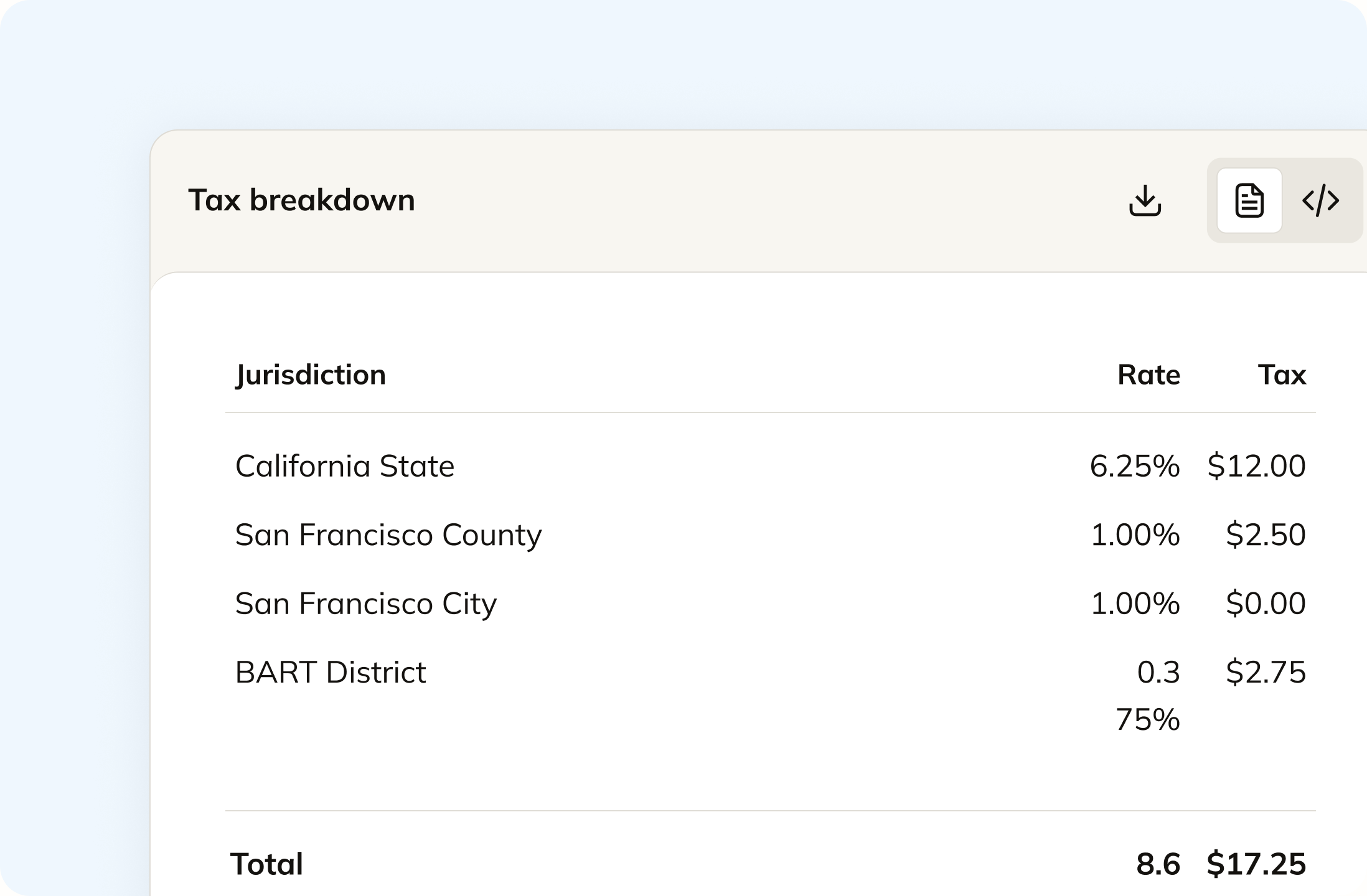
Campfire is clear about who does this. Its own announcement of the Anrok integration says the partner applies the correct rates to every invoice created in Campfire. Natively you get tax rates a person selects and can apply in bulk, which Campfire frames as useful when importing from systems that do not calculate tax automatically. Commenda holds the rate per jurisdiction and applies it per transaction.
Track your global exposure from Campfire
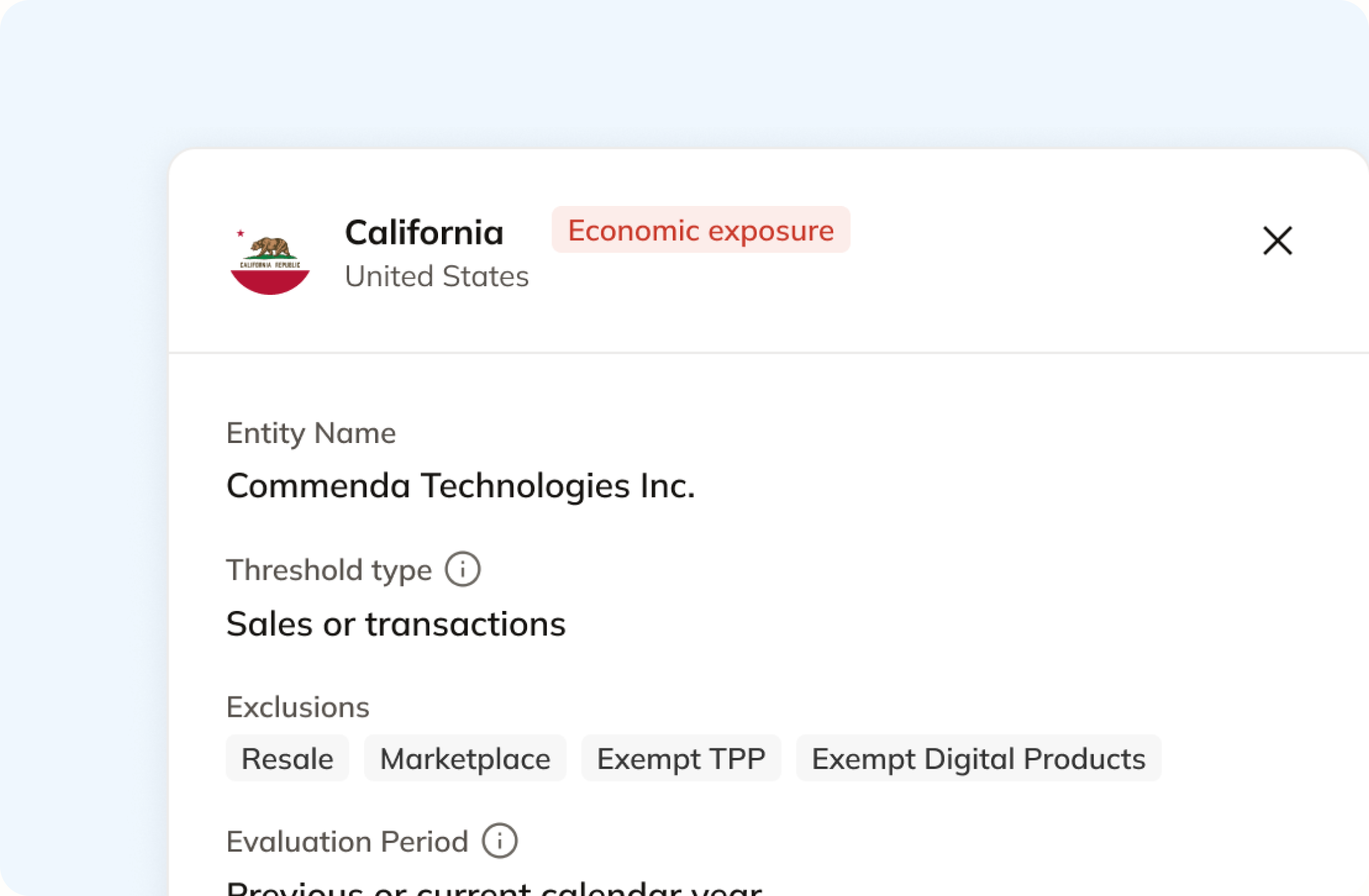
Campfire closes the month three to ten days faster, and none of that speed tells you which state your billing just created an obligation in. Commenda measures the same revenue against economic thresholds in all 50 states and 80+ countries and tells you at 80%, before you cross. A short questionnaire covers physical presence too, because an office or a remote employee never shows up on an invoice.
Register and file everywhere you owe
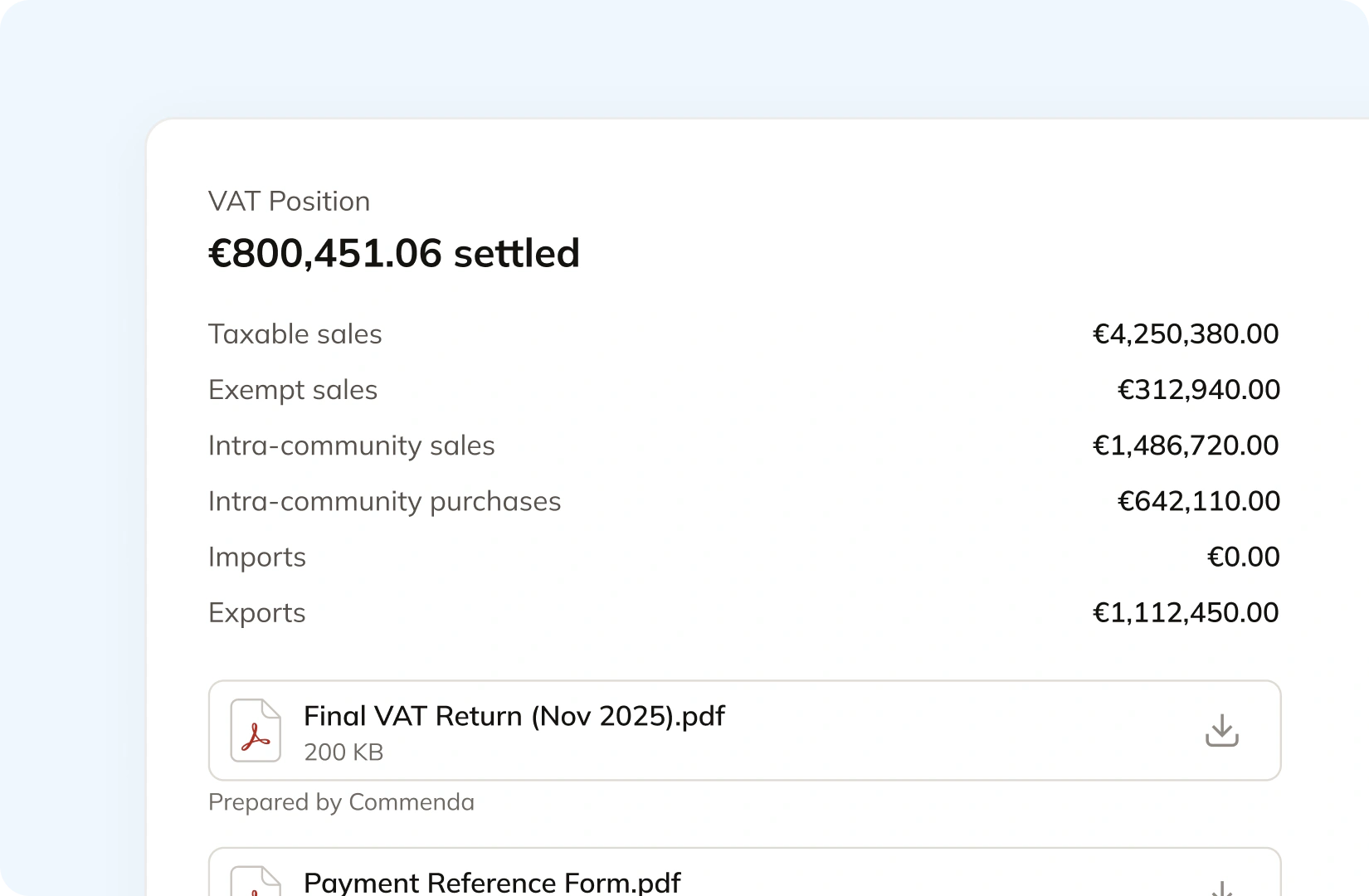
In every Campfire tax integration the pattern is identical. The partner calculates, Campfire creates the journal entry for tax payable by jurisdiction, and when the partner remits, that syncs back and clears the liability account. The booking is Campfire's. The registration, the return and the remittance are not. Commenda registers you in all 50 states, across EU VAT including OSS and IOSS, and for GST in APAC and Canada, then files on each jurisdiction's frequency.
Manage your customers and exemptions in one place
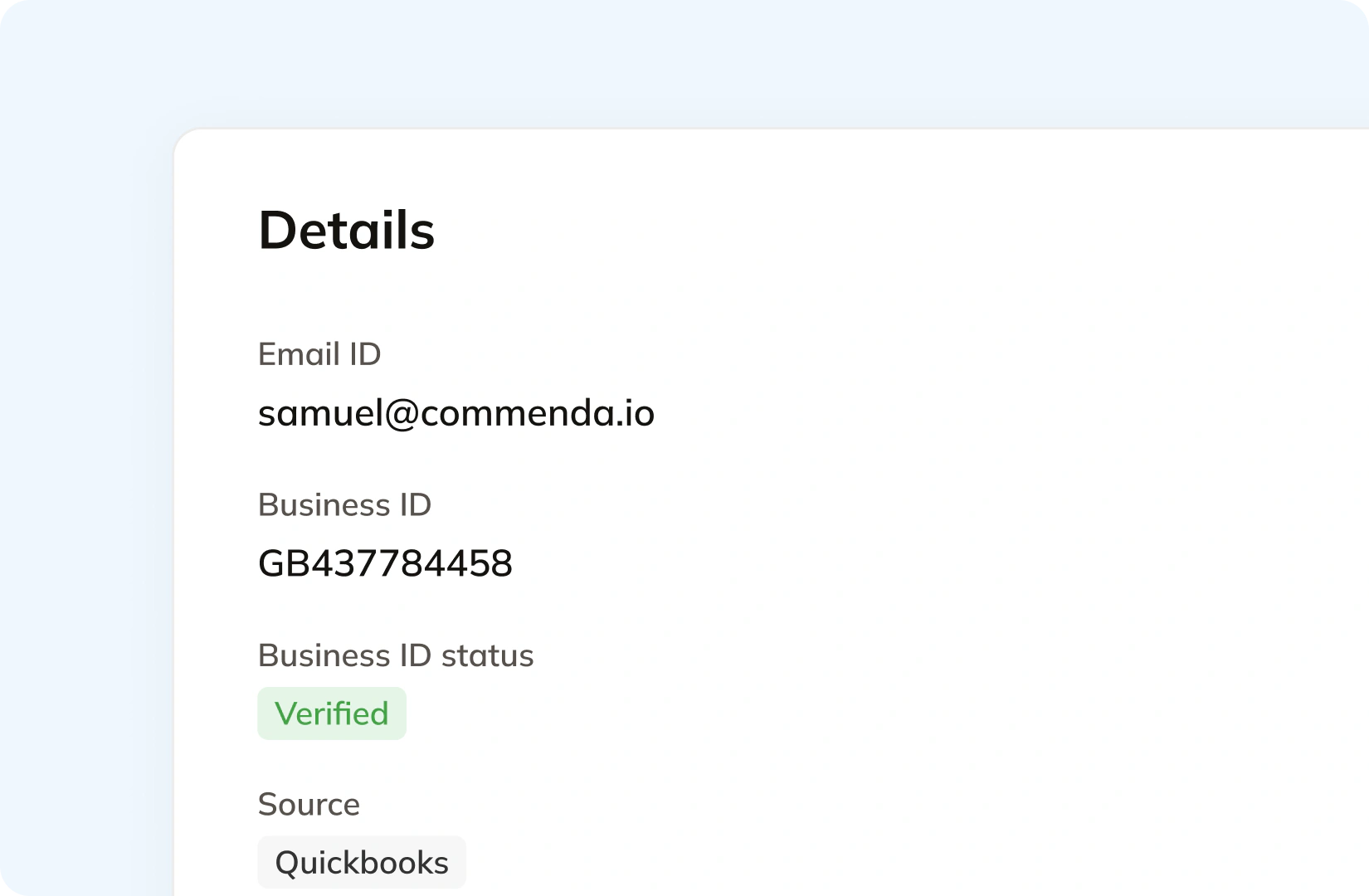
Campfire stores your partner's keys on its own records, including an Avalara tax code on each product and an Anrok customer ID on each invoice. Certificates themselves live in the partner. Commenda holds a verified tax ID on the customer record with the system it came from, and certificates work the same way: your customers upload through a portal, each one is validated on upload, and it applies automatically where it is valid.
Consolidation
Why the journal entry is not the whole job
Campfire closes the books fast and books tax liability properly while doing it. Indirect tax is a different job. It needs a rate for each jurisdiction, a threshold counted across every sales channel, a registration, and a return filed on each state and country schedule. Commenda does that work on top of your Campfire data.
Campfire treats tax as an integration, not a product
Campfire's product menu is core accounting, revenue automation, Ember AI, accounting intelligence, and implementation. Tax is not on it. Instead its integrations directory carries a Sales Tax category with five partners. That is a reasonable decision for an ERP to make. It also means picking the tax vendor was always going to be your job, and the ledger is neutral about which one.
Campfire books the tax a partner calculated
Every Campfire tax integration reads the same way. The partner calculates, Campfire creates the journal entry, and the partner's remittance clears the liability account. The accounting is clean. The tax decision, the registration and the return all happened somewhere else, on a separate subscription, with a separate support queue.
A tax partner only sees Campfire invoices
A partner connected to Campfire calculates on the invoices that pass through Campfire. Revenue from a marketplace, a reseller, an app store or a second billing system counts toward the same state threshold and none of it appears. Physical presence never appears on an invoice at all. One office or one remote employee creates an obligation with no revenue threshold to cross first.
One number per state, whatever it came through
Campfire is one of 100+ systems Commenda reads, and each transaction keeps its origin, its product tax code, and any tax already collected. An app store sale that was never yours to tax stays separate from a direct invoice that needs it. You get one exposure figure per state and one return per period.
What it requires
What Campfire hands to a tax partner
Every row below is Campfire describing its own role. Two are easy to miss. The rate on an invoice comes from the partner, and Campfire part of the filing cycle is the journal entry that the partner remittance later clears.
| What you need | What Campfire requires | Source |
|---|---|---|
| A rate applied to an invoice automatically | A tax partner. Campfire's own announcement states that Anrok applies the correct rates to every invoice created in Campfire | Campfire, Anrok integration |
| A rate applied without a partner | You, manually. January 2026 added bulk application of a sales tax or VAT rate across selected transactions, which Campfire frames as useful when importing from systems that do not calculate tax automatically | Campfire, January 2026 update |
| Tax on an invoice through the API | A number you supply. The documented line item field is a plain tax amount, with no address, jurisdiction or tax code in the request and no rate-lookup endpoint | Campfire developer docs |
| To know when you crossed a state threshold | The tax partner. Nexus appears nowhere in Campfire's published API schema, and multi-state nexus tracking is listed as an Anrok capability | Campfire, Anrok integration |
| A registration in a new state | The tax partner. Campfire's Anrok page describes registering in new jurisdictions from the Anrok dashboard, not from Campfire | Campfire, Anrok integration |
| A return filed and the money remitted | The tax partner. Campfire's role is the journal entry: the partner calculates, Campfire books the liability, and the partner's remittance syncs back to clear it | Campfire, Avalara integration |
| Exemption certificates kept and validated | The tax partner. Campfire describes validating exemption certificate flows in Avalara's sandbox, and resale exemptions as something applied through its Anrok integration | Campfire, August product update |
| Product taxability decided | The tax partner, from keys you map. Campfire stores an Avalara tax code on each product, giving SW052000 for SaaS as its example, plus Avalara and Anrok item IDs | Campfire, Avalara integration |
| A price you can compare before talking to anyone | A conversation. Campfire publishes no pricing page, and none appears in its sitemap | Campfire |
A rate applied to an invoice automatically
A tax partner. Campfire's own announcement states that Anrok applies the correct rates to every invoice created in Campfire
Campfire, Anrok integrationA rate applied without a partner
You, manually. January 2026 added bulk application of a sales tax or VAT rate across selected transactions, which Campfire frames as useful when importing from systems that do not calculate tax automatically
Campfire, January 2026 updateTax on an invoice through the API
A number you supply. The documented line item field is a plain tax amount, with no address, jurisdiction or tax code in the request and no rate-lookup endpoint
Campfire developer docsTo know when you crossed a state threshold
The tax partner. Nexus appears nowhere in Campfire's published API schema, and multi-state nexus tracking is listed as an Anrok capability
Campfire, Anrok integrationA registration in a new state
The tax partner. Campfire's Anrok page describes registering in new jurisdictions from the Anrok dashboard, not from Campfire
Campfire, Anrok integrationA return filed and the money remitted
The tax partner. Campfire's role is the journal entry: the partner calculates, Campfire books the liability, and the partner's remittance syncs back to clear it
Campfire, Avalara integrationExemption certificates kept and validated
The tax partner. Campfire describes validating exemption certificate flows in Avalara's sandbox, and resale exemptions as something applied through its Anrok integration
Campfire, August product updateProduct taxability decided
The tax partner, from keys you map. Campfire stores an Avalara tax code on each product, giving SW052000 for SaaS as its example, plus Avalara and Anrok item IDs
Campfire, Avalara integrationA price you can compare before talking to anyone
A conversation. Campfire publishes no pricing page, and none appears in its sitemap
Campfire
Figures verified on September 16, 2026.
From the field
Trusted by businesses across the globe


“The platform works exactly the way I need it to. I have one team member who manages all of our exemption certificates, and that functionality has been particularly efficient for us. It allows him to handle everything seamlessly, making the handoff significantly easier.”
VP of Finance, TRX






Compare Commenda sales tax software with competitors
Campfire lists five sales tax vendors and stays neutral between them. We compare the options on coverage and ratings, and say which buyer each one suits.
More sales tax resources
Guides from the Commenda team on nexus, permits, remittance, and switching vendors.
Frequently asked questions
Custom integration support for your business
Campfire setups differ in what feeds them. Some teams bill through Stripe, some through Chargebee or Orb, some raise invoices from Salesforce. We map how yours works, including which revenue arrived already taxed and which entities need VAT, and build the integration to match.
Indirect Tax
Monitor nexus exposure, register, file, and remit sales tax and VAT in one platform. Commenda keeps you compliant across 100+ jurisdictions.
Explore the product