Sales tax and VAT software for BlackLine
BlackLine runs the close, and its own guides cover comparing sales and use tax liabilities to payments. That proves the balance ties. It does not tell you where you owe, and it does not register or file. Commenda supplies the collected side, files across all 50 states and 70+ countries, and posts the confirmation back.
Trusted by global businesses

































Produce the figures you reconcile against
BlackLine reconciles the sales tax liability account and matches it to payments. Commenda produces the other side: what was collected per jurisdiction, what was filed, and the confirmation that it was remitted.
Monitor your global exposure
An unexplained balance in the liability account is often a state you never registered in. Commenda measures your revenue against thresholds in all 50 states and 70+ countries, and notifies you at 80% of one.
Register, file, and remit
Commenda gets the permits, files across all 50 states and 70+ countries, and posts the liability and the filing confirmation back to your ledger so the close works from a matched figure.
Coverage comparison
What BlackLine is scoped to do, and what sits outside it
BlackLine is close and reconciliation software, not a source of revenue transactions, so most rows below sit outside what it is built for and say so. Its figures come from BlackLine's pages on sales tax accruals, VAT accrual reconciliation, account reconciliations, transaction matching, and suspense and clearing accounts, checked on July 30, 2026.
Reconciling the sales tax liability account
- BlackLine
- Handled. Its own guide compares sales and use tax liabilities to payments
- Commenda
- Supplies the collected side at line level, per jurisdiction, per period
Reporting you can file from
- BlackLine
- Partly. Its words are reporting to assist with the filing by state
- Commenda
- The return itself, prepared and filed in all 50 states and 70+ countries
Calculating the tax in the first place
- BlackLine
- Not in scope. It works from general ledger and subsystem data
- Commenda
- Resolved from the ship-to address and the product tax code
Knowing where you owe
- BlackLine
- Not in scope. Unregistered revenue creates no balance to reconcile
- Commenda
- Economic and physical thresholds in 50 states and 70+ countries, with alerts at 80%
Registrations for collecting tax
- BlackLine
- Not in scope
- Commenda
- Permits in all 50 states, EU VAT with OSS and IOSS, and GST across APAC and Canada
Filing and remitting
- BlackLine
- Not in scope. It records the entry once you have paid
- Commenda
- Filed in all 50 states and 70+ countries, with remittance tracked per jurisdiction
Exemption certificates
- BlackLine
- Not in scope. No page on its site covers them
- Commenda
- Collected, validated, stored, and applied automatically where valid
| BlackLine |  | |
|---|---|---|
| Reconciling the sales tax liability account | Handled. Its own guide compares sales and use tax liabilities to payments | Supplies the collected side at line level, per jurisdiction, per period |
| Reporting you can file from | Partly. Its words are reporting to assist with the filing by state | The return itself, prepared and filed in all 50 states and 70+ countries |
| Calculating the tax in the first place | Not in scope. It works from general ledger and subsystem data | Resolved from the ship-to address and the product tax code |
| Knowing where you owe | Not in scope. Unregistered revenue creates no balance to reconcile | Economic and physical thresholds in 50 states and 70+ countries, with alerts at 80% |
| Registrations for collecting tax | Not in scope | Permits in all 50 states, EU VAT with OSS and IOSS, and GST across APAC and Canada |
| Filing and remitting | Not in scope. It records the entry once you have paid | Filed in all 50 states and 70+ countries, with remittance tracked per jurisdiction |
| Exemption certificates | Not in scope. No page on its site covers them | Collected, validated, stored, and applied automatically where valid |
Calculate taxes globally on BlackLine using Commenda
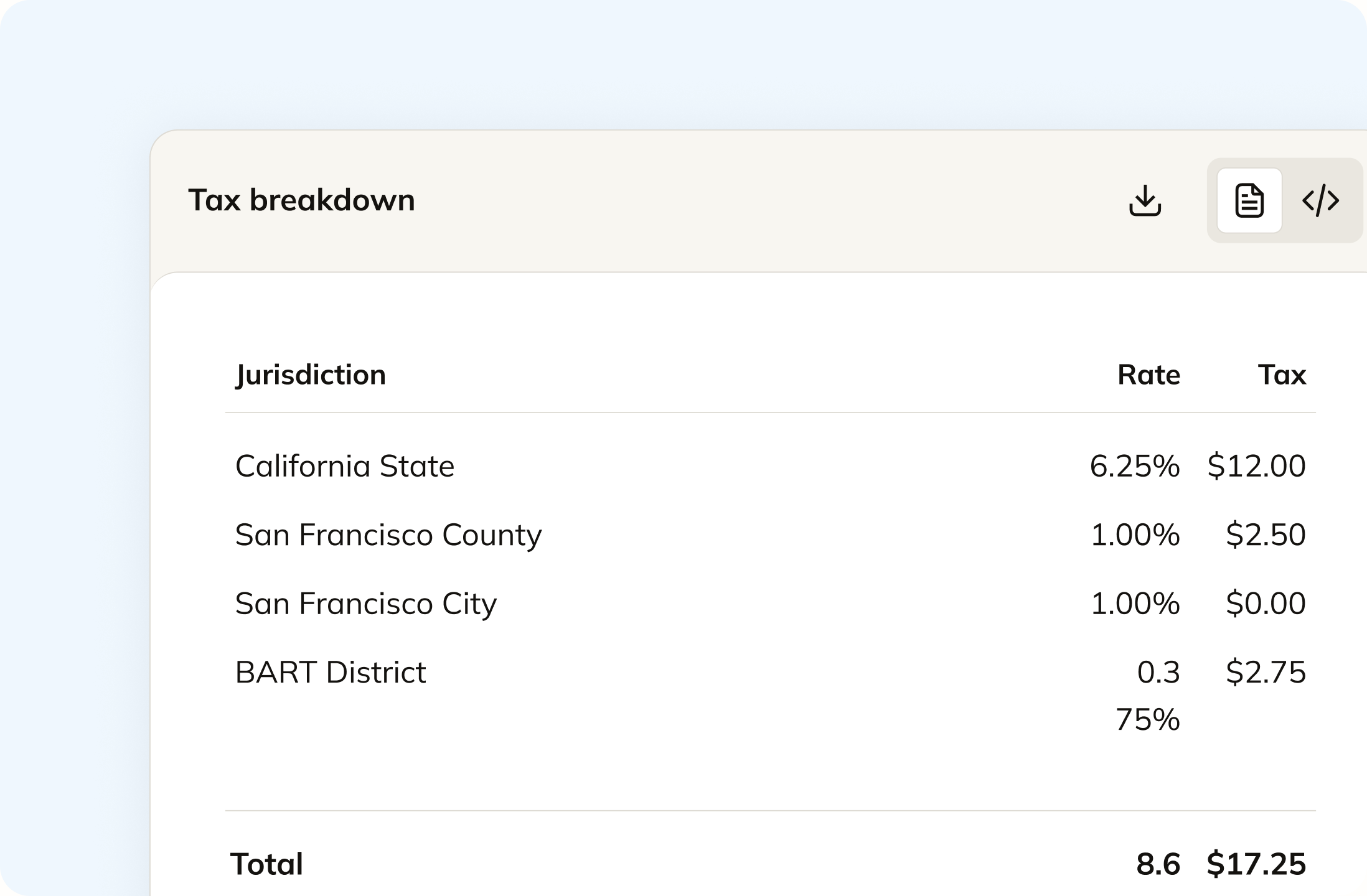
Reconciling a tax liability account needs a defensible figure for what was collected, per jurisdiction, per period. Commenda calculates state, county, city, and district rates from the ship-to address on every transaction and holds the result at line level. So the balance in the account has a transaction list behind it rather than a subledger total nobody can decompose.
Track your global exposure from BlackLine
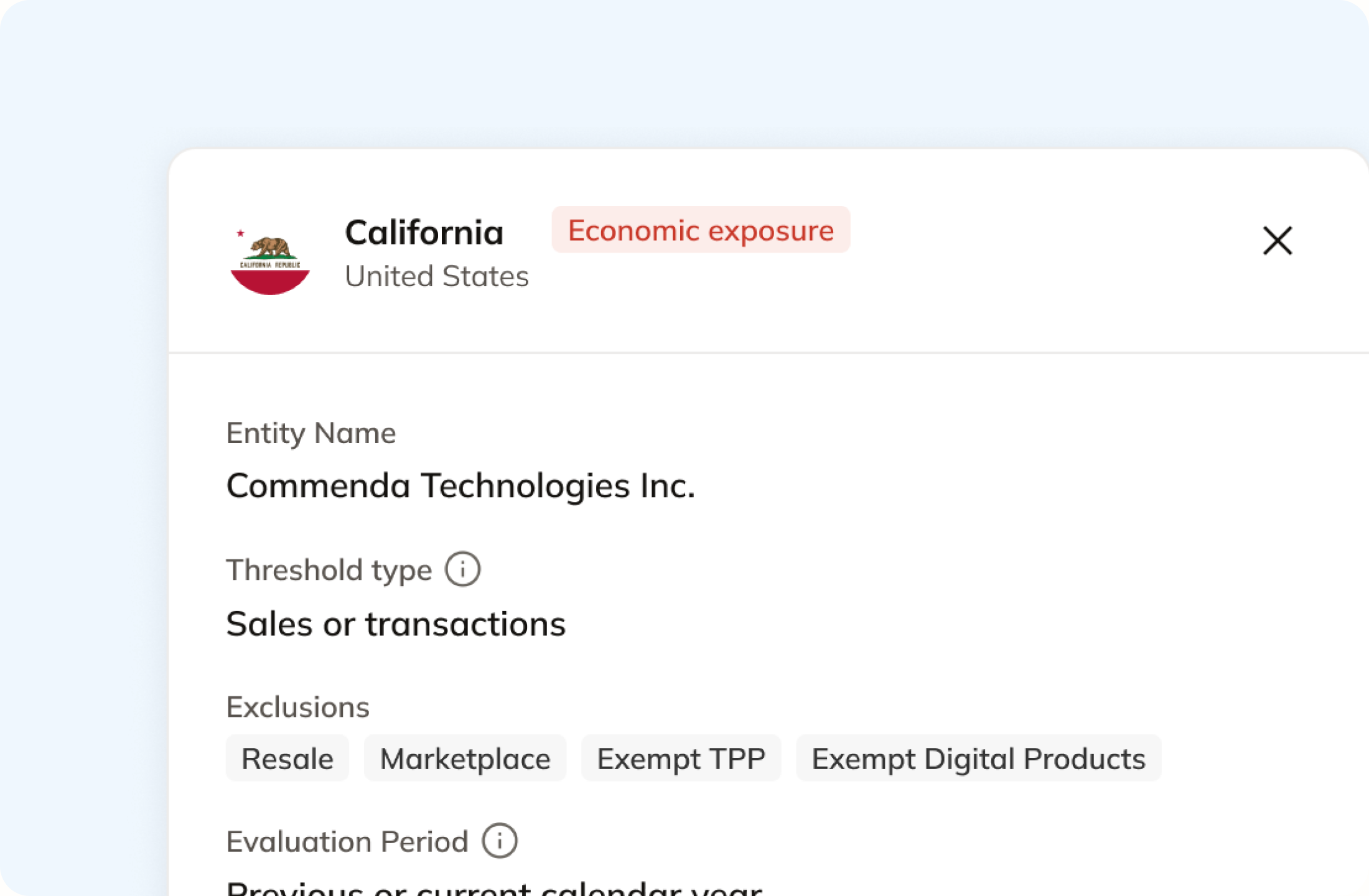
An account reconciliation proves the balance ties. It does not ask whether you should have been collecting in a state at all, because revenue in an unregistered state produces no liability to reconcile. Commenda measures the same revenue against economic and physical thresholds in all 50 states and 70+ countries, and tells you at 80%, before you cross. A short questionnaire covers physical presence too.
Automatically remit transactions around the world
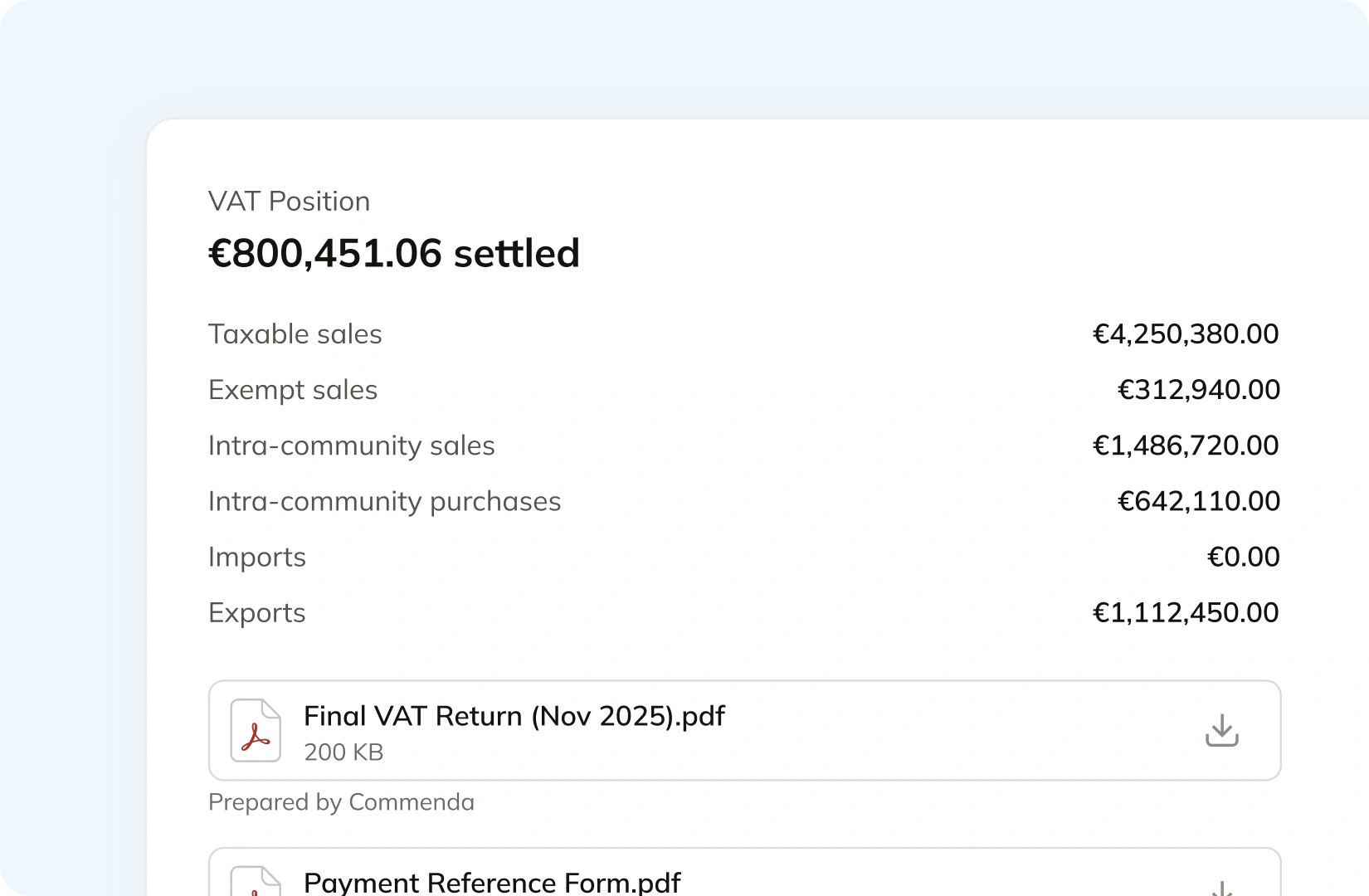
Commenda files across all 50 states on each state's required frequency, plus EU VAT with OSS and GST in APAC and Canada, with amendments where a period needs correcting. The liability and the filing confirmation post back to your ledger. That gives the close a remitted figure with a date against it, which is exactly what the collected side has to clear against.
Manage your customers and exemptions in one place
Exempt revenue is the part of a liability balance that is hardest to defend, because the certificate is the evidence and it usually lives in an inbox. Commenda collects certificates through a portal that can carry your branding, validates each one on upload, stores it against the customer, and applies it automatically in the states where it is valid. Expiries are tracked and chased.
Consolidation
Why the close cannot find your indirect tax exposure
A close platform proves the numbers in the ledger are right. Indirect tax exposure is a question about the numbers that never reached the ledger: revenue in a state you never registered in, a rate applied wrongly and consistently, an exempt sale with no certificate behind it.
A reconciled liability account is not a compliant one
BlackLine's own process guide describes customers using it to compare sales and use tax liabilities to payments and develop reporting to assist with the filing by state. That proves the balance ties to what you paid. It cannot prove you collected in the right places, at the right rate, from the right customers. Those are three different questions, and only the first one shows up in the close.
The balance that reconciles perfectly is often the one nobody owed
Tax collected in a state you never registered in sits in the liability account with nothing to remit it against. Tax not collected in a state you crossed the threshold in leaves no trace at all, because there is no accrual to reconcile. Thresholds start at $100,000 of sales in most states and some count exempt or marketplace sales toward them (thresholds state by state). Reading the transaction history finds both directions.
BlackLine reconciles what the ledger holds, and the ledger is downstream
BlackLine's suspense and clearing process imports detailed transactional data from your general ledger, and Transaction Matching ingests data from ERPs, banks, payroll, revenue, and procurement. If a storefront, a marketplace, and a billing platform posted to the ledger with tax logic that differed, the reconciliation inherits that. The tax has to be right before it is reconciled.
One ledger behind every channel
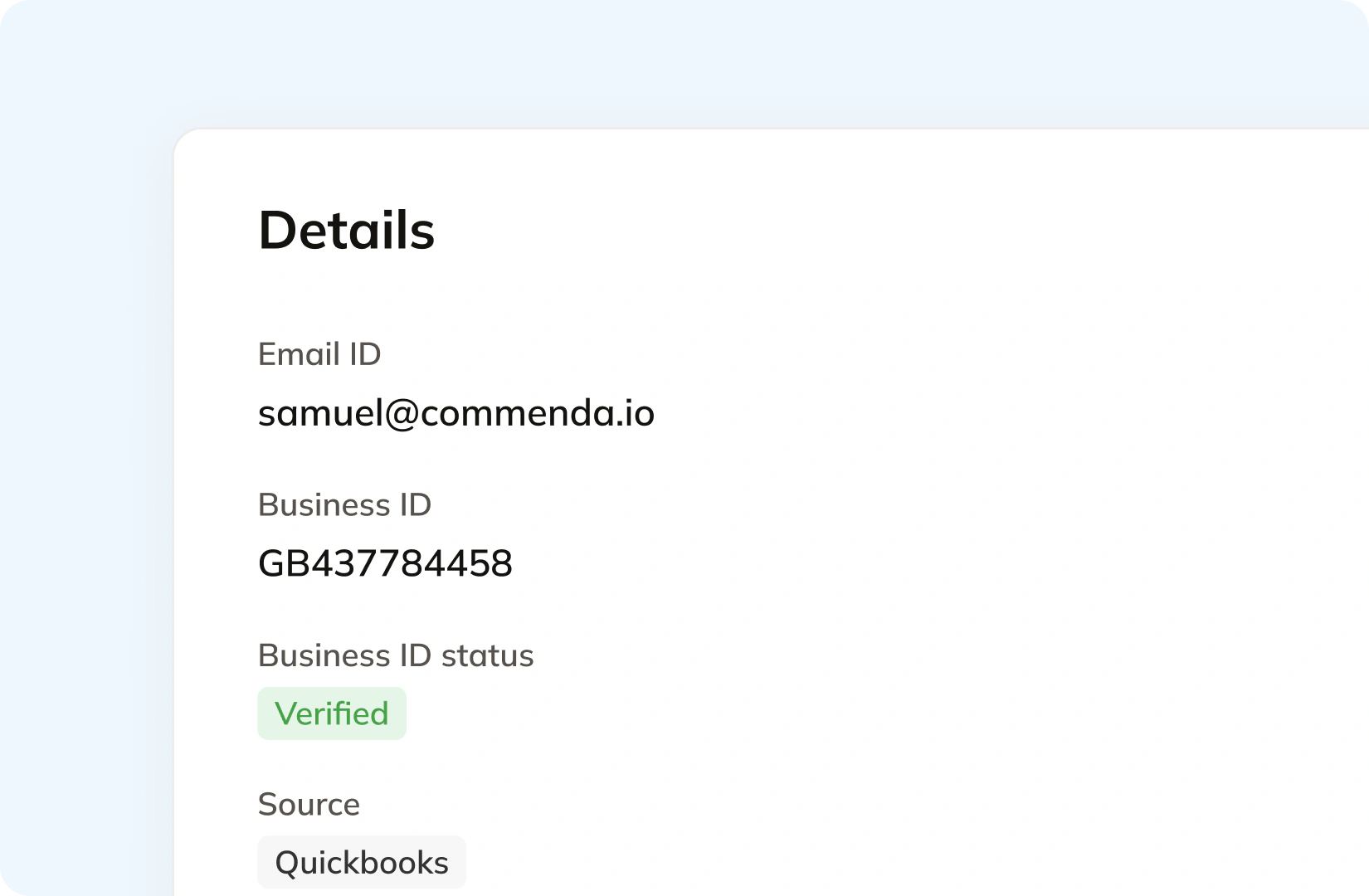
Every source connects to one ledger, across 100+ supported integrations. Each transaction carries its origin, product tax code, and any tax already collected, so marketplace revenue stays separate from revenue that still needs tax. The result is one exposure figure per state, one return per period, and a filing confirmation posted back for the close to clear against (how global indirect tax works at Commenda).
What it takes
What global indirect tax takes around BlackLine
BlackLine publishes no list pricing, so there are no dollar figures here. What its site does document is which part of the tax problem the close platform owns and which parts it needs from somewhere else. The first seven rows are BlackLine's. The last one is not, and it says so.
| What you need | Where it comes from | Source |
|---|---|---|
| Sales and use tax liabilities compared to payments | An Optimization Academy process. BlackLine describes customers using it to compare sales and use tax liabilities to payments and develop reporting to assist with the filing by state | Sales tax accruals |
| VAT reconciled to what was paid | A second Academy process, covering reconciling VAT with corresponding payments and recording any related FX | VAT accrual reconciliation |
| The transaction detail behind the balance | Detailed transactional data imported from your general ledger. BlackLine's suspense and clearing process starts by importing it and transforming it into a comparable format | Suspense and clearing |
| Collected versus remitted, matched automatically | Transaction Matching, which ingests transaction-level data from third-party systems including ERPs, banks, payroll providers, revenue, lease accounting, and procurement | Transaction Matching |
| The adjusting entry once the difference is explained | Journal Entry, which creates entries from reconciliation supporting items or raw data feeds and posts them directly to your ERP with an end-to-end audit trail | Journal Entry |
| Audit evidence for the balance | Compliance, which centralizes control documentation and attestation. BlackLine reports 50% less time spent on audits and 80% less time preparing compliance documentation | Compliance |
| Data from systems outside BlackLine | Studio360, its integration layer, using pre-built connectors and open APIs across BlackLine solutions, ERPs, and third-party systems | Studio360 |
| A registration, a return, or a remittance | Something else entirely. Across BlackLine's whole site, indirect tax appears on two Optimization Academy reconciliation guides and no page covers nexus, registration, or filing | Financial Close and Consolidation |
Sales and use tax liabilities compared to payments
An Optimization Academy process. BlackLine describes customers using it to compare sales and use tax liabilities to payments and develop reporting to assist with the filing by state
Sales tax accrualsVAT reconciled to what was paid
A second Academy process, covering reconciling VAT with corresponding payments and recording any related FX
VAT accrual reconciliationThe transaction detail behind the balance
Detailed transactional data imported from your general ledger. BlackLine's suspense and clearing process starts by importing it and transforming it into a comparable format
Suspense and clearingCollected versus remitted, matched automatically
Transaction Matching, which ingests transaction-level data from third-party systems including ERPs, banks, payroll providers, revenue, lease accounting, and procurement
Transaction MatchingThe adjusting entry once the difference is explained
Journal Entry, which creates entries from reconciliation supporting items or raw data feeds and posts them directly to your ERP with an end-to-end audit trail
Journal EntryAudit evidence for the balance
Compliance, which centralizes control documentation and attestation. BlackLine reports 50% less time spent on audits and 80% less time preparing compliance documentation
ComplianceData from systems outside BlackLine
Studio360, its integration layer, using pre-built connectors and open APIs across BlackLine solutions, ERPs, and third-party systems
Studio360A registration, a return, or a remittance
Something else entirely. Across BlackLine's whole site, indirect tax appears on two Optimization Academy reconciliation guides and no page covers nexus, registration, or filing
Financial Close and Consolidation
Figures verified on July 30, 2026.
From the field
Trusted by businesses across the globe


“The platform works exactly the way I need it to. I have one team member who manages all of our exemption certificates, and that functionality has been particularly efficient for us. It allows him to handle everything seamlessly, making the handoff significantly easier.”
VP of Finance, TRX






Compare Commenda sales tax software with competitors
Finance teams running BlackLine usually sit alongside an enterprise tax engine such as Sovos, Vertex, or Avalara. We compare the alternatives on coverage, ratings, and real pricing, and we say where each one wins.
More sales tax resources
Guides from the Commenda team on audits, remittance, and substantiating a liability.
Frequently asked questions
Custom integration support for your business
Close processes are built around the systems that feed them, and yours will be specific. We map where your tax data originates, what the liability account is made of today, and how the filing confirmation should land, then build the integration to match.
Indirect Tax
Monitor nexus exposure, register, file, and remit sales tax and VAT in one platform. Commenda keeps you compliant across 100+ jurisdictions.
Explore the product
