Sales tax and VAT software for Acumatica
Acumatica sends the UK VAT return straight to HMRC. For US jurisdiction rates, filed returns, and exemption certificates its own documentation points to Avalara or Vertex, each on a separate subscription. Commenda covers all of it from your Acumatica data, across all 50 states and 70+ countries.
Trusted by global businesses

































Calculate tax without building rate tables
Acumatica's instruction is to create every tax with its effective rate, then the zones and categories that decide when it applies. Commenda maintains the rate per jurisdiction and applies it per transaction.
Monitor your global exposure
A tax zone assumes you already know where you are registered. Commenda measures your Acumatica invoices against economic and physical thresholds in all 50 states and 70+ countries, and notifies you at 80%.
File in the US and 70+ countries
Acumatica submits the UK VAT return to HMRC. For US rates, filing, and certificates its own docs point to Avalara or Vertex, each on its own paid subscription. Commenda is one platform for all of it.
Coverage comparison
What Acumatica handles, and what it hands back
Acumatica ships one tax engine and documents two third-party providers on top, so most rows below turn on which of the three you are using. Its figures come from Acumatica's own 2026 R1 Taxes guide, Integrations guide, and its feature reference, all published on help.acumatica.com, plus its pricing page, checked on July 30, 2026.
Keeping US jurisdiction rates current
- Acumatica
- Not native. Its docs send you to Avalara or Vertex for up-to-date US rates
- Commenda
- Maintained per jurisdiction and applied per transaction, with nothing to configure
Knowing where you owe
- Acumatica
- Not handled. In Avalara you tick the states you already have nexus in
- Commenda
- Economic and physical thresholds in 50 states and 70+ countries, with alerts before you cross
Registrations for collecting tax
- Acumatica
- Not handled. A tax zone assumes the registration already exists
- Commenda
- Permits in all 50 states, EU VAT with OSS and IOSS, and GST across APAC and Canada
Filing your US sales tax returns
- Acumatica
- Not handled. Avalara files for each branch, on an Avalara subscription
- Commenda
- Filed in all 50 states, amendments included
Filing VAT and GST outside the US
- Acumatica
- Partly. It submits the UK VAT return to HMRC. Elsewhere you get a report to file
- Commenda
- Filed across 70+ countries from one platform
Remitting what you collected
- Acumatica
- Not handled. Releasing the report raises an AP bill you still have to pay
- Commenda
- Tracked per jurisdiction, every filing
Exemption certificates
- Acumatica
- Requested through Avalara's ECM service. Natively it is a zero-rated tax zone
- Commenda
- Collected, validated, stored, and applied automatically where valid
| Acumatica |  | |
|---|---|---|
| Keeping US jurisdiction rates current | Not native. Its docs send you to Avalara or Vertex for up-to-date US rates | Maintained per jurisdiction and applied per transaction, with nothing to configure |
| Knowing where you owe | Not handled. In Avalara you tick the states you already have nexus in | Economic and physical thresholds in 50 states and 70+ countries, with alerts before you cross |
| Registrations for collecting tax | Not handled. A tax zone assumes the registration already exists | Permits in all 50 states, EU VAT with OSS and IOSS, and GST across APAC and Canada |
| Filing your US sales tax returns | Not handled. Avalara files for each branch, on an Avalara subscription | Filed in all 50 states, amendments included |
| Filing VAT and GST outside the US | Partly. It submits the UK VAT return to HMRC. Elsewhere you get a report to file | Filed across 70+ countries from one platform |
| Remitting what you collected | Not handled. Releasing the report raises an AP bill you still have to pay | Tracked per jurisdiction, every filing |
| Exemption certificates | Requested through Avalara's ECM service. Natively it is a zero-rated tax zone | Collected, validated, stored, and applied automatically where valid |
Calculate taxes globally on Acumatica using Commenda
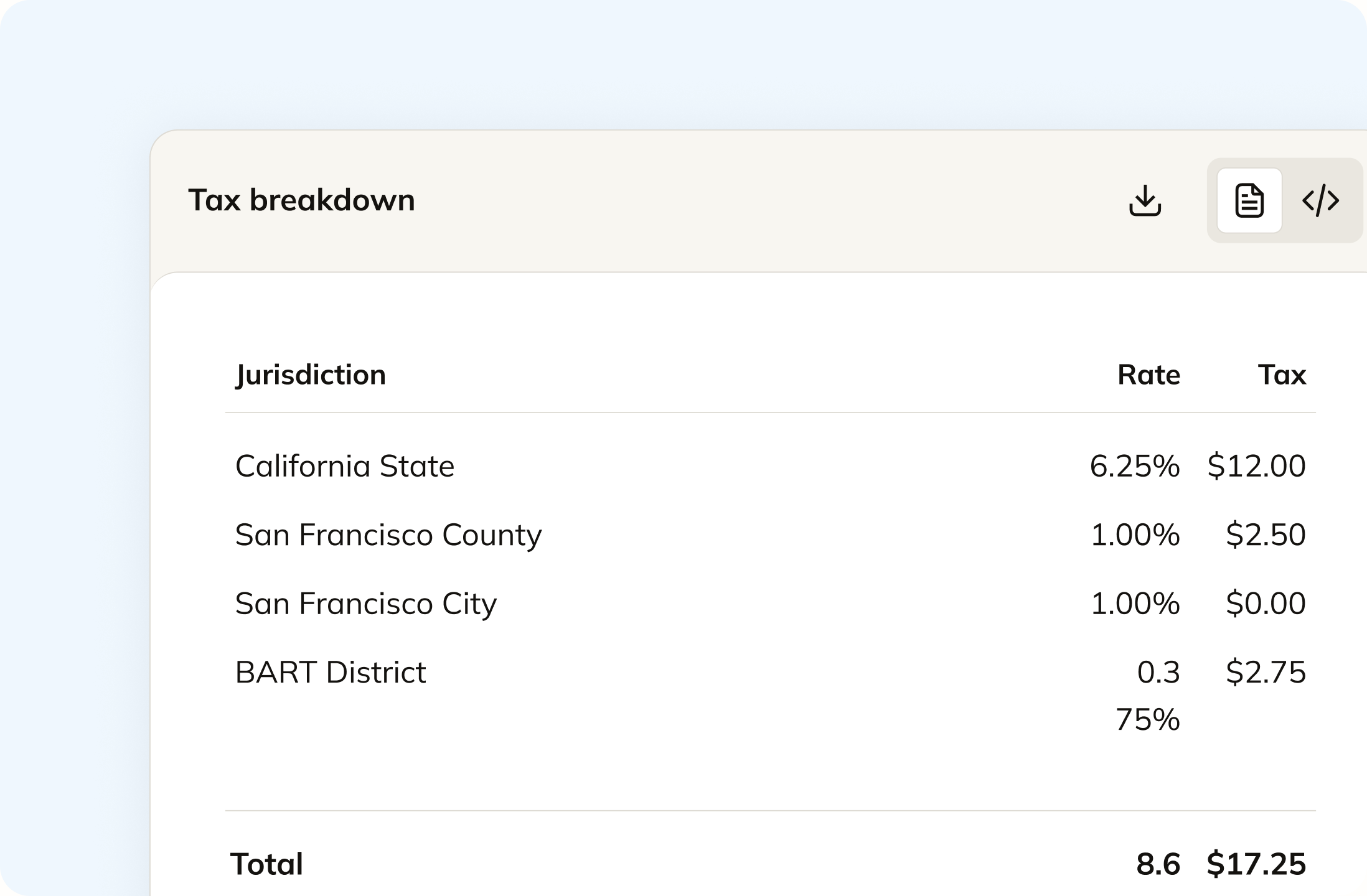
In Acumatica the tax that applies to a line is the one where the customer's tax zone meets the item's tax category, and you created both. Commenda works from the ship-to address instead, down to state, county, city, and special district. There is nothing to configure per jurisdiction, and nothing to update when a rate moves.
Track your global exposure from Acumatica
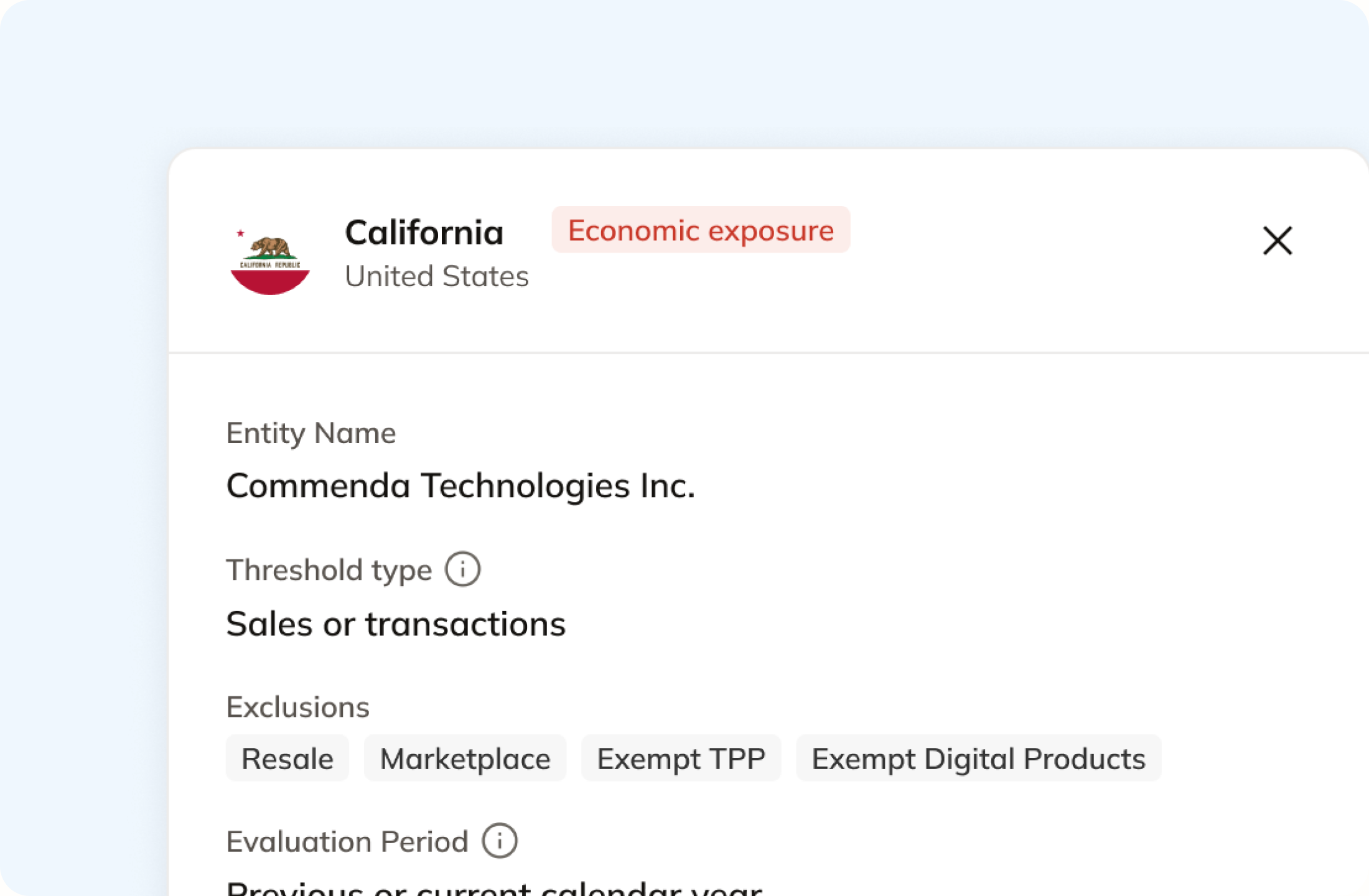
Nexus appears in Acumatica's docs only inside the Avalara chapter, where you tick the states you already have it in. Commenda reads the same invoices and measures them everywhere you sold, registered or not, in all 50 states and 70+ countries. Connecting Acumatica backfills your history, and alerts fire at 80% of a threshold.
Automatically remit transactions around the world
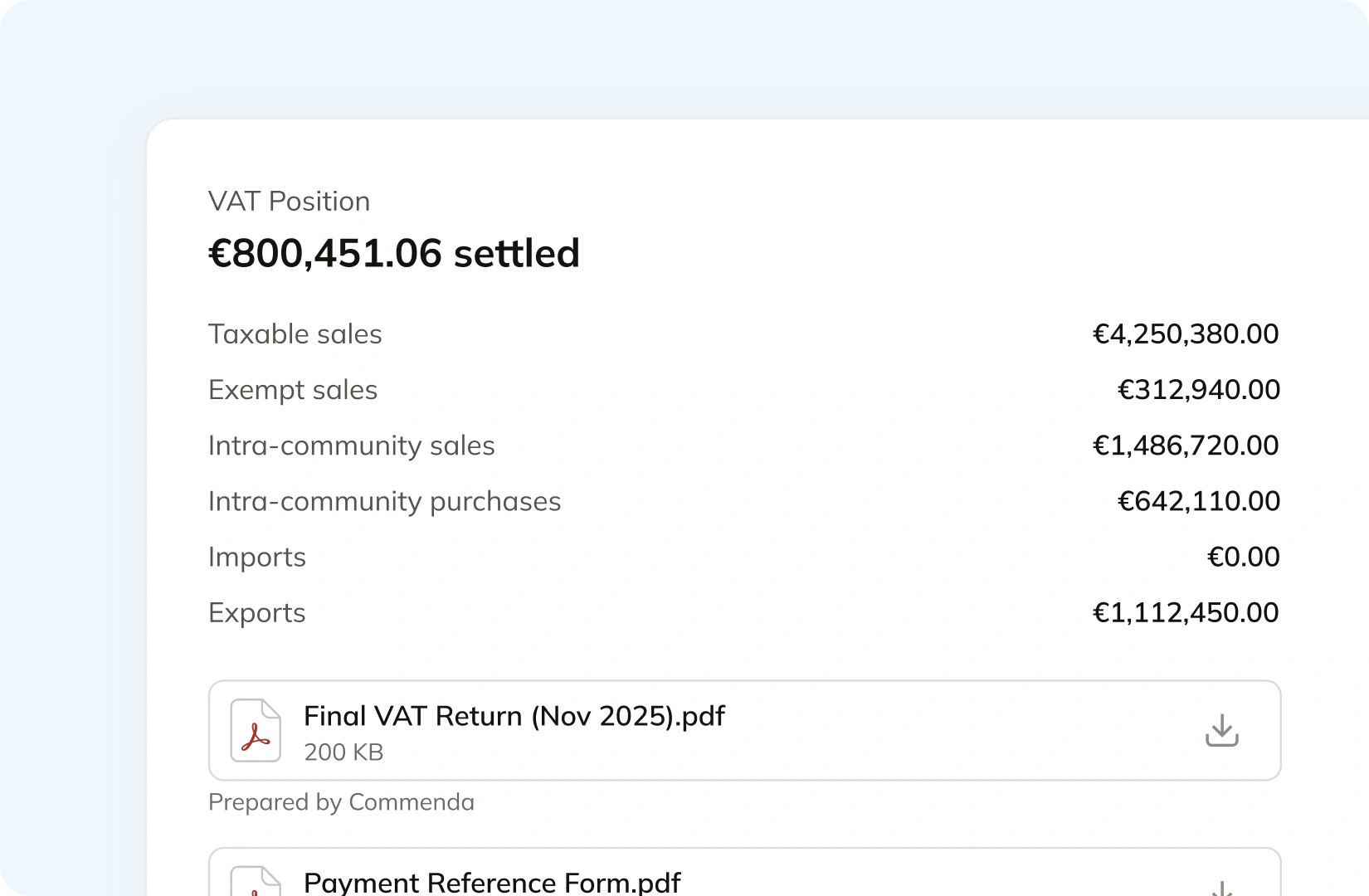
Releasing an Acumatica tax report closes the period and can generate an AP bill for the tax amount owed to the tax agency, which is a vendor you set up. Paying it is still your job. Commenda files across all 50 states on each state's own frequency, tracks remittance per jurisdiction, and files amendments. The liability and the confirmation post back.
Manage your customers and exemptions in one place
Acumatica can request certificates from customers and retrieve them, through Avalara's exemption certificate management service and the subscription behind it. Without that, a tax-exempt customer is a tax zone holding zero-rated taxes. Commenda collects certificates through a portal that can carry your branding, validates each at upload, applies them where valid, and chases expiries.
Consolidation
Why Acumatica does not know your total exposure
Acumatica runs the operation and calculates tax on the documents inside it. Filing one return means knowing which revenue arrived already taxed, which states you actually owe, and which registrations you are still carrying. Commenda solves that.
Acumatica already tells you that maintaining every rate does not scale
This is worth reading in Acumatica's own words. Its Vertex chapter opens by saying that if you sell many types of products in many tax jurisdictions, configuring tax calculation and reporting in Acumatica ERP and maintaining up-to-date rates for all the taxes may require too much work and time. Its answer is a third-party provider on a separate subscription. That is the decision this page is about.
A tax zone assumes you already know where you owe
Acumatica's tax zones hold the taxes of appropriate rates and attach to a customer or vendor location, and the tax that applies is the one where that zone meets the item's tax category. It is a good model for charging correctly in a state you have already registered in. Anything you sold into a state you never built a zone for is taxed at nothing and counted nowhere. Our nexus threshold guide has the current rule for each state.
Multi-entity helps the ledger more than it helps the filing
Acumatica runs an unlimited number of related companies in a single instance, with real-time exchange rates and consolidated statements, and it says the system supports use tax, VAT, and financial reporting requirements for select geographies. On the tax side you still prepare a report per branch, then close the period per company, and one HMRC connection can be used only once in the instance.
One ledger behind every source
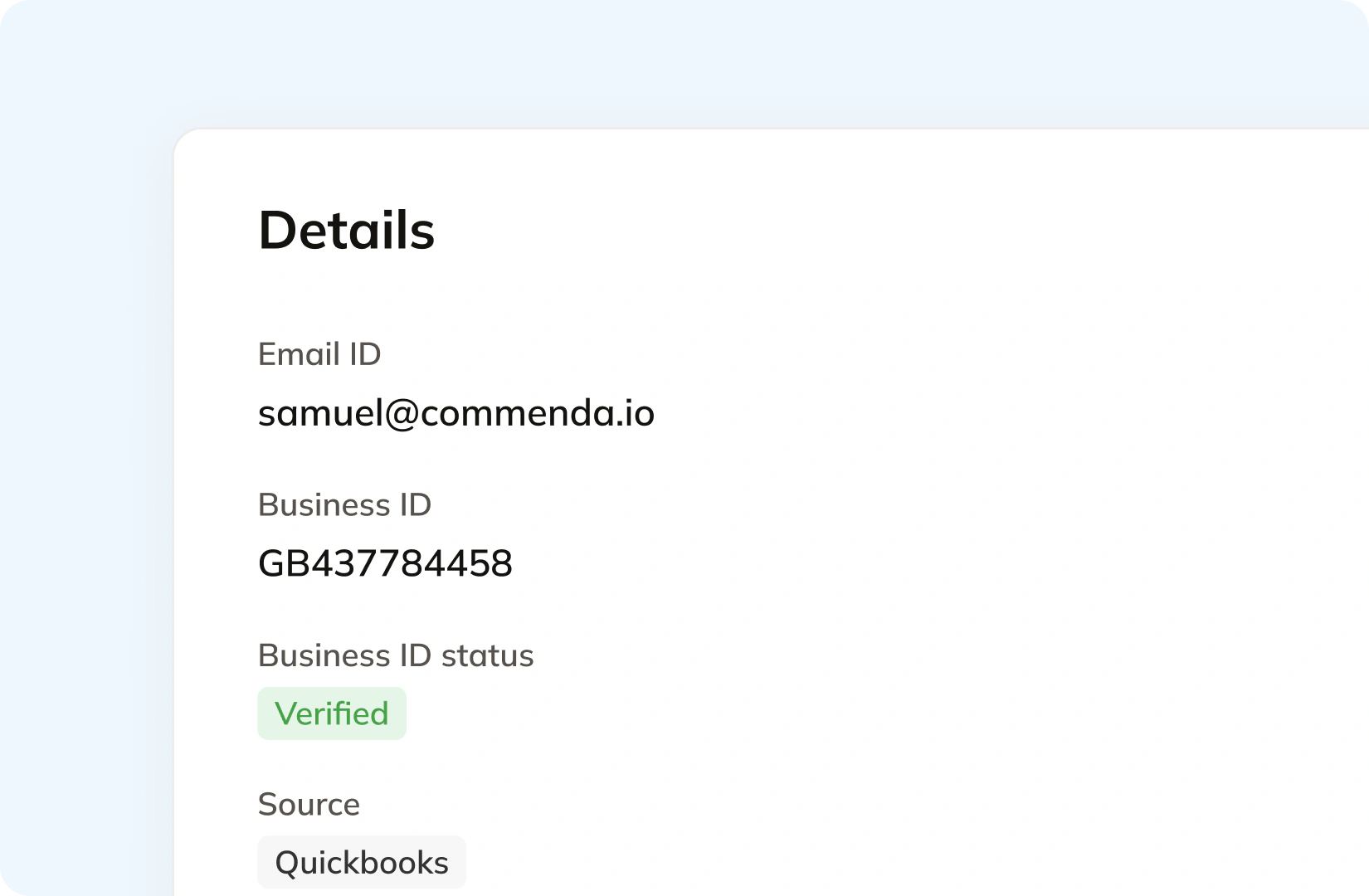
Acumatica is rarely the only place revenue lands. A storefront, a marketplace, and a billing platform all feed it, and tax a marketplace already collected is not yours to file again. Every source connects to one ledger, across 100+ supported integrations, and each transaction carries its origin and product tax code. One exposure figure per state, one return per period. See how Commenda global indirect tax fits together.
What it takes
What global indirect tax takes in Acumatica
Acumatica publishes no list price, so there are no dollar figures here. What its documentation does publish is where each capability lives: the tax you configure sits in the ERP, and US rates, filed returns, and certificates sit with Avalara or Vertex on a separate subscription.
| What you need | What Acumatica requires | Source |
|---|---|---|
| A price you can compare before talking to anyone | A partner conversation. Acumatica sets the price from the applications you implement, your expected usage and resource requirements, and your deployment choice, and publishes no list price | Acumatica pricing |
| A seat count to budget against | Not how it works. Acumatica states it does not charge by user, and sizes you on the load at peak, which for most customers is monthly commercial transactions. It is sold exclusively through partners | Acumatica SaaS FAQ |
| A tax rate inside Acumatica | You. Acumatica's instruction is to create all required taxes with their effective rates, along with the tax zones and tax categories that decide when each one applies | Taxes guide |
| US jurisdiction rates kept current | Avalara AvaTax or Vertex. Acumatica lists up-to-date rates for all US tax jurisdictions as a benefit of the AvaTax integration, and says maintaining them yourself may require too much work and time | Integrations guide |
| Either tax provider at all | A paid subscription to that provider. Acumatica requires a subscription to the AvaTax service or to the Vertex Tax service, and recommends AvaTax Pro for most companies | Integrations guide |
| US sales tax returns actually filed | Avalara. Acumatica lists filing of tax reports for each branch that reports separately under AvaTax's benefits, and it is absent from its own feature list | Integrations guide |
| Exemption certificates requested and kept current | Avalara's exemption certificate management service. Customers are added to the Avalara ECM account, and Acumatica retrieves, views, updates, and prints the certificates from there | Integrations guide |
| A VAT return sent to a tax authority | The UK Localization feature, an HMRC Making Tax Digital connection signed in through the Government Gateway, and a tax registration ID that is nine digits long with no letters | Taxes guide |
| MTD filing for a second UK entity | A second connection. Acumatica states an external application can be selected only once in the instance, on either the Companies or the Branches form | Taxes guide |
| A country localization | One of two. Canadian Localization and UK Localization are the only localization features in Acumatica's list, and the Canadian one adds EFT export, T5018 slips, and tax registration numbers, not a GST return | Acumatica ERP features |
| Changing an invoice after AvaTax has priced it | A new document. Acumatica states that once an invoice is committed in Avalara, a change to the date, address, or amount cannot be saved, and the invoice cannot be released | Integrations guide |
A price you can compare before talking to anyone
A partner conversation. Acumatica sets the price from the applications you implement, your expected usage and resource requirements, and your deployment choice, and publishes no list price
Acumatica pricingA seat count to budget against
Not how it works. Acumatica states it does not charge by user, and sizes you on the load at peak, which for most customers is monthly commercial transactions. It is sold exclusively through partners
Acumatica SaaS FAQA tax rate inside Acumatica
You. Acumatica's instruction is to create all required taxes with their effective rates, along with the tax zones and tax categories that decide when each one applies
Taxes guideUS jurisdiction rates kept current
Avalara AvaTax or Vertex. Acumatica lists up-to-date rates for all US tax jurisdictions as a benefit of the AvaTax integration, and says maintaining them yourself may require too much work and time
Integrations guideEither tax provider at all
A paid subscription to that provider. Acumatica requires a subscription to the AvaTax service or to the Vertex Tax service, and recommends AvaTax Pro for most companies
Integrations guideUS sales tax returns actually filed
Avalara. Acumatica lists filing of tax reports for each branch that reports separately under AvaTax's benefits, and it is absent from its own feature list
Integrations guideExemption certificates requested and kept current
Avalara's exemption certificate management service. Customers are added to the Avalara ECM account, and Acumatica retrieves, views, updates, and prints the certificates from there
Integrations guideA VAT return sent to a tax authority
The UK Localization feature, an HMRC Making Tax Digital connection signed in through the Government Gateway, and a tax registration ID that is nine digits long with no letters
Taxes guideMTD filing for a second UK entity
A second connection. Acumatica states an external application can be selected only once in the instance, on either the Companies or the Branches form
Taxes guideA country localization
One of two. Canadian Localization and UK Localization are the only localization features in Acumatica's list, and the Canadian one adds EFT export, T5018 slips, and tax registration numbers, not a GST return
Acumatica ERP featuresChanging an invoice after AvaTax has priced it
A new document. Acumatica states that once an invoice is committed in Avalara, a change to the date, address, or amount cannot be saved, and the invoice cannot be released
Integrations guide
Figures verified on July 30, 2026.
From the field
Trusted by businesses across the globe


“The platform works exactly the way I need it to. I have one team member who manages all of our exemption certificates, and that functionality has been particularly efficient for us. It allows him to handle everything seamlessly, making the handoff significantly easier.”
VP of Finance, TRX






Compare Commenda sales tax software with competitors
Acumatica documents built-in integrations with two tax providers, Avalara AvaTax and Vertex, and expects one of them for US sales tax at scale. If that is the decision in front of you, we compare the alternatives on coverage, ratings, and real pricing, and we say where each one wins.
More sales tax resources
Guides from the Commenda team on multi-state registration, deregistration, and audits.
Frequently asked questions
Custom integration support for your business
Every Acumatica instance is configured differently, from the tax zones and categories you built to the branches you file by. We map how yours works, including which revenue should be calculated and which arrived already taxed, and build the integration to match.
Indirect Tax
Monitor nexus exposure, register, file, and remit sales tax and VAT in one platform. Commenda keeps you compliant across 100+ jurisdictions.
Explore the product
