Blocked sales, delayed customs clearance, and steep fines are just a few consequences of skipping VAT registration in Thailand. For foreign companies selling into the Thai market, non-compliance can mean marketplace account suspension and even legal action. Partnering with experts like Commenda can help you understand these requirements without costly mistakes. In this Thailand VAT registration guide, let’s have a look at everything you need to get started with a compliant business.
Why Non-Resident Firms Must Register for VAT in Thailand?
VAT registration for non-resident businesses in Thailand is essential to avoid severe penalties, blocked marketplace sales, and customs holds that can disrupt business continuity.
When Does a Foreign Business Need to Register? Key Triggers
Foreign businesses must register for VAT online in Thailand under several scenarios, even without a local office. The key triggers for VAT registration in Thailand include:
- Holding Inventory in Thailand: Storing goods in a Thai warehouse or using third-party logistics providers (3PLs) requires VAT registration.
- Selling Goods to Thai Customers: Importing products and selling them locally, regardless of sales volume, mandates VAT registration.
- Providing Digital Services to Thai Consumers: Offering online services like streaming, e-books, or software to Thai consumers triggers VAT obligations.
- Selling via Marketplaces: Using platforms such as Lazada or Shopee to sell to Thai customers requires VAT registration.
- Participating in Trade Shows or Events: Selling products or services at exhibitions, trade fairs, or events in Thailand may necessitate VAT registration.
Country-Specific Examples
- Japan: A Japanese company storing goods in a Bangkok warehouse and delivering to Thai consumers must register for VAT.
- United States: A US-based SaaS provider offering subscription services to Thai customers must register for VAT under Thailand’s e-Service Tax rules.
Registration Thresholds & Nexus Tests
VAT registration for foreign companies in Thailand should be done immediately upon conducting taxable activities. There is no threshold (nil threshold) for foreign sellers. This means any foreign company making taxable supplies in Thailand must register for VAT from the first transaction.
Key considerations include:
- Digital Services: Foreign businesses providing electronic services to Thai consumers, such as SaaS, streaming, online courses, or app sales, must register for VAT regardless of turnover. Under Thailand’s e-Service Tax regime, a 7% VAT applies to these services.
- Low-Value Imports: For imported goods, VAT is applied at customs clearance, but if a foreign seller facilitates sales through a Thai marketplace or holds inventory locally, VAT registration becomes compulsory.
Thailand VAT Number Format Explained
Businesses are issued a Tax Identification Number (TIN) that also serves for VAT purposes. Understanding the correct structure is crucial to avoid compliance issues.
| VAT ID Type | Format | Explanation |
| VAT Number | 13 digits (e.g., 01055512234567) | Assigned by the Thai Revenue Department to businesses registered for VAT. The number typically starts with a prefix identifying the type of taxpayer, followed by the company registration code and a check digit. |
Is a Local Tax Agent or Fiscal Representative Required?
For non-resident tax registration in Thailand, it’s not legally required to appoint a local tax agent or fiscal representative. Foreign companies can register directly with the Thai Revenue Department. However, many choose to appoint a local agent to manage compliance, handle filings, and communicate with authorities, especially due to language and documentation requirements.
Special Schemes & Simplifications
Thailand offers certain schemes and simplifications to help businesses manage VAT obligations more efficiently, such as:
- Import-VAT Deferment: Thailand does not have a full deferment scheme, but businesses can use bonded warehouses or Free Trade Zones to suspend VAT on imports.
- Simplified E-Services Scheme: Foreign digital service providers can register under Thailand’s VAT on Electronic Services (VES) system, which offers an online registration and filing portal for non-residents.
- Small-Business Exemption: Available only to Thailand-based businesses with annual revenue under 1.8 million THB, so it does not apply to non-resident sellers.
Step-by-Step: How to Register for VAT in Thailand
Here is the step-by-step guide to register for VAT in Thailand:
1. Check Threshold: For non-resident sellers, Thailand applies a nil threshold, registration is required from the first taxable transaction.
2. Gather Documents: Prepare required documents, such as certificate of incorporation, articles, director passports/IDs, proof of business address, bank details, and more.
3. Create Tax-Portal Account & Complete the Form: Choose your path:
- Digital services (VES): Create an account on the Thai Revenue Department’s e-services portal and complete the non-resident electronic services VAT form.
- Goods/other supplies: Apply for standard VAT with the Thai Revenue Department.
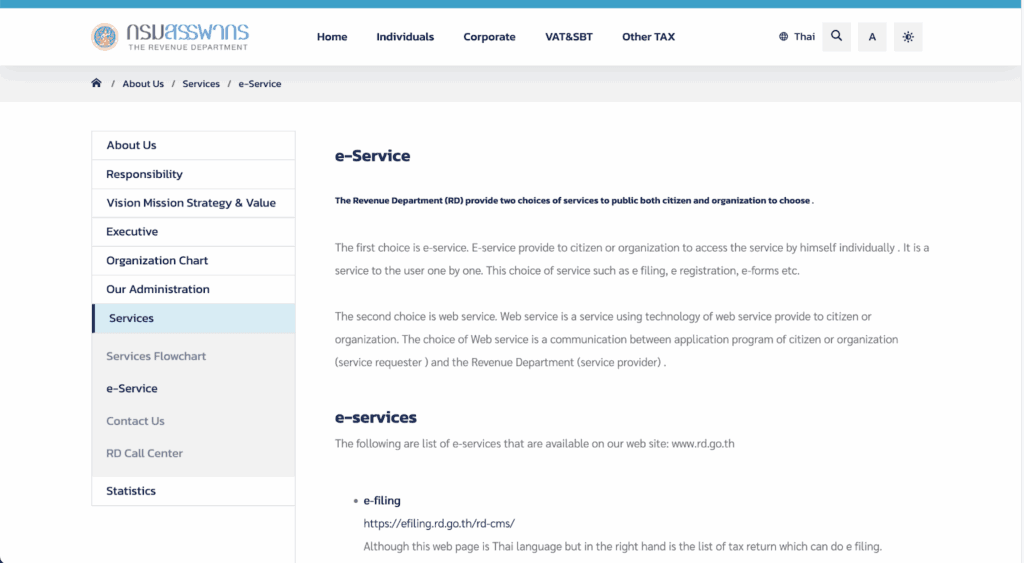
4. Upload Documents & Submit: Upload required IDs, corporate documents, POA (if any), and supporting contracts/invoices. Confirm declarations and submit the application. Keep a copy of the submission receipt/acknowledgment.
5. Pay Fee (If Required): Thailand typically does not charge a government fee for VAT registration; however, translation/notary or agent service fees may apply. If the portal requests payment (scheme-specific), settle it to finalize the filing.
6. Receive Tax ID: Upon approval, you’ll receive your 13-digit Thai Tax ID (for standard VAT) or a VES VAT ID (for electronic services). Save the certificate/letter and set up your e-filing and VAT return schedule.
Required Documents Checklist
When registering for VAT in Thailand, you will need to provide several key documents to complete your application. Gather the following before starting the registration process:
- Certificate of Incorporation: Proof of your company’s legal registration in the home country.
- Directors’ IDs/Passports: Identification documents for company directors and authorized signatories.
- Proof of Business Activity: Evidence such as invoices, contracts, or service descriptions to show taxable operations in Thailand.
- Bank Letter: Confirmation of your business bank account details (local account if applicable; not mandatory for e-service registration).
- Signed Power of Attorney (if agent): Authorization for a local tax agent or representative to act on your behalf in dealings with the Thai Revenue Department.
Processing Time & Government Fees
In Thailand, VAT registration for foreign businesses typically takes 2 to 4 weeks from the date of application submission, depending on document accuracy and whether the application is for standard VAT or the e-Service (VES) scheme.
- Processing Time:
- Standard VAT registration: Usually 3–4 weeks, as it may involve additional verification by the Area Revenue Office.
- VES (digital services): Often 1–2 weeks, since it is an online process with simplified checks.
- Government Fees: There is no official VAT registration fee in Thailand. However:
- Translation, notarization, and legalization of foreign documents may incur costs.
- If a local tax agent is appointed, service fees will apply (varies by provider).
Post-Registration Obligations
Once registered for VAT in Thailand, non-resident businesses must adhere to strict compliance rules:
- Filing Frequency: VAT returns are filed monthly by the 15th day of the following month. For non-resident e-service providers, the VES portal also requires monthly filing.
- Payment Deadlines: VAT payments are due on or before the filing deadline. Late filing or payment results in surcharges (1.5% per month) and penalties (up to 200% of VAT due in severe cases).
- Record-Keeping: Businesses must retain VAT records for at least 5 years, including invoices, contracts, VAT returns, and payment confirmations. For digital services, electronic records of transactions must be kept in an accessible format.
Claiming Input-Tax Credits & Refunds as a Non-Resident
Non-resident businesses registered for VAT in Thailand may be eligible to claim input VAT credits on business-related expenses or apply for refunds under certain conditions. Here’s how it works:
Eligibility
- Foreign businesses registered for VAT under Thailand’s standard VAT system can offset input VAT against output VAT on their monthly return.
- For digital service providers under VES, input tax credits are not allowed, as this scheme is simplified for non-residents.
- Non-resident businesses not registered for VAT cannot claim refunds under Thailand’s current rules.
Documentation Standards
- Original tax invoices issued by Thai VAT-registered suppliers.
- Proof of payment.
- Completed VAT return (for offsetting) or refund application form.
Refund Timelines
- Refunds can take 3–6 months, subject to Revenue Department review. Large claims or high-risk cases may take longer due to audit checks.
Penalties for Late Registration or Non-Compliance
Failing to register for VAT or comply with ongoing obligations in Thailand can result in severe financial and operational consequences. Below is a summary of common penalties:
- Interest on Late Payments: 1.5% per month (or part of a month) on unpaid VAT amounts, capped at the principal tax due.
- Import Blocks: Non-compliant businesses may face customs holds on imported goods until VAT issues are resolved.
Deregistration & VAT Number Changes
When your business no longer meets VAT registration requirements in Thailand or needs to update its VAT details, you must follow the proper procedure with the Thai Revenue Department.
When to Cancel
- Your business ceases taxable activities in Thailand.
- You no longer meet the criteria for non-resident VAT registration (e.g., stop selling to Thai customers).
- Your branch or local entity is closed or merged.
Deadline
- You must apply for deregistration within 15 days of becoming ineligible. Failure to do so can result in penalties.
Steps for Deregistration
- Prepare Documents: Proof of business closure or cessation of taxable activity, company registration documents, and the latest VAT return.
- Submit Application: File the form at the Area Revenue Office or online via the e-service portal.
- File Final VAT Return: Include all taxable transactions up to the deregistration date and account for VAT on any remaining assets.
- Pay Outstanding VAT: Settle any liabilities to avoid delays.
- Obtain Clearance Certificate: Issued once the Revenue Department confirms there are no outstanding obligations.
Updating or Merging VAT Numbers
- For changes in legal status, address, or business structure, submit an update request with supporting documents.
- If merging entities, apply for consolidation and cancel old VAT numbers as instructed by the Revenue Department.
Conclusion
Understanding VAT registration in Thailand is essential for any foreign business selling goods or providing digital services in the Thai market. From mandatory registration to ongoing compliance obligations, timely action is key to avoiding penalties, customs delays, and operational disruptions.
VAT compliance can be complex, especially for non-resident businesses, but Commenda makes it simple. Our team specializes in helping international companies register for VAT in Thailand, manage filings, and stay compliant with the Thai Revenue Department’s regulations.
Focus on expanding your business in Thailand while we handle your VAT obligations. Book a free demo with Commenda today and see how we can simplify your compliance journey!