






























Skip to content

Sales Tax Automation for Deltek Vision

Deltek Vision is an established ERP for professional services, architecture, engineering, and project-oriented companies -  particularly effective when it comes to handling project accounting, time capture, billing, and revenue recognition.

Integration connection between platform and Commenda

Trusted by global businesses

Storii
Mpl
Cloudsek
Razorpay
Assembled
WilsonLearning
GmLighting
Isochem
ProlongLash
Mystifly
Seismic
Fairs
Remote
PineLabs
Jhana
Avea
Wetstone
Pharmapac
Composio
LoulouLollipop
Passes
Aestus
Frex
Aspire
RifaAi
Skydo
Trx
Npw
Mojo
CleanAir
CoxLondon
SportsHeads
Skydesk

Why Sales Tax Compliance Breaks Down in Deltek Vision

Deltek Vision is proficient in administering contracts, projects, billing rules, and labor costs, yet it is not equipped to tackle the entire process of U.S. sales tax compliance. The common factors contributing to compliance issues for Vision users are:

  • The presence of tax logic imprinted in local settings calls for manual adjustments whenever there is a change in state or local rules.
  • Absence of a native economic nexus tracking that can help identify when registration requirements are triggered in different states.
  • Preparation and submission of state and local returns are done manually based on data exported from Vision and spreadsheets.
  • Lack of transparency regarding local (county/city) liabilities in comparison with enterprise roll-up reporting.
  • Dependence on spreadsheets for reconciliations, differences in assigning project billing lines to tax categories, and confusion over the location of exemption certificates.
  • Problems integrating transactions from other channels (e-commerce, marketplaces, field sales) with Vision billing for a unified compliance view.

Who This Sales Tax Integration Is Built For

The Deltek Vision sales tax integration is primarily designed for companies that require top-notch compliance but do not want to invest in extensive engineering. 

  • The primary users are professional services, architecture, engineering, and consulting firms that are using Deltek Vision for their project accounting and invoicing.
  • Moreover, it also targets businesses that sell goods or provide taxable services to several U.S. states at once.
  • And on top of that, it also benefits the finance, tax, and compliance teams, who take care of multi-state filings and are always ready for audits.
  • Companies with more than one cost center, branch, or legal entity that get their accounts merged in Vision will find it useful.
  • International companies and exporters that are entering the U.S. market and using Vision for their finance system will also be able to use this tax integration.
  • Shared services centers and accounting firms that support multiple Vision instances or clients will also benefit from the sales tax integration.

If you are expanding your business into new states, adding new taxable product lines, or unifying sales channels in Vision, an automated compliance layer will not only lessen manual work but also reduce liability.

Common Sales Tax Challenges for Deltek Vision Users

A typical controller or tax manager using Vision will face the following problems:

  • They will be missing registrations once they cross the economic nexus thresholds, especially for new states or new services that are put up for sale.
  • One of the problems will be that they end up having to manually reconcile their liability for state and local taxes that have been pulled from Vision into spreadsheets.
  • Another issue they will have to deal with is the mapping of complex project billing lines in Vision to consistent taxability categories across the various jurisdictions.
  • Yet another headache will be the management of exemption and resale certificates for diverse customer bases and jurisdictions.
  • Consolidating sales from external channels (marketplaces, e-commerce, POS) with Vision invoices to build accurate returns will also be one of the things that they will have to put up with.
  • One more thing they will have to do is to produce audit-ready supporting documentation that is linked to filed returns and source transactions.

An external automation layer takes over these tasks, collects the data from all different places, and makes accurate, auditable filings.

What Is Sales Tax Automation Software for Deltek Vision?

A tax automation for software is a specialized compliance engine exclusively connected to Deltek Vision that performs and manages the tax lifecycle parts that Vision was not created for. After connecting:

  • The latest laws of the state, county, and city are used to calculate sales tax per transaction down to the dollar or cent.
  • States with nexus only need to be registered once their thresholds are reached; registration alerts are sent beforehand as a matter of course.
  • Tax amounts by jurisdiction are totaled, and return submissions are prepared with the help of Vision transaction totals.
  • Filing, payment, and return storage are all linked to the originating Vision records and are done automatically.
  • All the documents you need in case of an audit- calculations, supporting transactions, and exemption certificates- are kept in one place.

This way, the precise financial records are transformed into compliance outputs in multiple jurisdictions without increasing the number of manual tasks.

How Commenda Integrates With Deltek Vision

Commenda works with Deltek Vision through the use of secure, configurable connectors and ETL workflows that reduce engineering requirements to a minimum:

  • Commenda gets invoices, credit memos, customer master records, shipping/billing addresses, item/service codes, and ledger adjustments from Vision.
  • Ready-to-use mapping templates match the Vision project and billing structures with tax categories in Commenda to make setup quicker.
  • Constant synchronization allows the new invoices or post-billing credits to flow into Commenda for recalculation, nexus evaluation, and filing preparation.
  • Usually, no heavy custom development is needed in implementation; a guided setup and mapping reduce the effort and keep Vision as the undisputed source of truth.

This configuration places the control of transactions in Vision while shifting tax complexity to Commenda’s tax engine.

Real-Time Sales Tax Calculation

Commenda determines the sales tax for each transaction. This is done by utilizing a comprehensive rulebase that is continuously getting updated. The parameters for the calculation are the following:

  • The location of the customer (shipping/billing) is used to find out the state and local authorities.
  • The taxability classifications of the product or service, which are derived from the Vision item’s, service’s, or revenue codes.
  • The rules for source versus destination and local special district levies.
  • Exemption certificates, the resale status, and other customer-level exceptions.
  • The time-stamped calculation rationale is stored against the Vision invoice reference.

A tax calculation record is created for every transaction which contains the reason for the tax outcome –  this is quite important for audits and defending disputes.

Economic Nexus Monitoring and Alerts

The economic nexus rules mean that businesses will have to register and collect sales tax once they cross the revenue or transaction thresholds; these thresholds vary by state and are subject to change over time. This is what Commenda’s vision of customer monitoring includes:

  • It combines gross sales and transaction counts by state and maintains a rolling window for each jurisdiction.
  • It gives alerts before and after the threshold, which means the tax teams can register proactively.
  • It looks back, estimates exposure, and quantifies future tax payments and filings as if the threshold had been breached in the past.
  • It keeps track of registration statuses, renewal deadlines, and compliance obligations all in one place.

The proactive nexus monitoring ensures that companies get their registrations done on time and, consequently, do not face retroactive liabilities or penalties.

Automated Sales Tax Filing and Remittance

Commenda takes care of the whole filing process automatically by using transaction data sourced from Vision:

  • It summarizes the jurisdictional liabilities into totals ready for returns and also matches the adjustments made in Vision with the appropriate return lines.
  • Workflows of finance-grade reviews allow internal controls and carry out the variance review and approval process before they are submitted.
  • Commenda electronically files where the support exists, and in case e-filing is not available, prepares reconciled and print-ready returns.
  • When needed, Commenda arranges and pays states and localities, and records the payment confirmations back to the compliance dashboard (and optionally to Vision GL).
  • All the returns, remittance receipts, and filing correspondence are linked to the originating Vision transactions, which makes them ready for audit.

This workflow makes it easier to keep track of deadlines and therefore less missed filings and manual compilation errors.

Centralized Compliance Dashboard

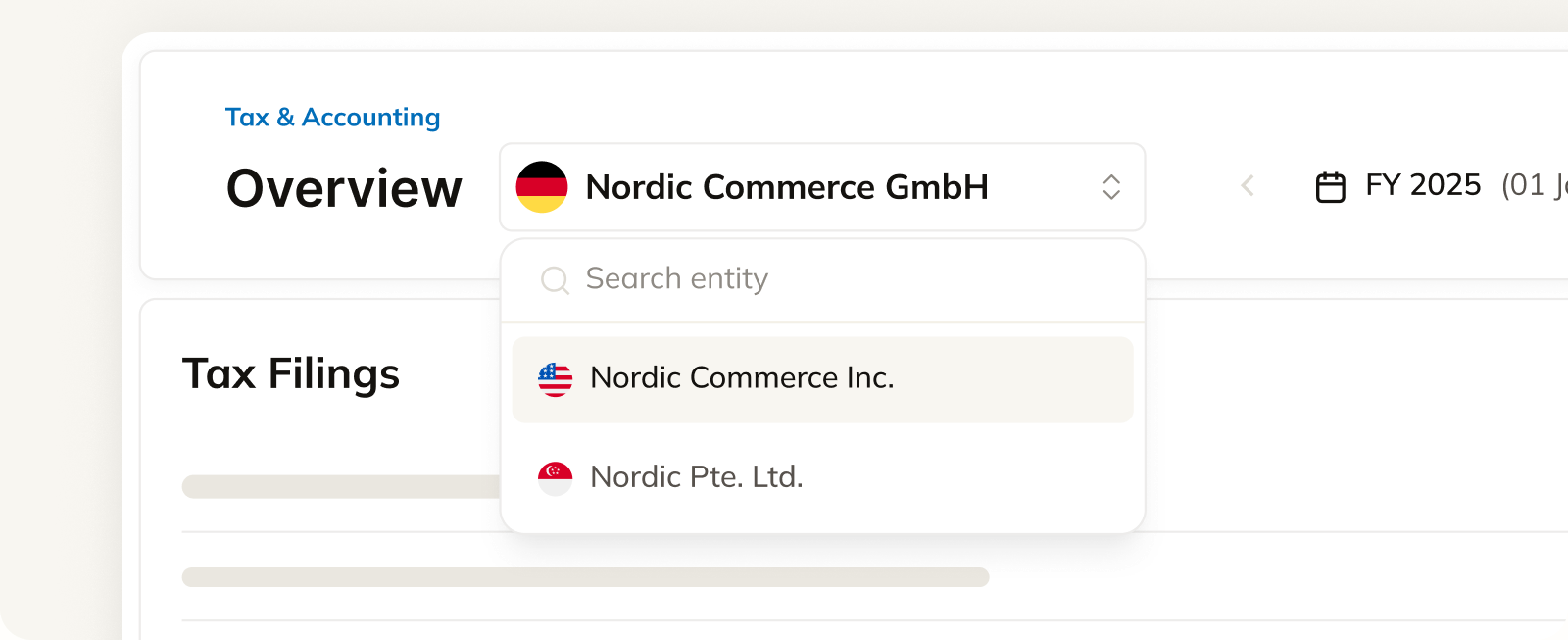
Commenda gives a comprehensive dashboard that extracts Vision tax data into one place:

  • Jurisdiction-by-jurisdiction current liabilities and unpaid filings view.
  • Filing calendars and upcoming deadlines for states, counties, and cities.
  • Archive of past returns, payment receipts, and supporting documents.
  • Nexus status per legal entity with alert history and remediation actions.
  • The capability of drilling through to the exact Vision invoice, project, or journal entry that created each liability.

This single source of information makes sauntering through the month-end close, audit responses, and executive reporting quite easy.

Multi-Entity and Multi-Channel Support

Deltek Vision is usually the one supporting complex organizational structures and external sales channels. Commenda’s approach is:

  • Liabilities of different legal entities are consolidated, or entity-level filings are prepared as required.
  • Sales from Vision’s non-Demand (marketplaces, e-commerce platforms, POS) channels are integrated so that all the taxable activities are directed to the same compliance model.
  • In the professional services and government contracting sectors, handling intercompany allocations, project-based tax treatments, and pass-through billing is quite common.

This capacity assures that compliance is uniform even in decentralized and multi-channel environments.

Time to Value and Ongoing Maintenance

Commenda is tailored for quick onboarding and low maintenance: 

  • Pre-built Vision mapping templates and guided onboarding reduce initial setup.
  • Regular updates for rates, rules, and taxability are managed by Commenda’s tax-rule engine-  your staff does not need to update rate tables manually.
  • Human review processes in the Exception-driven workflows highlight transactions that need to be reviewed (mixed shipments, unclear taxability, and strange discounts).
  • Most maintenance consists of exception handling; core rule and rate maintenance are taken care of by Commenda.

This means quicker ROI and less ongoing maintenance for your finance team.

Commenda vs. Generic Sales Tax Tools

Why finance-grade automation layer over basic plugins or spreadsheets?

  • All-in-one: Commenda takes care of calculation, continuous nexus monitoring, filing, remittance, and even audit records, not just point-of-sale tax computation.
  • Finance processes: built-in review, approvals, and full audit trails supported by accounting teams rather than ad-hoc exports.
  • Scalability: Commenda expands to include your state footprint, entities, and channels without increasing manual processes.
  • Preparedness for audit: all exemption certificates, nexus histories, and transaction-level support related to Vision are kept in one place.

An integrated automation platform gives the benefit of reducing reconciliation labor, lowering audit risk, and freeing tax staff to concentrate on exceptions and strategy over the period compared to spreadsheets or simple tax utilities.

Security, Accuracy, and Compliance Standards

Commenda adheres to security measures and operational controls that are of enterprise-level:

  • Secure APIs along with data encryption in transit and storage for transactional and tax records.
  • Role-based access, approval logs, and unchangeable audit trails for computations and submissions.
  • Constant updates and research on tax rules to adapt to changes in state and local legislation.
  • A unified storage for exemption certificates, nexus mitigation evidence, and submitted returns.

These measures not only uphold financial data’s confidentiality but also create strong, defensible compliance scenarios.

FAQs: Sales Tax Integration for Deltek Vision

Author

Sam Suechting

Sam Suechting

Head of Product, Commenda

Join hundreds of international
businesses growing fast
with Commenda