






























Why Sales Tax Compliance Breaks Down in Deltek Costpoint
Deltek Costpoint is superior in handling project costs, direct labor, and billing rules, but again, it is not fully equipped to manage the entire U.S. sales tax lifecycle. The compliance risk is mostly due to the following gaps:
- The tax logic remains static and is subject to manual updates at the time of state or local rules changes.
- There is no built-in economic nexus monitoring across states to detect registration obligations proactively.
- Manual preparation and submission of state and local sales tax returns.
- Limited visibility into liability at the county, city, and special-district level versus roll-up financial reporting.
- Spreadsheet-driven reconciliation and lack of standardized, audit-ready documentation.
- No central system to combine Costpoint transactional data with marketplace, POS, or ecommerce sales channels for consolidated compliance.
All these gaps lead to hard work, reconciliation mistakes, missed registrations, late filings, and possibly penalties as the companies expand across states.
Who This Sales Tax Integration Is Built For
The Deltek Costpoint sales tax integration is a solution for enterprises that require high-level sales tax automation:
- Deltek Costpoint’s government contractors and professional services companies for billing and project accounting.
- The companies that are selling in different U.S. states through direct business, resellers, or digital channels.
- Finance, tax, and compliance groups tasked with multi-state reporting and audit-response.
- Companies with a network of branches, cost centers, or legal entities sharing accounting in Costpoint.
- International companies and exporters who enter the U.S. market using Costpoint for financial consolidation.
- Accounting firms and shared service centers that assist numerous Costpoint environments or clients.
Should you be expanding revenue in multiple states, introducing new products, or integrating various sales channels into Costpoint, an integrated compliance system will minimize manual work and reduce the risk involved.
Common Sales Tax Challenges for Deltek Costpoint Users
The finance departments and controllers who handle sales tax through Costpoint often face the following issues:
- Not registering for sales tax when the business crosses state-specific economic nexus thresholds.
- Keeping track of liabilities manually in dozens of counties and cities, and reconciling them with Costpoint invoices.
- Classifying Costpoint billing lines with product taxability categories and ensuring that tax codes are synchronized.
- Managing exemptions and resale certificates for customers and jurisdictions.
- Integrating sales data from marketplaces, online stores, or sales representatives with Costpoint billing.
- Creating documents supporting audits for returns, and reconciling returns to Costpoint GL balances.
A layer of external automation does these tasks in a centralized manner and transforms disparate data into precise filings and ready-for-proof records.
What Is Sales Tax Automation Software for Deltek Costpoint?
The sales tax automation software is a compliance engine that forms a bridge with Deltek Costpoint and takes over the tax lifecycle parts that Costpoint wasn’t capable of. Upon connection:
- The engine computes sales tax at the transaction level based on the most recent state, county, and city regulations.
- It keeps track of economic nexus thresholds all the time and notifies about registration requirements.
- It collects liabilities by jurisdiction and generates returns based on Costpoint transaction totals.
- It processes filing submissions, payments, and keeps all filed returns and payment confirmations.
- It provides centralized, audit-ready documentation that supports the transactions and includes certificates and histories of nexus.
In a nutshell, automation transforms Costpoint’s financial record of one system only into tax compliance outputs of numerous jurisdictions.
How Commenda Integrates With Deltek Costpoint
Commenda integrates with Deltek Costpoint through secure API connectors and ETL workflows that are specifically aimed at minimizing configuration and avoiding heavy engineering lifts:
- Commenda receives invoices, credit notes, customer master records, shipping/billing addresses, product/service tax codes and adjustments directly from Costpoint.
- Pre-built mapping templates pair Costpoint AR lines and project billing structures with Commenda tax categories to cut down on setup time.
- The connector provides continuous data sync support, thereby ensuring that the new invoices or post-billing adjustments flow into Commenda for recalculation, nexus evaluation, and filing preparation.
- Typically, no custom Costpoint development is required; guided setup and mapping facilitate shorter implementation time and maintain Costpoint as the system of record.
The method is using Costpoint as the reliable source of transactional truth while passing tax complexity onto an automated engine.
Real-Time Sales Tax Calculation
Commenda uses the latest rule base for real-time sales tax calculations in Costpoint transactions. The logic for tax calculation takes into consideration:
- Customer location (both shipping and billing) which leads to the splitting of jurisdictions among the customers.
- The mapping of taxability of products/services (taxable, exempt, partially taxable) to Costpoint item or revenue codes.
- Where applicable, the origin vs. destination sourcing rules.
- The local surtaxes, district levies and special jurisdiction rules (for example, local use taxes or transient occupancy exceptions).
- The exemption certificates and resale status that are recorded at the customer level.
Each calculation is accompanied by a rationale and the evidence that has been timestamped, which is stored next to the Costpoint invoice reference, allowing audits to trace the computation back to the transaction.
Economic Nexus Monitoring and Alerts
Economic nexus obligations depend on time and are specific to states. Commenda checks Costpoint sales and transaction counts against the thresholds by:
- Summing up the gross sales and transaction counts by state on a rolling 12-month (or state-defined) basis.
- Providing pre-threshold and post-threshold alerts to finance and compliance teams so that registrations can be started up proactively.
- Calculating look-back liability and devising remediation plans if the thresholds were historically exceeded.
- Keeping track of registrations and renewal obligations to make sure that no deadlines are missed.
Proactive nexus monitoring changes a reactive compliance burden into a managed operational workflow, which results in reduced surprise liabilities and penalties.
Automated Sales Tax Filing and Remittance
Commenda takes care of the whole process of filing using data synchronized with Costpoint:
- It collects liabilities from different jurisdictions and calculates them into totals ready for returns. The adjustments and discounts made in Costpoint are also appropriately mapped to the tax return lines.
- Workflows of review that are of finance-grade quality allow for the internal approval and the reconciliation of variances before submission.
- The returns are submitted electronically in the jurisdictions that allow e-filing; Commenda prepares the reconciled return packages for submission, ready for jurisdictions that do not have electronic channels.
- If needed, Commenda can take care of scheduling the payments and remittance to the state or local tax authorities, recording the payments back into Costpoint AR/GL if that is desired.
- The filed returns, payment receipts, and correspondence are all stored in a central repository that is linked to the original Costpoint transactions and the filing batch for audit readiness.
This cuts down on missed deadlines, interest on late filing, and compilation of manual returns.
Centralized Compliance Dashboard
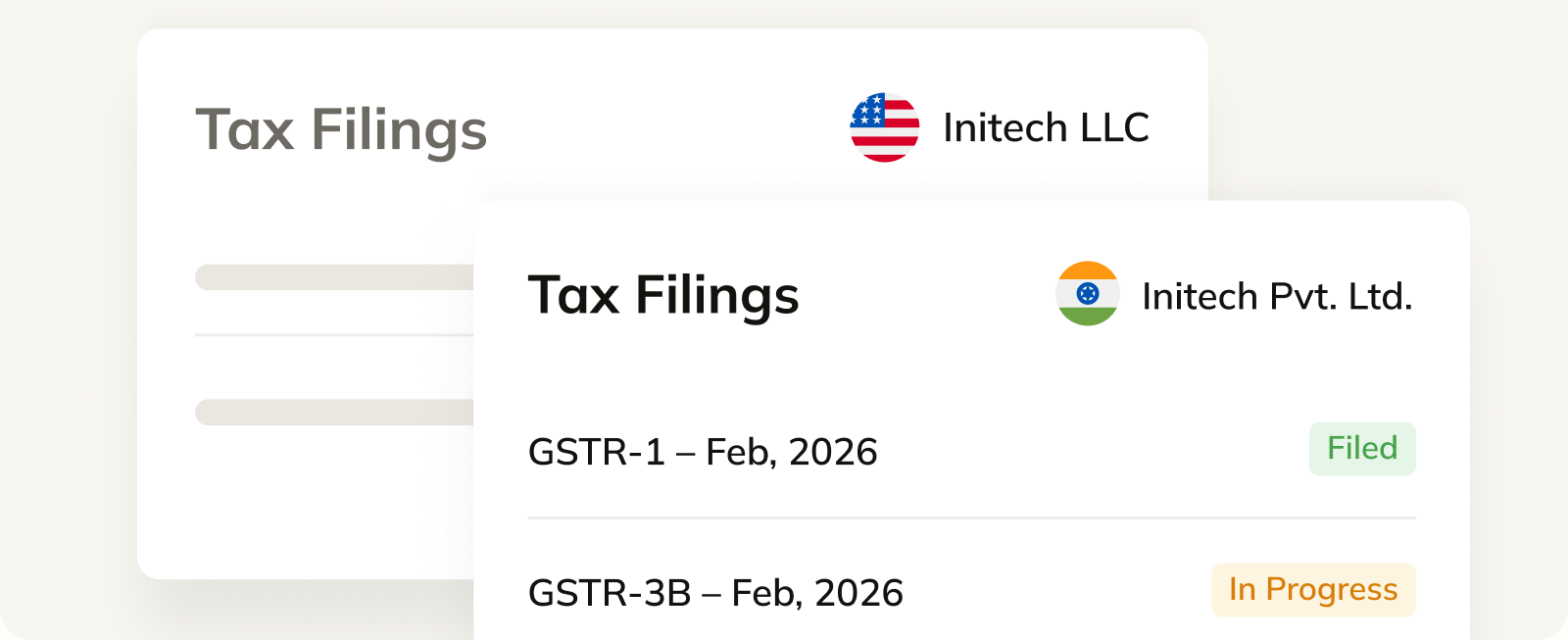
Commenda provides a single dashboard that brings together all the tax-related data of Costpoint:
- A summary showing how much tax is currently owed and which filings are unpaid, broken down by jurisdiction.
- Filing calendars and all upcoming deadlines for states, cities, and districts.
- Historical returns, confirmations of remittance, and supporting documents that have been archived.
- Nexus status by entity and state, along with alert history and remediation actions taken.
- An ability to trace back to the Costpoint invoice or journal entry that gave rise to each liability.
The dashboard is the one and only source of tax truth, thus allowing controllers and auditors to quickly verify positions without exporting and handling multiple spreadsheets.
Multi-Entity and Multi-Channel Support
Deltek Costpoint is usually characterized by the presence of various contract accounting entities, cost centers, and billing structures, which are often supported by Commenda. The support comes in the form of:
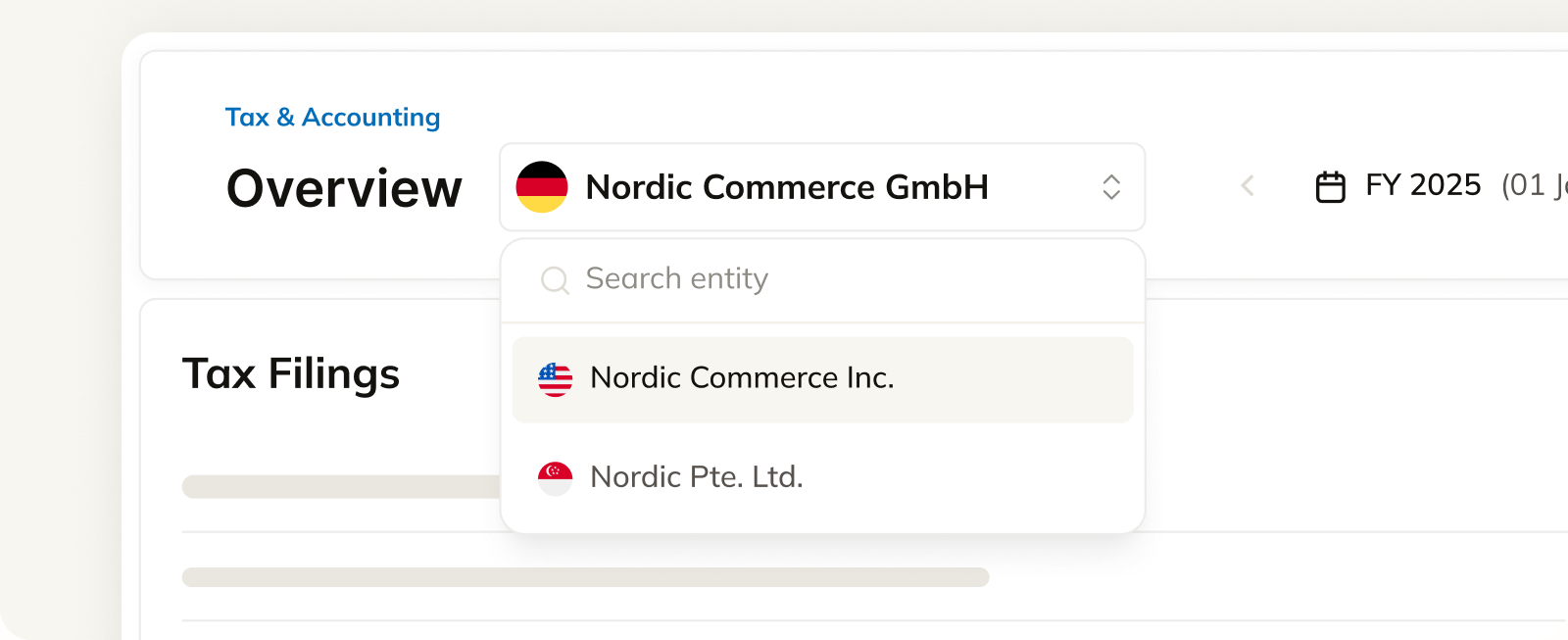
- A method that allows for the consolidation of liabilities among legal entities and at the required legal-entity level.
- Legal entity-level mappings that enable the classification for taxation purposes of sales from marketplace, e-commerce and POS (when they are captured in Costpoint or integrated systems) into one compliance model.
- Intercompany allocation rules set up for sales shared among entities, pass-through items, or project-based tax treatment scenarios.
All these features together support the tax filings that are uniform and at the same time reflect the intricate accounting practices that come with government contracting and project accounting.
Time to Value and Ongoing Maintenance
Commenda is purposely built for fast and low-maintenance deployment:
- The use of pre-built Costpoint mapping templates and guided onboarding cuts down the initial setup time significantly.
- Instead of rate-table editing by your team, the centrally maintained Commenda’s tax-rule engine handles changes to rates, rules and local taxability on an ongoing basis.
- The exception workflows bring to light the transactions that need review (for instance, these could be taxability issues, mixed shipments, or unusual discounts).
- After the go-live stage, there will be very minimal operational overhead; the maintenance will mostly be rule and rate updates, which the Commenda will handle.
This is what makes the solution feasible for the teams that are looking for a fast return on investment and limited ongoing systems maintenance.
Commenda vs. Generic Sales Tax Tools
What are the reasons for choosing a finance-grade automation layer instead of a basic tax plugin or the manual spreadsheet process?
- End-to-end compliance: Commenda includes everything- calculation, continuous nexus monitoring, filing, and remittance- only point-of-sale tax calculation is not part of the coverage.
- Finance-grade workflows: there are reviews, approvals, and trails that are completely ad-hoc exports instead of just results.
- Scalability: it has been built in such a way that it can easily accommodate the expansion of your state footprint, legal entities, and channel mix without increasing the number of manual processes.
- Audit readiness: it has been made possible by the centralized office of filings, where the ledgers and exemption certificates are stored and tagged to Costpoint transactions.
The integrated automation platform takes away the hassle of reconciliation, makes tax teams focus on exceptions and strategy, and reduces the risk of an audit compared to the use of spreadsheets or simple tax plugins.
Security, Accuracy, and Compliance Standards
Commenda complies with and implements the best practices in security and compliance that are characteristic of enterprises:
- Data transmission is secured, and storage for both transactional and tax data is encrypted.
- Role-based access controls and complete audit logs for calculation, review, and filing events.
- There are regular rule updates and tax research so that the calculations remain aligned with the jurisdictional changes.
- A documentation vault containing exemption certificates, nexus evidence, and filed returns to support audits.
All these controls are in place to help protect sensitive financial information and to ensure reliable compliance outcomes.