Expanding into Mexico? Understanding VAT registration is a must for non-resident companies looking to trade legally and efficiently. This article breaks down who needs to register, how to do it, and what to expect post-registration.
Why Non-Resident Firms Must Register for VAT in Mexico
Expanding into Mexico gives foreign companies, especially from the U.S.,access to one of Latin America’s biggest consumer markets. But this move also comes with strict tax rules, including VAT registration for non-resident businesses in Mexico.
Selling goods or services in Mexico without registering can result in customs delays, platform delistings, and steep fines. The Mexican Tax Administration Service (SAT) monitors cross-border activity closely and expects prompt compliance.
Commenda helps simplify registration and ongoing compliance for foreign companies. With the right support, you can avoid costly issues and tap into Mexico’s growing market with confidence.
When Does a Foreign Business Need to Register? Key Triggers
VAT registration in Mexico isn’t just for businesses with a physical presence. Foreign companies may be required to register as soon as they engage in certain taxable activities, even without a local office or employees.
Understanding these triggers is key to staying compliant and avoiding unexpected tax obligations.
Here are the most common situations that require VAT registration for non-resident companies:
- Holding inventory in Mexico: If your business stores goods in a local warehouse, even if managed by a third party, you’re likely required to register.
- Importing and selling goods locally: Companies that import products into Mexico and sell them to local customers must register and collect VAT.
- Providing digital or remote services to Mexican consumers: SaaS platforms, streaming services, or other online providers targeting individuals in Mexico are typically within scope.
- Facilitating sales via online marketplaces: If you’re using platforms like Mercado Libre or Amazon Mexico, you may be legally obligated to register, especially if those platforms are required to withhold or report VAT.
- Participating in trade shows or commercial events: Even temporary business activity, like selling at a trade fair in Mexico, can trigger registration.
For example, a U.S. e-commerce brand using a fulfillment center in Guadalajara, or a Canadian software company billing Mexican clients monthly, would both be considered liable for VAT registration in Mexico.
Registration Thresholds & Nexus Tests
Mexico applies a nil threshold for VAT registration by non-resident businesses. And, because there’s no minimum threshold, VAT registration for foreign companies in Mexico becomes mandatory as soon as taxable activities begin.
There is no minimum sales volume that allows you to delay registration, making it essential for businesses to monitor their activities closely from the start. For low-value imports, VAT is typically charged at the border, but this does not exempt sellers from registration if they also conduct local sales or hold inventory within the country.
Mexico VAT Number Format Explained
In Mexico, the VAT number is referred to as the RFC (Registro Federal de Contribuyentes). This tax ID is issued by SAT and is required for all entities conducting taxable activities in the country.
Here’s a quick breakdown of the RFC structure for legal entities:
| Element | Description | Example |
| 3 Letters | Derived from the business name | ABC |
| 6 Digits (Date) | Date of incorporation (YYMMDD format) | 210615 |
| 3 Alphanumeric Suffix | Unique SAT-generated code + checksum | 9K1 |
| Full RFC | Combination of all the above | ABC2106159K1 |
Common Mistakes to Avoid:
- Mixing up the letter “O” with the number “0”
- Using an individual’s RFC format (which includes birthdate) instead of a corporate one
- Omitting or altering the checksum suffix
Getting the RFC format wrong can lead to registration rejections or issues with invoice validation.
One platform to simplify global tax and compliance
See why high-growth companies trust Commenda
Is a Local Tax Agent or Fiscal Representative Required?
Yes. For non-resident tax registration in Mexico, appointing a local fiscal representative is a legal requirement for completing your VAT registration. This representative acts as the official liaison between your business and the SAT, helping ensure full compliance with local VAT rules.
The fiscal representative must be a licensed entity or individual established in Mexico and is responsible for handling filings, correspondence, and any VAT payments on behalf of the foreign company. In some cases, the representative may be held jointly liable for unpaid taxes, interest, or penalties, so choosing a trusted and experienced agent is essential.
While Mexico does not typically require a bank guarantee or financial bond for VAT registration, the fiscal representative’s liability makes it critical to maintain accurate records and remain current on filings.
Special Schemes & Simplifications
Mexico offers VAT schemes to ease compliance for certain sectors, especially helpful for non-resident businesses.
- Import VAT Deferment: Registered businesses can defer VAT at customs and report it in monthly returns, improving cash flow.
- Simplified E-Services Regime: Non-resident digital providers must register, collect VAT, and file simplified returns.
- Small Business Exemption: Applies to low-turnover resident entities, not foreign firms.
- Consignment & Warehouse Programs: Requires correct VAT handling on inventory transfers and sales.
These schemes help reduce costs and simplify VAT obligations in Mexico.
Step-by-Step: How to Register for VAT/GST in Mexico
Looking for a clear path through the process? This Mexico VAT registration guide outlines the key steps foreign companies need to follow to stay compliant.
Here’s a step-by-step overview:
- Gather Required Documents: Prepare key documents, including your certificate of incorporation, proof of business activity, valid ID or passport copies for directors, a Mexican tax agent’s power of attorney (if applicable), and bank reference letters.
- Create a SAT Tax Portal Account: To register for VAT online in Mexico, you’ll need to set up an account on the SAT platform and complete the registration form.
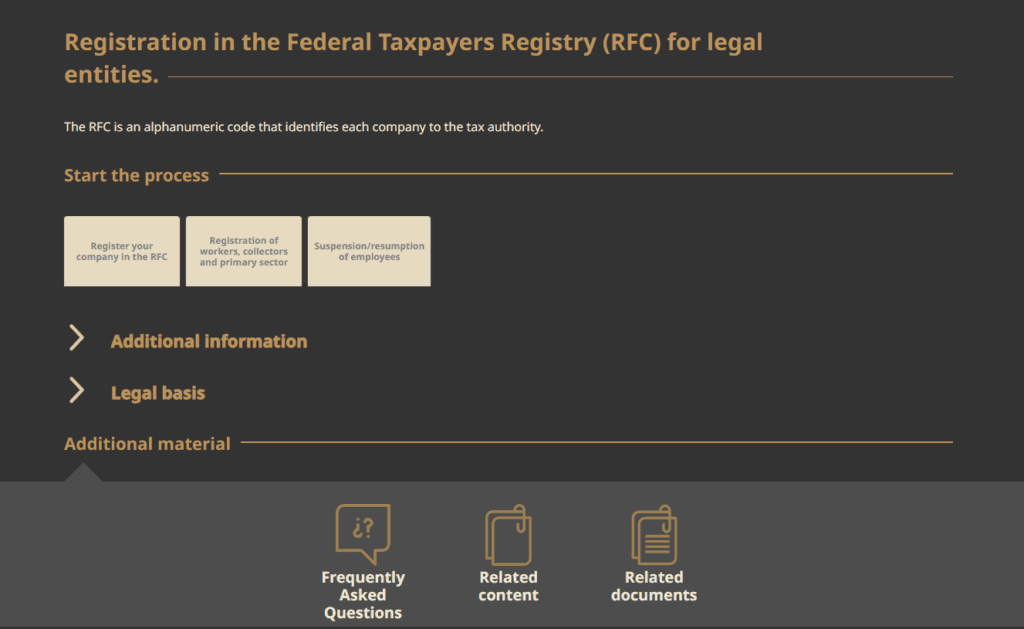
- Upload Documents and Submit Application: Submit all required documents through the online portal. Ensure formats and file sizes comply with portal requirements (typically under 150 KB per file).
- Pay Any Required Government Fees: While VAT registration is generally free, certain cases, such as digital service providers or importers, may involve processing fees or security deposits.
- Receive Your Mexican Tax ID (RFC): Once approved, you will be issued an RFC. Processing times vary but typically take 2–4 weeks.
This registration process is crucial for ensuring compliance and unlocking access to local markets and customers. Always verify current requirements with SAT or a trusted local advisor.
Required Documents Checklist
To complete VAT registration in Mexico, foreign companies must prepare and submit the following documents:
- Certificate of Incorporation: Verifies your company’s legal existence in its home country.
- Directors’ IDs or Passports: Government-issued identification for company directors or legal representatives.
- Proof of Business Activity: Invoices, contracts, or operational details showing taxable activity in Mexico.
- Bank Reference Letter: Confirms your company’s banking relationship and financial standing.
- Signed Power of Attorney: Required if appointing a local tax agent or fiscal representative to act on your behalf.
Ensure all documents are clear, up to date, and translated into Spanish if required.
Processing Time & Government Fees
VAT registration in Mexico for non-resident companies typically takes 3 to 8 weeks, depending on the completeness of your application and the responsiveness of the tax authority.
There is generally no government fee for standard VAT registration. However, certain categories, such as digital service providers or businesses involved in import activities, may be required to pay a processing fee or provide a security deposit as part of the approval process.
While bank guarantees are not usually mandatory, SAT may request additional financial assurances in cases where tax exposure is deemed high. Ensuring accurate documentation and representation can help avoid delays or added compliance hurdles.
Post-Registration Obligations
Once the VAT registration in Mexico is completed, businesses must file monthly VAT returns, typically due by the 17th day of the following month. Payments must be made in Mexican pesos, with currency conversion based on official exchange rates.
E-invoicing (CFDI) is mandatory, and all invoices must follow SAT’s digital format and approval system.
Companies are required to maintain tax records for at least five years. Currently, Mexico does not enforce SAF-T or e-Waybill systems, but compliance with evolving digital tax mandates is recommended.
Claiming Input‑Tax Credits & Refunds as a Non‑Resident
Foreign businesses registered for VAT in Mexico can claim input tax credits on expenses tied to taxable activities.
You’ll need CFDI-compliant invoices and proof of business relevance. Refunds are possible if credits exceed output VAT; SAT typically processes them within 40 business days, though requests for extra documents can extend this.
Common rejections include incomplete paperwork or unclear business purpose. For imported services, reverse-charge rules may apply, limiting refund eligibility.
Penalties for Late Registration or Non‑Compliance
Non-compliance with VAT rules in Mexico can trigger serious consequences: Your business might be required to pay a fee, based on the nature of non-compliance.
- Failure to register on time: MXN 3,870–11,600
- Late filing: MXN 1,560–38,700
- Late DIOT submission (transaction report): MXN 11,580–23,160
- Late payment/return: surcharge of ~5% + ~0.033% daily interest; interest of ~1.47% monthly on unpaid VAT
- Issuing invalid invoices (CFDI): fines up to MXN 10,080 each
Additional risks include customs seizure, marketplace delisting, and personal liability for directors where willful non-compliance is found.
Staying proactive with registration and compliance is key to avoiding unnecessary costs and disruptions.
Deregistration & VAT Number Changes
If your business stops taxable activities in Mexico, you can request VAT deregistration via the SAT portal. File a final return, submit a formal request, and provide proof of ceased activity.
For changes like mergers or name updates, notify SAT and submit updated documents. Until SAT confirms deregistration or changes, you must continue filing returns. Keeping your information current helps avoid penalties and maintain compliance.
Conclusion
Expanding into Mexico brings exciting opportunities, but also complex tax obligations. From understanding when to register to navigating compliance rules and input tax refunds, getting VAT right is essential for smooth cross-border operations.
With Commenda, foreign businesses can simplify the entire VAT lifecycle. Our platform handles registrations, document submissions, and ongoing compliance with precision and speed. Backed by automated tools, clear guidance, and expert support, you can avoid delays, reduce manual errors, and stay compliant in a constantly evolving tax landscape.
Want to streamline your VAT registration in Mexico? Book a demo today and see how Commenda makes tax compliance smarter, faster, and easier for global businesses.
About the author

Sam is a seasoned expert in sales tax, leading Commenda's effort to build the worlds most comprehensive database of global tax rules and business regulations. At Silverhaze Partners, he worked in early-stage venture capital, where he saw firsthand how tax complexity and regulatory friction hold back startups from scaling internationally. That experience now powers his work at Commenda-bringing clarity, precision, and real-world insight to one of the most frustrating parts of doing business globally.
Disclaimer: Commenda and its affiliates do not provide tax, accounting, or legal advice. This material has been prepared for informational purposes only, and is not intended to provide or be relied on for tax, accounting, or legal advice. You should consult your own tax, accounting, and legal advisors before engaging in any related activities or transactions.