

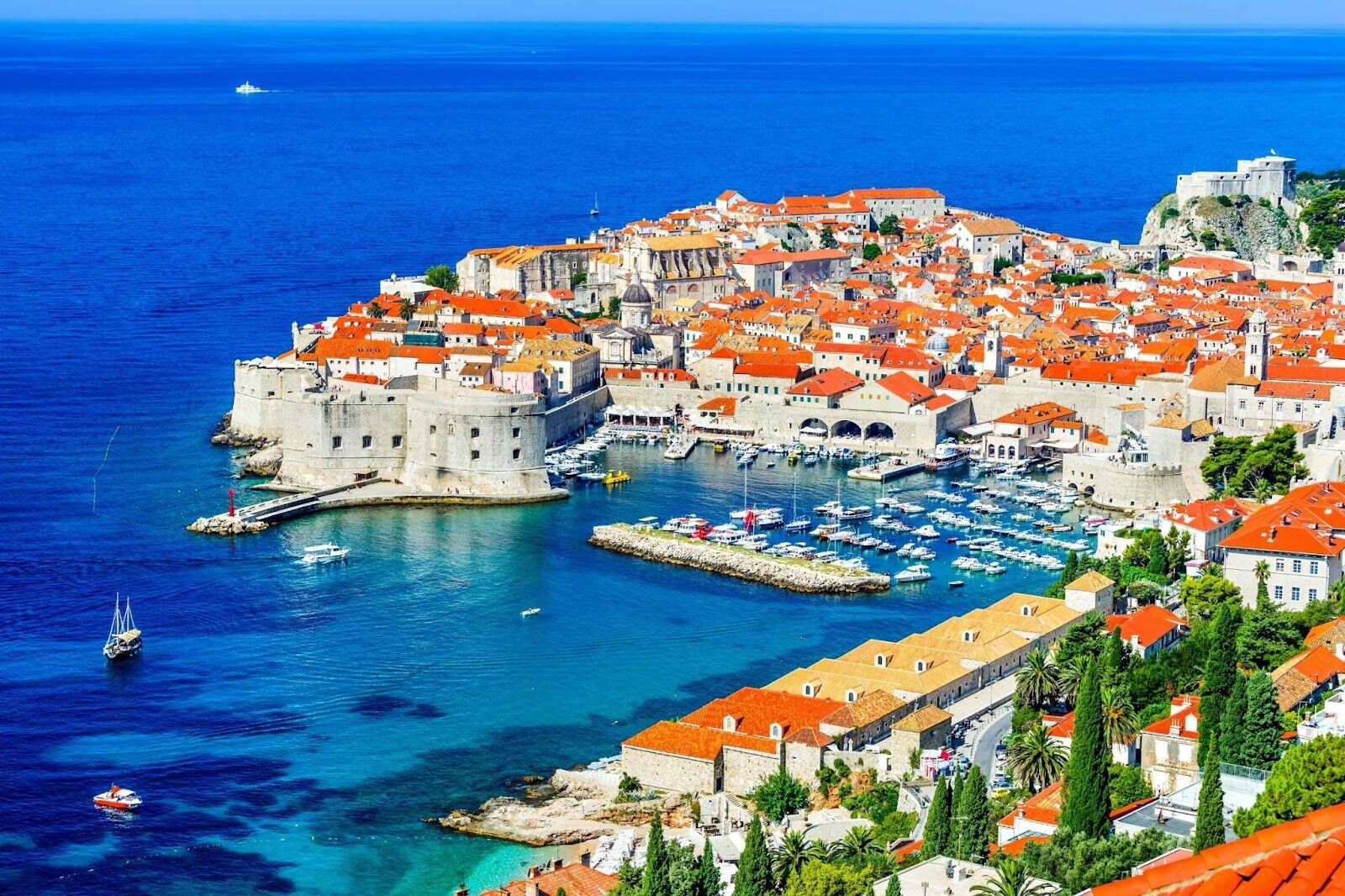
Most people discover Croatia through a travel blog, not a business one, and that gap is worth exploiting.
The d.o.o. structure, Croatia’s version of an LLC, carries a minimum share capital of around 2,500 euros, files through the court registry system, and lands you inside a full EU legal framework without the overhead of operating in Frankfurt or Amsterdam.
Knowing how to start an LLC in Croatia means knowing which documents the notary needs on day one, how the OIB tax identification system works, and what comes after your company hits the registry. This article gives you that roadmap, in the right order.
Key Takeaways
- Foreign founders can own 100% of a Croatian d.o.o. remotely, with no residency requirement attached.
- The minimum share capital is 2,500 euros, and registration typically completes within two to four weeks.
- Croatia’s corporate tax drops to 10% for companies earning under one million euros annually.
- Getting your OIB tax number is the first practical step, and everything else follows from there.
- Missing annual FINA filings or VAT returns triggers financial penalties and can affect your registry standing.
Can You Register an LLC in Croatia?
Yes, you can, and the process is more open than most people expect. Croatia welcomes foreign founders with no residency requirement attached to company ownership, though a few structural details are worth knowing before you begin.
- Foreign ownership is fully permitted: Non-residents can own 100% of a Croatian d.o.o. without needing a local partner or co-founder.
- No residency requirement for shareholders: You do not need to live in Croatia to own or operate a d.o.o., which makes remote registration genuinely workable.
- A local director adds convenience: Having a Croatia-based director is not legally mandatory, but it speeds up bank account opening and notary coordination considerably.
- EU founders face fewer friction points: Founders from EU member states move through the process faster since document apostilles are often unnecessary within the bloc.
- Non-EU founders need apostilled documents: If you are based outside the EU, your identification and incorporation documents will need apostille certification before the notary accepts them.
- HITRO.HR simplifies things noticeably: Croatia runs a one-stop business registration system called HITRO.HR that consolidates court registry filing, tax registration, and statistical office enrollment in one place.
Advantages of Forming an LLC in Croatia
Croatia offers a combination of EU membership benefits and lower operational costs that most founders in Western Europe simply do not have access to. Beyond the obvious, there are several advantages that do not get nearly enough attention.
- 18% corporate tax rate: Croatia’s standard corporate tax sits at 18%, dropping to 10% for companies earning under €1 million annually, which is a meaningful saving.
- Full EU market access: A Croatian d.o.o. gives you legal standing to trade, contract, and invoice across all 27 EU member states without additional registration hurdles.
- Eurozone membership since 2023: Croatia adopted the euro in January 2023, removing currency conversion costs and making cross-border EU transactions cleaner for your business.
- Investment incentives for certain sectors: The Croatian government offers tax relief and cash grants for businesses in manufacturing, technology, and high-value service sectors through its investment promotion law.
- Double taxation treaties with 60+ countries: Croatia has signed agreements with over 60 countries, meaning profits are not taxed twice if you operate across borders.
- Lower operating costs than Western EU hubs: Office space, local payroll, and professional service fees in Zagreb run significantly below equivalent costs in Berlin, Vienna, or Amsterdam.
- Access to EU structural funds: As an EU member, Croatia-registered businesses can apply for European structural and investment fund grants, particularly in innovation and regional development.
Steps to Register an LLC in Croatia
The registration sequence in Croatia follows a specific order, and skipping steps or getting the order wrong is where most delays happen. Move through these in sequence, and the process stays clean.
- Step 1 (Choose your company name and check availability): Search the Croatian court registry database to confirm your chosen d.o.o. name is not already taken before preparing any documents.
- Step 2 (Obtain your OIB tax identification number): Every founder and director needs a Croatian personal identification number called an OIB, obtained from the Tax Administration office or via a notary.
- Step 3 (Draft and notarize the founding act): A Croatian public notary prepares and certifies your founding act, which is the core legal document defining ownership, share capital, and company structure.
- Step 4 (Deposit the minimum share capital): Open a temporary bank account and deposit the minimum share capital of 2,500 euros, obtaining a bank confirmation letter for the court filing.
- Step 5 (File with the Commercial Court through HITRO.HR): Submit your notarized founding act, capital deposit confirmation, and director details to the Commercial Court via the HITRO.HR one-stop system.
- Step 6 (Receive your court registry decision): The court reviews and approves your application, typically within five to seven business days, and issues your official company registration number.
- Step 7 (Register for VAT and open a permanent business account): Once registered, enroll with the Tax Administration for VAT purposes and open a permanent business bank account using your court registry certificate.
Documents Required for LLC Registration in Croatia
Getting your document package right before the notary appointment saves you from rescheduling, which adds unnecessary weeks to the timeline. Here is exactly what you need to bring together beforehand.
- Valid passport or national ID: All founders and directors must provide a current government-issued photo ID, with non-EU documents requiring an apostille stamp for notary acceptance.
- Proof of OIB for each founder and director: Every person named in the founding act needs their Croatian OIB tax number confirmed before the notary can proceed with certification.
- Proposed company name confirmation: Bring written confirmation from the court registry database showing your chosen company name is available and not already registered by another entity.
- Registered office address proof: You need a valid Croatian business address on file, which can be a lease agreement, a virtual office contract, or a property ownership document.
- Founding act drafted by a Croatian notary: This document cannot be self-prepared and must be drafted and certified by a licensed Croatian public notary during an in-person or authorized appointment.
- Bank confirmation of share capital deposit: Your temporary bank account statement confirming the 2,500 euro minimum deposit must be included in the court registry filing package.
- Power of attorney if registering remotely: If you cannot attend in person, a notarized and apostilled power of attorney authorizing a local representative to act on your behalf is required.
Tax Obligations After LLC Registration in Croatia
Getting registered is one thing, but knowing what comes next on the tax side is what keeps your company in good standing long term. Croatia’s tax framework is straightforward compared to most EU countries, though there are a few line items that founders consistently overlook.
- Corporate income tax at 18%, or 10% for smaller companies: If your annual revenue stays below approximately €1 million, Croatia applies the reduced 10% rate, which is one of the lowest in the EU.
- VAT registration threshold sits at 60,000 euros: Once annual revenue crosses that mark, VAT registration with the Croatian Tax Administration becomes mandatory, currently at a standard rate of 25%.
- Monthly or quarterly VAT filing, depending on your turnover: Businesses above the VAT threshold must file returns regularly, with the frequency determined by annual revenue volume and business category.
- Profit tax advance payments are required quarterly: After the first full tax year, Croatian companies pay corporate tax in quarterly advance installments based on the prior year’s liability.
- Payroll tax and social contributions add up quickly if you hire locally: Employer contributions in Croatia run to around 16.5% on top of gross salary, covering pension and health insurance obligations.
- Double taxation treaties protect cross-border earnings: Croatia’s network of over 60 bilateral agreements means profits earned across multiple countries are not taxed twice, which matters significantly for internationally active d.o.o. Companies.
Set Up Your Croatian LLC with Commenda
Most founders get through the research phase just fine, but then stall when the actual filing begins, because knowing the steps and executing them without errors are two very different things.
That is exactly the problem Commenda was built to solve, and we do it across 70 countries, including Croatia, with one unified platform that handles incorporation, compliance, and tax management end to end.
- Full d.o.o. formation handled remotely: We manage the notary coordination, court registry filing, and OIB registration on your behalf, so you never need to be in Croatia to get your company registered.
- AI-powered compliance tracking built in: Our platform monitors Croatian tax deadlines, VAT filing windows, and annual reporting requirements automatically, so nothing falls through the cracks.
- EIN and tax registration support included: We handle your Croatian Tax Administration enrollment and guide you through VAT registration once your revenue threshold is reached.
- Registered office address services available: If you need a Croatian business address for your d.o.o. filing, we provide compliant registered office solutions as part of the formation package.
- Dedicated support team, not a ticket queue: Every Commenda client gets responsive, direct support from people who know the local requirements, not automated responses that leave you waiting.
- Global scalability from day one: Whether Croatia is your first entity or one of many, the Commenda platform keeps all your international companies, filings, and obligations in a single dashboard.
- Transparent pricing with no hidden fees: What you see is what you pay, with no surprise charges buried in the process after you have already started.
Book a demo today and let us get your Croatian d.o.o. registered the right way, the first time.
Frequently Asked Questions
1. What are the ongoing compliance requirements for an LLC in Croatia?
After registration, a Croatian d.o.o. must file annual financial statements with the Financial Agency, known as FINA, submit corporate tax returns, and maintain accurate accounting records throughout the year. If you are VAT registered, regular VAT returns are required on top of that, either monthly or quarterly depending on your revenue.
2. Can I register my LLC online in Croatia?
Partial online registration is possible through the HITRO.HR system, but the founding act must still be notarized in person or through an authorized representative holding a power of attorney. A fully remote setup works well when you appoint a local representative to handle the notary appointment on your behalf.
3. How long does it take to register an LLC in Croatia?
Once your documents are complete and the notary appointment is done, the Commercial Court typically processes the application within five to seven business days. The full timeline from start to finish, including OIB registration and document preparation, usually runs between two and four weeks.
4. Do I need a physical office in Croatia to register an LLC?
You need a registered business address in Croatia, but it does not have to be a traditional office space. A virtual office address provided by a licensed service provider satisfies the legal requirement for court registry and tax administration purposes.
5. Are there any hidden costs or fees during LLC registration in Croatia?
The minimum share capital deposit of 2,500 euros is the largest upfront cost, but notary fees, court filing fees, and translation or apostille costs for non-EU founders add up alongside it. Budgeting an additional 500 to 1,000 euros for professional and administrative fees gives you a realistic picture of total setup costs.
6. What are the annual filing and reporting obligations for LLCs in Croatia?
Croatian d.o.o. companies must submit annual financial statements to FINA by the end of June each year, covering the prior financial year. Corporate tax returns are filed separately with the Tax Administration, and VAT-registered companies carry additional quarterly or monthly reporting obligations throughout the year.
7. Can I operate an LLC in Croatia without a local director or shareholder?
Yes, Croatian law does not require a local director or shareholder, so foreign nationals can fully own and manage a d.o.o. remotely. That said, having a Croatia-based contact for notary appointments and bank account coordination makes the practical side of registration considerably smoother.
8. How do I open a business bank account for my LLC in Croatia?
After receiving your court registry decision and company registration number, you can approach Croatian banks to open a permanent business account. Most banks require your registry certificate, founding act, director identification, and proof of registered address, with the process typically taking one to two weeks after registration.
9. What are the benefits of choosing an LLC over other types of business structures in Croatia?
The d.o.o. structure limits your personal liability to your share capital contribution, keeping personal assets separate from business obligations. It also carries more credibility with clients and partners than sole trader structures, and it gives you a cleaner framework for bringing in additional shareholders or investors later on.
10. Can I convert my existing business to an LLC in Croatia?
Yes, Croatian law allows conversion of sole trader businesses and other structures into a d.o.o., though the process involves a formal legal procedure including a notary, court filing, and transfer of assets and liabilities. Working with a local legal advisor during conversion keeps the transition clean and avoids gaps in your operating status.
11. What happens if I fail to comply with tax obligations after forming an LLC in Croatia?
Late or missed filings with the Croatian Tax Administration result in financial penalties, and persistent non-compliance can trigger audits or legal proceedings against the company. VAT filing delays carry specific penalty rates, and failure to submit annual financial statements to FINA can affect your company’s standing in the court registry.

