
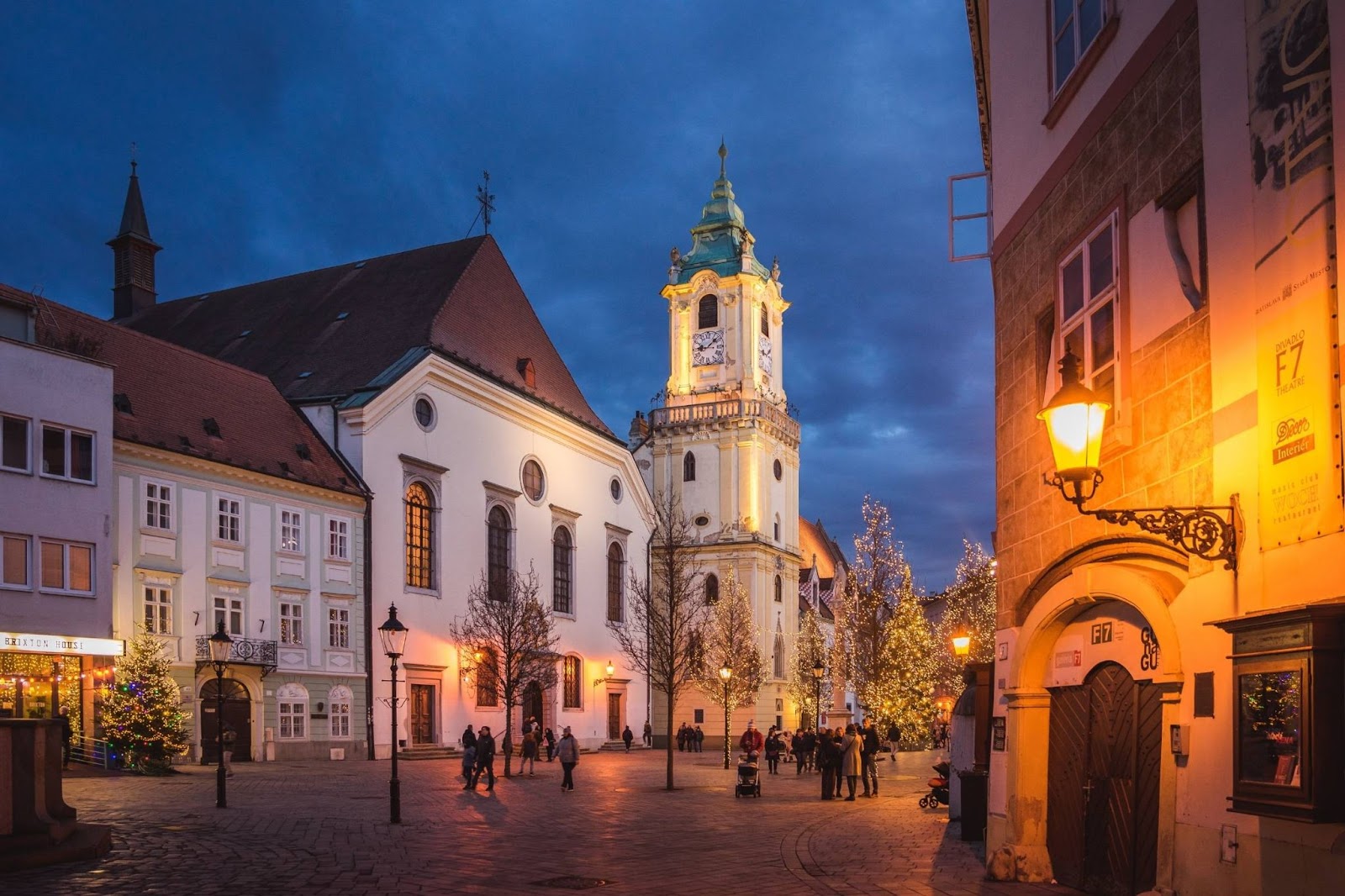
Starting a business in Slovakia has become increasingly attractive for global founders looking to access the EU market, benefit from competitive tax rates, and operate in a stable, investor-friendly environment.
The country’s strategic location, skilled workforce, and supportive business ecosystem make it a strong choice for entrepreneurs across sectors, from technology and logistics to manufacturing and services. Foreigners can own 100% of a Slovak company, enjoy straightforward incorporation rules, and leverage government incentives that support innovation and foreign investment.
However, understanding local regulations, tax obligations, and compliance requirements is crucial before you begin. This guide walks you through everything you need to know to register, operate, and grow your business in Slovakia with confidence.
Key Highlights
- Slovakia welcomes foreign founders, allowing 100% foreign ownership and offering a stable, EU-integrated business environment.
- Most entrepreneurs choose an s.r.o., which requires a minimum capital of € 5,000 and offers flexible ownership and limited liability.
- Foreigners may need a residence permit, with processing times of up to 90 days and permits valid for up to 3 years.
- Corporate tax is 21%, VAT is 20%, and businesses must maintain accounting, file VAT returns, comply with payroll requirements, and maintain an electronic mailbox.
- Commenda streamlines incorporation and compliance, enabling global founders to manage tax, VAT, and cross-border obligations from a single unified platform.
Why Foreign Entrepreneurs Choose Slovakia
Slovakia is an increasingly popular destination for foreign founders for several compelling reasons. Its strategic location in Central Europe offers direct access to the European Union single market, providing a gateway for business expansion into EU countries.
The country also has a well-educated workforce, political stability, and a competitive tax system. These combined factors create a favorable business environment for foreign entrepreneurs.
The Slovak government supports foreign investment and maintains transparent and relatively efficient administrative processes. While setting up a company is straightforward, maintaining compliance across multiple tax jurisdictions can be complex.
Understanding Market Entry Strategy in Slovakia
When you decide to start a business in Slovakia, a well-defined market-entry strategy is essential. First, research local demand carefully. Some sectors, such as logistics, technology, household services, and beauty, are auspicious for foreign entrepreneurs. Understanding consumer preferences, cultural norms, and regulatory requirements will shape how you position your business in Slovakia.
Localization is another key factor. Language may be a barrier, as Slovak is the official language. Consider hiring local expertise or preparing your business documentation in both English and Slovak. Legal factors also play a role: you need to navigate Slovak corporate law, trade licensing requirements, and sector-specific regulation.
Minimum Capital and Investment Options for Foreigners
If you plan to start a business in Slovakia, especially a limited liability company (s.r.o.), you need to factor in the minimum capital requirements. The minimum registered capital for an s.r.o. is EUR 5,000, and if there are multiple partners, each must contribute at least EUR 750. Non-cash contributions (such as real estate, patents, or know-how) are allowed, but they must be validated by an expert opinion confirming their value.
Foreign direct investment (FDI) is fully permitted in Slovakia, with no blanket limits on foreign ownership in most sectors. Depending on your business, you might explore funding via angel investors, venture capital firms, or local business grants. There are also EU-supported programs and Slovak government incentives in some sectors (e.g., technology, renewable energy) that support startup growth.
Choosing the Right Business Structure
When starting a business in Slovakia, you can choose from multiple legal structures. The most common and flexible is the limited liability company (s.r.o.). It can be established by 1 to 50 partners, and liability is limited to each partner’s contribution.
Here’s a quick breakdown:
- Sole trader (individual) – If you want a simple setup, you can operate as a sole trader with a trade license (Živnostenské oprávnenie).
- Limited liability company (s.r.o.) – Minimum capital €5,000, limited liability.
- Joint-stock company (a.s.) – For larger businesses; minimum capital €25,000.
- Simple joint-stock company (j.s.a.) – More flexible shares, minimum capital from €1 with specific rules.
- Partnerships (v.o.s., k.s.) – For smaller ventures or passive investors.
- Cooperative (družstvo) – For member-owned ventures, with a minimum contribution of €1,250.
Each structure has different implications for ownership, liability, corporate governance, and tax. For detailed incorporation steps, refer to our in-depth guide on registering a business in Slovakia.
Legal, Residency, and Immigration Requirements
Both EU and non-EU foreigners can start a company in Slovakia. You can own 100% of a Slovak company, regardless of nationality. The legal framework is governed by the Slovak Commercial Code (Act No. 513/1991 Coll.) and trade licensing regulations.
Non-EU citizens who want to run a business in Slovakia typically apply for a business residence permit. You’ll need to submit business-related documentation (such as Commercial Register extract, business plan, and proof of authority) to the Slovak immigration authorities.
The application fee is around €232 (for domestic applications) or €240 (for applications from abroad), plus €4.50 for the residence card. Decisions are usually made within 90 days, and the permit can be issued for up to three years.
Foreign Investment Restrictions and Business Incentives
Most sectors in Slovakia are open to foreign investment, and there are no broad prohibitions on foreign ownership in standard business activities. However, specific strategic industries, such as defense or certain telecom operations, may face restrictions or regulatory scrutiny.
On the other hand, Slovakia offers incentives for foreign investors, especially in priority areas such as advanced manufacturing, technology, renewable energy, and exports. These incentives may come in the form of government grants, tax credits, or special economic zones, depending on the project and location.
Engaging local advisors or using a cross-border platform like Commenda can help you efficiently identify, apply for, and manage such incentive programs.
Opening a Bank Account and Managing Cross-Border Payments
Opening a bank account in Slovakia as a non-resident entrepreneur is possible, but you must complete due diligence (KYC) with the bank. Typical documentation includes:
- Company formation documents (Memorandum of Association, Articles)
- Trade license or Commercial Register extract
- Proof of the company’s registered address in Slovakia (ownership deed or lease agreement)
- Identity documents for directors and ultimate beneficial owners (UBOs)
- Proof of address (for individuals)
Some Slovak banks may demand in-person presence for account opening, especially for non-resident directors, though this depends on the bank’s internal policies.
For cross-border payments, consider using multi-currency accounts to reduce currency conversion costs. Slovakia uses the euro, which simplifies transactions with most euro-area partners, but cross-border trade with non-euro countries will require planning.
Taxation and Compliance for Foreign-Owned Businesses
When you start a business in Slovakia, understanding local tax obligations is critical for long-term success.
Here’s a breakdown of key tax and compliance areas:
- Corporate Income Tax
- Standard rate: 21% on the tax base, under the Income Tax Act.
- A reduced rate of 15% applies to companies whose revenue does not exceed €100,000 in a tax period.
- Value Added Tax (VAT)
- The standard VAT rate in Slovakia is 20%, with a reduced rate of 10% applying to certain goods and services.
- If your annual turnover (or taxable transactions) exceeds the local VAT registration threshold, you must register for VAT and file VAT returns regularly.
- Payroll and Social Insurance
- If you hire employees, you must register with the Social Insurance Agency and local health insurance companies within 8 days of hiring.
- Employers are responsible for social contributions, health contributions, and payroll withholding.
- Other Obligations
- On incorporation, you must notify the local tax authority within 30 days of starting business to obtain a Tax ID (DIČ).
- Annual financial reporting, statutory accounting, and potentially audits may apply, depending on the company’s size and legal form.
- Double Taxation & Treaties
- Slovakia has a broad network of double taxation treaties, helping to avoid or reduce tax on cross-border income.
- Tax residency is determined under local rules, and foreign-owned companies must consider permanent establishment, cross-border withholding, and transfer pricing.
Given these obligations, using Commenda’s platform helps streamline global tax registration, VAT management, and compliance tracking. You can manage your EU VAT, U.S. sales tax, and other international tax obligations from a single dashboard.
Hiring Employees and Payroll Compliance
When you expand your company in Slovakia, hiring local employees brings its own set of rules:
- Employment contracts must comply with Slovak labor laws and typically include a written job description, compensation, working hours, and other conditions.
- You must withhold income tax and pay employer social and health contributions.
- Minimum wage and social contribution rates depend on current legislation (check with a local advisor).
- For remote hiring or distributed teams, consider using a local entity (s.r.o.) to act as the employer.
Commenda can support you here by helping maintain global payroll compliance, tracking local obligations, and integrating compensation into your overall cross-border structure.
Setting Up Operations and Staying Compliant
After you register your company in Slovakia, there are several operational steps to ensure compliance:
- Registered Office: You must have a legal address in Slovakia, either through ownership or a lease contract. The lease contract or owner’s consent must be appropriately documented and certified.
- Electronic Mailbox: Once registered in the Commercial Register, you will receive an electronic mailbox on slovensko.sk, which will serve as your channel for all official state communication. Access is via Slovak eID or residence card.
- Accounting & Bookkeeping: Maintain statutory books, prepare annual reports, and comply with Slovak accounting standards.
- VAT Registration: If required, register for VAT, submit periodic returns, and make payments.
- Insurance: Evaluate business liability insurance, property coverage, and other relevant policies to align with your operation’s risk profile.
- Compliance Alerts: Ensure you stay on top of submission deadlines for tax returns, annual reports, and trade licensing renewals.
Commenda automates many of these processes, sending reminders, generating reports, and helping you meet deadlines efficiently.
Maintaining Your Business in Good Standing
Maintaining compliance in Slovakia involves ongoing administrative and legal tasks. Key requirements include:
- Annual Returns: File financial statements and annual reports as required by Slovak law.
- License Renewals: Some trade licenses may need updating or renewal, depending on the trade and structure.
- Tax Filings: Submit corporate tax returns, VAT returns, and payroll-related declarations on time.
- Audits: Depending on your company’s size, statutory audits may be mandatory.
- Penalties: Non-compliance can lead to fines, late-filing penalties, or issues with your trade license.
By using Commenda, you can leverage automated reminders, centralized dashboards, and compliance reporting tools to minimize risk and maintain your company’s good standing.
Finding Local Partners, Accelerators, and Support Networks
Entering the Slovak market is easier if you build local connections. Here are some valuable resources:
- Chambers of Commerce: Connect with the Slovak Chamber of Commerce, regional business associations, and bilateral country-specific business groups.
- Startup Accelerators: Explore Slovak accelerators, including Spotlight, INTEGRA, and EU-funded innovation hubs, for early-stage support and investment.
- Trade Agencies: Use Slovakia’s Investment and Trade Development Agency (SARIO) for incentives, market intelligence, and regulatory guidance.
- Professional Services: Partner with local law firms, accounting practices, and immigration consultants, or work via Commenda’s network, to access institutional knowledge and scale more confidently.
How to Close or Sell Your Business in Slovakia
If you decide to exit the Slovak market, here are the main paths and steps:
- Liquidation: You need to call a shareholders’ meeting, adopt a resolution to liquidate, and appoint a liquidator. All debts must be settled, and remaining assets distributed.
- Sale / M&A: You can transfer your shares to a buyer, subject to approval from partners (if any) per your articles of association. You should conduct financial, legal, and tax due diligence.
- Deregistration: Once liquidated or after the sale, file for deregistration in the Commercial Register and notify the tax office, social insurance, and health insurance institutions.
- Tax Closure: Final corporate tax return, VAT deregistration (if relevant), and payroll closure must be completed.
Commenda can support this process by helping maintain your compliance history, preparing the necessary filings, and ensuring a clean exit from the Slovak business environment.
Challenges Foreigners Commonly Face
When you start a business in Slovakia, foreign entrepreneurs often encounter specific pain points:
- Regulatory Complexity: Navigating multiple authorities (trade, commercial register, tax, and social insurance) can be time-consuming.
- Banking Hurdles: Non-resident account opening may require in-person visits; KYC can be strict.
- Immigration: Securing the correct visa or residence permit requires thorough documentation and proper planning.
- VAT & Tax Compliance: Managing VAT registration, cross-border filings, and transfer pricing can be complicated.
- Language Barrier: Official documentation and communication are often in Slovak, which can cause delays or errors.
Pro Tips:
- Use local advisors or a cross-border platform like Commenda to centralize compliance and reduce administrative burden.
- Appoint a local director or representative to manage your electronic mailbox and regulatory communications.
- Start with a lean business structure (s.r.o.) to minimize upfront capital and complexity.
- Automate accounting, payroll, and tax reporting; platforms like Commenda can help.
By doing this, many common difficulties can be mitigated effectively.
Why Choose a Cross-Border Platform Instead of Local Agents
Relying on fragmented local advisors across jurisdictions may seem like a viable option, but it often leads to inefficiencies, redundant processes, and higher costs. A cross-border platform like Commenda offers a centralized, unified solution for incorporation, global tax, and compliance needs.
With Commenda, you don’t need separate service providers for company setup, VAT compliance, payroll management, and regulatory filings. Instead, you access a single dashboard that supports your Slovak entity and your broader international operations, reducing administrative overhead, improving visibility, and minimizing risk.
How Commenda Helps You Start and Scale Globally
Here’s how Commenda becomes your partner when you start a company in Slovakia and scale internationally:
- One-click incorporation: Establish your Slovak s.r.o. (or other entity) with a guided process, and use Commenda’s infrastructure to spin up entities in different jurisdictions.
- Global VAT and U.S. sales tax management: Whether you are selling into Europe, North America, or beyond, Commenda enables you to manage VAT/GST and sales tax registrations, filings, and payments from a unified dashboard.
- Automated compliance tracking: Get alerts for statutory deadlines, registrations, renewals, and financial filings, both in Slovakia and in other countries.
- Dedicated cross-border support: You receive a tailored onboarding experience, ongoing compliance advice, and access to multilingual experts familiar with Slovakia’s legal, tax, and business environment.
Start your business in Slovakia and scale globally with Commenda, your single platform for incorporation, tax, and compliance. Book a demo call with Commenda today!
FAQs
1. Can foreigners own 100% of a company in Slovakia?
Yes, both EU and non-EU nationals can fully own a Slovak company, including an s.r.o.
2. What are the visa or residency requirements to start a business?
Non-resident entrepreneurs can apply for a business residence permit. This typically involves submitting documents such as a Commercial Register extract, business plan, and proof of authority. Processing takes up to 90 days, with a maximum permit duration of three years.
3. What’s the minimum capital needed to start a business in Slovakia?
For an s.r.o., the minimum registered capital is EUR 5,000, with a contribution of at least EUR 750 per partner.
4. How are foreign-owned companies taxed in Slovakia?
Corporate income tax is 21%, with a reduced rate of 15% for companies with revenue not exceeding €100,000. VAT standard rate is 20%, with a reduced rate of 10% for selected goods or services.
5. What incentives are available for foreign investors?
Slovakia offers grants, tax credits, and opportunities in special economic zones for sectors such as technology, advanced manufacturing, and renewable energy.
6. How can I open a bank account as a non-resident?
You typically need company formation documents, a commercial register extract, proof of address, identity documents for directors or UBOs, and evidence of registered office. Some banks may require a personal visit for KYC.
7. What are the ongoing compliance obligations for foreign businesses?
These include tax filings, VAT returns, annual financial statements, license renewals, and maintaining the electronic mailbox on slovensko.sk for official communications.
8. How does Commenda simplify cross-border incorporation and global tax compliance?
Commenda centralizes incorporation, VAT/sales tax, payroll, and compliance in a single platform, reducing administrative burden, minimizing risk, and giving you visibility across jurisdictions.