

Utah’s thriving business environment attracts thousands of entrepreneurs and investors each year, making thorough business research more critical than ever. The Utah business entity search database, maintained by the Division of Corporations and Commercial Code, offers entrepreneurs and professionals instant access to vital information about companies registered across the Beehive State. From tech startups in Silicon Slopes to established enterprises statewide, this powerful tool helps you make informed decisions about business names, partnerships, and market opportunities.
In this guide, you’ll learn how to use the Utah business entity search system effectively. We’ll walk you through accessing the database, interpreting search results, handling common challenges, and using the insights you uncover to stay ahead of the competition.
What is a Utah Business Entity Search?
A Utah business entity search is a free online database tool provided by the Utah Division of Corporations and Commercial Code that allows users to access public records and filing information for businesses registered within the state. The Utah Division of Corporations and Commercial Code’s business entity search page enables visitors to run a query against its database. This aids online users to quickly verify if a name is currently in use by an active entity and even gives access to some of its public records.
This official database serves as the authoritative source for business entity information in Utah, enabling users to locate and verify information about various types of business structures, including corporations, limited liability companies (LLCs), limited partnerships, and other registered business entities.
The primary purposes of conducting a Utah business entity search include:
- Name availability verification – Confirming your desired business name isn’t already registered by another entity in Utah
- Business status confirmation – Determining whether a company maintains active status, has been dissolved, or faces compliance issues
- Due diligence research – Investigating potential business partners, competitors, vendors, or acquisition targets
- Compliance verification – Ensuring businesses meet their regulatory obligations and maintain good standing with state authorities
Importance of Conducting a Utah Entity Search
Performing thorough entity searches in Utah delivers substantial value across numerous business scenarios, protecting your interests while ensuring compliance with state regulations.
Checking Name Availability
Before finalizing a name, a Utah business entity search helps you avoid legal conflicts and document rejections. Utah law requires names to be distinguishable, making verification essential. The search shows if your name is in use and highlights conflicts.
This is only a preliminary check; final approval rests with the Utah Division of Corporations. Using different search parameters helps you confirm availability and meet state requirements.
Due Diligence & Risk Mitigation
Entity searches provide valuable insight when evaluating partners, competitors, or acquisition targets. You can verify legal status, compliance history, and stability, while spotting risks such as suspensions or non-compliance.
For investors and lenders, searches also offer key data for assessing creditworthiness and partnership viability.
Legal Compliance
Regular searches help monitor your own business’s standing and flag compliance issues before they escalate. Staying proactive prevents penalties and keeps your entity in good standing.
Searches also provide access to certified documents often required for loans, partnerships, and regulatory filings.
Types of Business Entities in Utah
Utah’s business entity search database contains comprehensive information about various business structures registered within the state, each offering distinct advantages for different business needs.
- Corporation: Traditional structure providing strong liability protection and facilitating investment through stock issuance. Ideal for businesses planning substantial growth or seeking outside investors.
- Limited Liability Company (LLC): Flexible entity combining liability protection with operational simplicity and favorable tax treatment. Popular among small to medium businesses seeking protection without extensive formalities.
- Limited Partnership (LP): Features general partners with management authority and unlimited liability, plus limited partners with investment roles and liability protection. Used for real estate ventures and investment projects.
- Limited Liability Partnership (LLP): Professional service entity providing liability protection while maintaining partnership taxation benefits. Utilized by attorneys, accountants, and licensed professionals.
- Nonprofit Corporation: A tax-exempt organization for charitable, educational, or public benefit purposes. Must comply with specific requirements to maintain tax-exempt status.
- Professional Corporation (PC): A Specialized structure for licensed professionals like doctors and lawyers, providing liability protection while meeting professional licensing requirements.
How to Perform a Utah Business Entity Search
Conducting a comprehensive Utah business entity search requires following specific procedures to access the official database and retrieve accurate, current information about registered businesses.
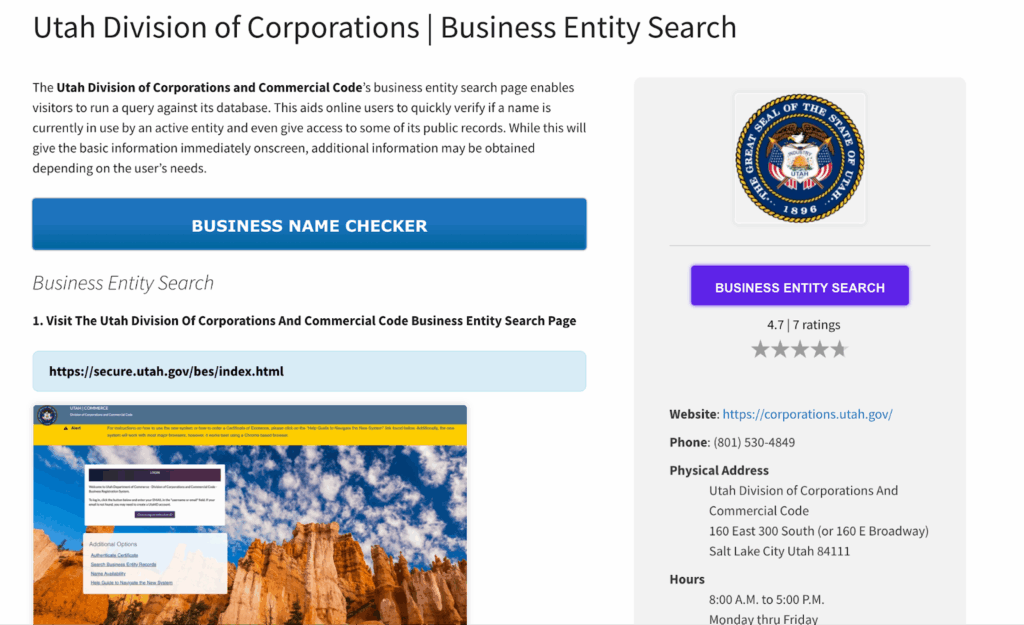
Step 1: Visit the Utah Division of Corporations Website
Navigate to the Utah Division of Corporations website. The official search portal provides free public access to the comprehensive business entity database maintained by the Utah Division of Corporations and Commercial Code.
Step 2: Select Search Type
The Utah Division of Corporations’ business entity search offers multiple search options to accommodate different research needs and available information:
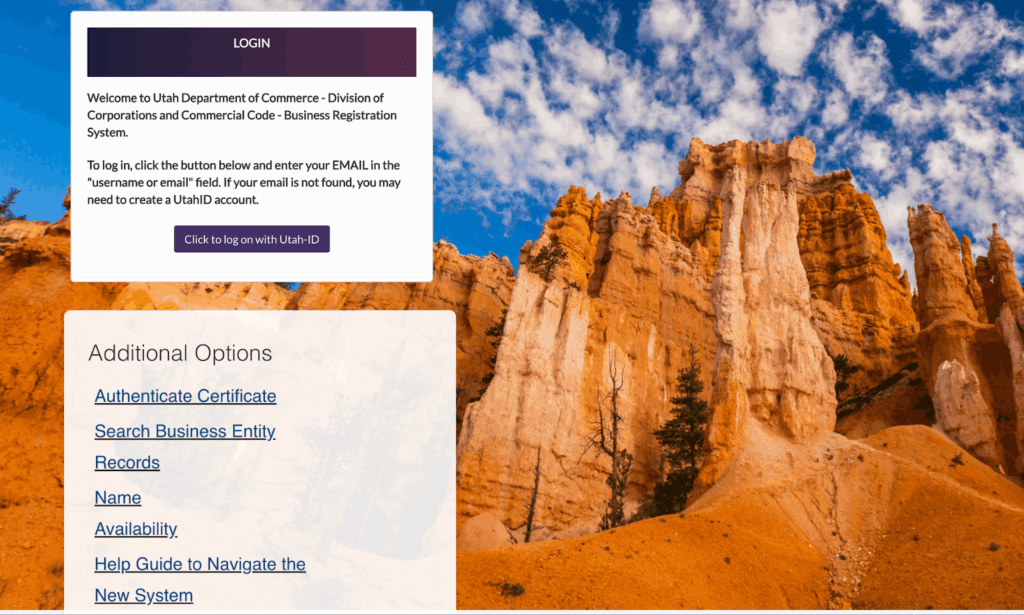
- Business Name Search: The “Name” search query is the most commonly used when performing a business entity search. Enter the business name and select “search,” and the database will generate any names related to the name entered. This option allows you to search for complete or partial business names.
- Entity ID Search: Input the specific Utah entity identification number to access detailed information about a particular business when you know the exact entity number from previous research or official documentation.
- Executive Name Search: This service searches the Utah Division of Corporations’ database for businesses associated with an individual. Search by officer or registered agent name to find entities associated with specific individuals, enabling you to identify businesses sharing common representation or management.
Step 3: Review Search Results
After submitting your search criteria, the system displays a comprehensive results list showing matching entities with essential identifying information, including entity name, ID number, entity type, status, and formation date. Carefully review all results, as similar names, abbreviations, or slight variations may appear in the listing.
Click on individual entity names to access detailed information pages containing complete business data, including formation dates, registered offices, current status, and complete filing history with the Division of Corporations.
Step 4: Request Official Documents (optional)
For official purposes such as loan applications, legal proceedings, or regulatory compliance, you can request certified copies of business formation documents, annual reports, and other official filings through the Utah Division of Corporations document services. Processing times are currently 3-5 business days from receipt for most transactions.
Understanding Utah Entity Search Results
Interpreting Utah business entity search results requires understanding various status designations and their practical implications for business operations, compliance, and legal standing.
- Active: The entity maintains good standing with the state, has filed all required reports and fees, and remains fully compliant with regulatory obligations. Active entities can conduct business legally and maintain all operational privileges throughout Utah.
- Inactive: The business has ceased active operations or failed to maintain required filings, though formal dissolution procedures have not been completed. Inactive entities cannot conduct business legally and may face penalties or administrative dissolution.
- Revoked: The Division of Corporations has revoked the entity’s charter due to serious non-compliance with filing requirements, fee payments, or regulatory violations. Revoked entities lose all legal authority to operate and must complete reinstatement procedures to resume business activities.
- Dissolved: The entity has completed formal dissolution procedures according to Utah law, effectively ending its legal existence. Dissolved businesses cannot conduct operations and cannot be reinstated without forming entirely new entities.
- Forfeited: The entity has lost good standing due to failure to pay required fees, file mandatory reports, or maintain other compliance obligations with state authorities. Forfeited entities cannot legally operate until they complete reinstatement procedures.
- Merged: The entity has been absorbed into another business entity through formal merger procedures, with the surviving entity continuing operations under its original or modified corporate structure.
- Converted: The business has changed its entity type while maintaining continuous legal existence, such as converting from a corporation to an LLC or modifying its registration status within Utah.
Common Issues with Utah Business Entity Searches
Even experienced users encounter challenges when conducting Utah business entity searches, but understanding common problems and their solutions ensures more successful research outcomes.
- Name Variations and Spelling Differences: Businesses may be registered with slight variations in spelling, punctuation, or abbreviations that don’t match your search terms. Try multiple search approaches, including partial name searches and testing different formats. For example, if searching for “Mountain View Technologies,” conduct various searches using different combinations and abbreviations.
- Limited Ownership Information: Utah’s public database provides basic entity information but limited ownership details for privacy protection. For comprehensive ownership research, you may need to review annual reports or contact the Division of Corporations directly for additional information.
- Recent Filings Not Immediately Reflected: New documents may take several business days to appear in the database. Processing times are currently 3-5 business days from receipt for most transactions. Allow adequate time when searching for recently formed entities or updated information.
- Technical or Browser Issues: Some users experience compatibility problems with older browsers or disabled JavaScript. Ensure your browser supports current web standards, clear cookies if experiencing errors, and try alternative browsers if problems persist.
- Incomplete Information: Public records may not contain all desired information due to privacy restrictions or incomplete filings. Consider supplementing research with additional sources such as professional databases or legal counsel consultation.
Steps After Completing Your Utah Entity Search
Your search results determine appropriate next steps based on whether you’re forming a new business or researching existing entities.
For New Businesses
- Name Reservation Process: If your desired name is available, consider reserving it through the Utah Division of Corporations’ name reservation system. The name reservation fee is $22 and protects your chosen name for 120 days during the formation process.
- Formation Document Filing: Proceed with filing your Articles of Incorporation, Articles of Organization, or other required documents. The processing fee for LLC formation is $59.00 payable to the State of Utah. Corporation filing fees are $70. You may file online through the OneStop Business Registration site.
- Tax Registration Steps: Register with the Utah State Tax Commission for state tax obligations and obtain federal tax identification numbers. All entities must comply with tax requirements based on their business type and activities.
- License Acquisition Needs: Research and obtain required business licenses or permits specific to your industry and operational locations within Utah.
For Existing Businesses
- Document Acquisition Processes: Obtain certified copies of corporate documents through the Division of Corporations document services. These official documents are required for banking, lending, and legal proceedings.
- Annual Report Requirements: Every LLC in Utah is required to submit an Annual Report to the Division of Corporations and Commercial Code. This report is due every year on the anniversary of your LLC’s formation date and costs $18 if submitted by mail, or $23 if submitted online.
- Reinstatement Procedures: If your entity shows non-compliant status, contact the Division of Corporations to understand reinstatement requirements, which typically involve paying outstanding fees and filing delinquent reports.
- Ongoing Compliance Maintenance: Establish systems for tracking filing deadlines and fee payments to maintain good standing and avoid compliance issues.
Simplify Your Utah Business Setup with Commenda
Navigating Utah’s business formation and compliance requirements can be complex for busy entrepreneurs. Commenda streamlines the process by providing comprehensive entity management solutions that eliminate pitfalls and ensure ongoing compliance with state requirements.
Our platform automates deadline tracking, manages required filings, and provides expert guidance throughout the business lifecycle. Utah businesses can focus on revenue-generating activities while maintaining perfect compliance records and avoiding costly penalties. Book a free demo with Commenda today to learn more.
FAQs on Utah Business Entity Search
Q: How do I verify if my chosen business name is available in Utah?
A: Use the Utah Division of Corporations entity search. If no results appear, the name may be available, pending final Division approval.
Q: Can I reserve a business name in Utah after my entity search?
A: Yes. You can reserve an available name for $22, which holds it for 120 days.
Q: What does it mean if a business entity in Utah is listed as “forfeited”?
A: It means the entity lost good standing for not meeting compliance, and it can’t operate until reinstated.
Q: How frequently is the Utah business entity database updated?
A: Updates usually occur within 3–5 business days. Contact the Division for the latest status.
Q: Can sole proprietorships be found through Utah’s entity search tool?
A: No. Sole proprietorships aren’t registered entities and don’t appear in the database.
Q: Are official business documents available directly via Utah’s entity search platform?
A: The platform shows basic info. Certified copies must be requested separately for a fee.
Q: Why might my Utah entity search return no results for an existing business?
A: Possible reasons include sole proprietorship status, out-of-state registration, name variation, recent filing, dissolution, or merger.