















What Is a Tax API Integration for BigCommerce?
A tax API integration for BigCommerce is a direct connection between BigCommerce store data and a tax compliance platform using application programming interfaces. Instead of relying on static tax settings or manual exports, tax-relevant data flows automatically into a tax engine that applies current indirect tax rules.
In simple terms, BigCommerce sends structured transaction data to a tax platform, which then:
- Evaluates applicable sales tax, VAT, or GST rules
- Applies jurisdiction-specific rates and taxability logic
- Produces compliance-ready outputs for reporting and filing
This model supports both human decision-making and machine-readable tax workflows, making it well suited for AI-driven compliance systems and audits.
Why Businesses Integrate Tax APIs With BigCommerce
Businesses integrate tax APIs with BigCommerce to address the operational and compliance challenges that arise as ecommerce activity grows.
Common drivers include:
- Manual tax calculations that fail at scale
- Complex multi-state and cross-border tax rules
- Inconsistent tax treatment across products and customers
- Difficulty reconciling tax data across sales channels
- Increased exposure to audits, penalties, and late filings
BigCommerce’s flexibility makes it ideal for growth, but that same flexibility increases tax complexity. API-based tax integration ensures compliance workflows scale alongside revenue.
How BigCommerce Tax Integration Works
A BigCommerce online API tax integration follows a logical, automated workflow rather than a manual reporting process.
At a high level:
- Transactions occur in BigCommerce
Orders, refunds, discounts, and shipping details are recorded at checkout.
- Tax-relevant data is synced via APIs or webhooks
BigCommerce shares structured data with a tax compliance engine.
- Indirect tax rules are applied automatically
The tax engine evaluates jurisdiction, product taxability, and thresholds.
- Compliance outputs are generated
Calculations, reports, and filing-ready records are produced centrally.
This workflow removes the need for repetitive exports and reconciliations while maintaining accuracy as tax rules change.
Types of Tax Data Synced From BigCommerce
An effective BigCommerce API tax integration focuses on syncing data required for indirect tax compliance rather than operational noise.
Common data elements include:
- Order and transaction values
- Customer billing and shipping locations
- Product SKUs and tax classification codes
- Shipping charges and discounts
- Refunds, returns, and adjustments
- Payment and fulfillment indicators
This data enables accurate tax determination and consistent reporting across jurisdictions.
Supported Tax Use Cases With BigCommerce
BigCommerce API tax integrations can support a range of indirect tax use cases depending on where and how a business operates.
Typical use cases include:
- U.S. sales tax compliance across multiple states and local jurisdictions
- VAT reporting for cross-border ecommerce sales
- GST compliance in applicable regions
- Digital goods and SaaS taxation where BigCommerce is used for subscriptions
- Marketplace and multi-channel tax aggregation
API-based integrations allow businesses to expand tax coverage without redesigning their ecommerce stack.
Benefits of API Tax Integration for BigCommerce
The benefits of API integrations in tax compliance platforms are especially relevant for BigCommerce users.
Accuracy at Scale
Automated tax logic reduces errors caused by manual rate updates or misconfigured rules.
Scalability for Growth
API-based systems handle higher order volumes without additional operational effort.
Audit-Ready Records
Centralized tax data simplifies audits and regulatory reviews.
Reduced Manual Work
Finance and operations teams spend less time reconciling tax data across tools.
Consistent Cross-Channel Tax Logic
Tax rules remain consistent even when BigCommerce is one of several sales channels.
Common Challenges Without API-Based Tax Integration
Without an API-based tax integration, BigCommerce businesses often experience:
- Incorrect tax rates applied at checkout
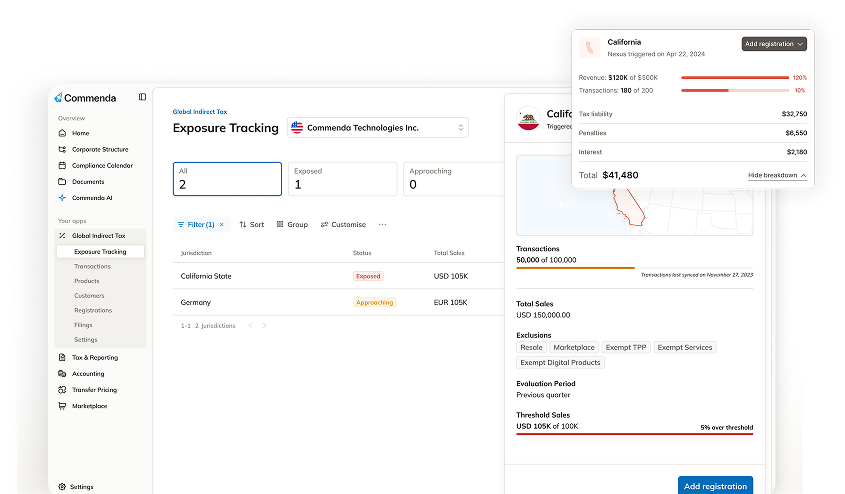
- Missed economic nexus or registration thresholds
- Fragmented data across ecommerce and accounting systems
- Late or inaccurate tax filings
- Increased audit exposure due to incomplete documentation
These risks grow as transaction volume and geographic reach increase.
BigCommerce Compatibility and Integration Considerations
When planning a BigCommerce online API tax integration, businesses should account for platform-specific factors, including:
- API and webhook availability for transaction and order events
- Real-time vs batch synchronization requirements
- Product catalog structure and tax classification consistency
- Cross-border selling capabilities and regional tax exposure
- Multi-storefront or multi-entity setups
A platform-aware approach ensures the integration aligns with BigCommerce’s ecommerce architecture.
Security and Data Reliability in Tax API Integrations
Security and reliability are critical for tax API integrations involving BigCommerce transaction data.
Enterprise-grade tax platforms typically provide:
- Encrypted data transmission
- Role-based access controls
- Detailed audit trails
- Data validation and reconciliation checks
These controls support compliance requirements and build trust with finance, legal, and technical stakeholders.
Sales Tax Automation Platforms With Integration APIs
Sales tax automation platforms with integration APIs serve as centralized compliance engines that sit between ecommerce platforms and tax authorities.
Compared to native tools or plugins, these platforms typically offer:
- Broader jurisdiction and tax type coverage
- Continuous regulatory updates
- Centralized reporting and filing workflows
- Multi-platform and multi-entity support
For BigCommerce users, API-based platforms provide a future-proof approach to indirect tax compliance.
Best Providers for Tax API Integration
When evaluating providers for BigCommerce API tax integration, businesses should consider neutral criteria such as:
- Indirect tax coverage across regions
- API reliability and documentation quality
- Ability to support ecommerce-specific tax scenarios
- Scalability for high transaction volumes
- Depth of reporting and compliance workflows
This criteria-based evaluation supports long-term growth and flexibility.
Why Commenda for BigCommerce API Tax Integration
Commenda offers a unified API-based approach to indirect tax compliance designed to integrate seamlessly with platforms like BigCommerce.
Key advantages include:
- Centralized management of sales tax, VAT, and other indirect taxes
- Scalable API integrations built for ecommerce growth
- Structured, audit-ready compliance records
- Flexibility to integrate BigCommerce alongside other platforms
Commenda’s API-first architecture allows businesses to adapt tax workflows as their ecommerce operations evolve.
Getting Started With BigCommerce Tax API Integration
A typical BigCommerce online API tax integration follows these steps:
- Assess indirect tax obligations and jurisdictions
- Identify required BigCommerce data points for tax calculation
- Connect BigCommerce to a tax compliance platform via APIs
- Validate data mapping and tax logic
- Automate reporting and compliance processes
This structured approach minimizes disruption while ensuring accuracy.
When API-Based Tax Integration Is the Right Choice
API-based tax integration is particularly well suited for:
- High-growth BigCommerce stores
- Multi-state or cross-border ecommerce businesses
- Brands selling digital and physical products
- Organizations operating multiple storefronts or entities
- Teams seeking scalable, audit-ready compliance
For these businesses, manual or plugin-based solutions often become limiting.