

Understanding the Rhode Island Sales Tax Rate is crucial for businesses in Rhode Island. This tax impacts every retail purchase made in the state, influencing budgeting and pricing strategies across various sectors. For instance, a local Rhode Island coffee shop must apply the correct sales tax on all its beverages and pastries, directly affecting its pricing and the taxes it collects from customers.
In this blog we will cover the essential aspects of the Rhode Island Sales Tax Rate, including the current rates, applicable rules, penalties for non-compliance, and a comprehensive guide on filing.
What is the Sales Tax Rate in Rhode Island?
The sales tax rate in Rhode Island for 2025 is 7% at the state level. Rhode Island does not allow local jurisdictions to impose additional sales taxes, meaning the rate remains consistent statewide.
Here’s a breakdown:
- State Sales Tax Rate: 7%
- Local Sales Tax Rate: 0%
- Maximum Combined Sales Tax Rate: 7%
For example, if you purchase a new laptop in Rhode Island for $1,000, you would pay $70 in sales tax (7% of $1,000). The total cost of the laptop would be $1,070. Similarly, if you buy a product from a neighboring state without sales tax, you would still owe the 7% use tax when bringing it into Rhode Island.
Also Read: US Sales Tax Guide: Introduction, Nexus, and How to Calculate Rates
Rhode Island Sales and Use Tax Overview
The Rhode Island Division of Taxation administers the state’s sales and use tax. Businesses selling taxable goods and services must collect and remit sales tax to the state. Understanding key tax regulations, exemptions, and filing requirements helps companies remain compliant.
Key Features of Rhode Island Sales Tax
- Sales Tax Rate: The state imposes a 7% sales tax on the retail sale, rental, or lease of many goods and services.
- Use Tax: A 7% use tax applies to the storage, use, or consumption of tangible personal property in Rhode Island when sales tax has not been paid.
- Filing Deadlines: Sales tax returns are due on the 20th day of the month following the reporting period.
- Penalties: Late filing or payment incurs a 10% penalty of the tax due, plus interest at a rate not less than 12%.
- Registration Requirement: Businesses must register for sales tax collection before commencing taxable sales in Rhode Island.
Taxable and Exempt Items
Taxable Goods and Services:
- Prepared Foods and Beverages: Sales of prepared foods, soft drinks, candy, and dietary supplements are subject to sales tax.
- Clothing and Footwear: Unlike many states, Rhode Island subjects most clothing and footwear to sales tax.
- Telecommunications Services: Charges for telecommunications services, including cable television, are taxable.
- Software and Digital Products: Sales of prewritten computer software, including Software as a Service (SaaS), are taxable.
Exempt Goods and Services:
- Unprepared Foods: Most groceries, such as fresh produce, bread, and milk, are exempt from sales tax.
- Prescription Medications and Medical Devices: Prescription drugs and certain medical devices are exempt from sales tax.
- Sales for Resale: Items purchased for resale are exempt from sales tax.
- Sales to Exempt Organizations: Sales to qualified non-profit organizations, government agencies, and certain other exempt entities are not subject to sales tax.
When Do Businesses Need to Collect Sales Tax in Rhode Island?
Businesses must collect Rhode Island sales tax when they establish a taxable connection, known as “nexus,” with the state. This sales tax nexus can be physical, such as having an office or employees in Rhode Island, or economic, based on sales volume or transaction numbers.
1. Physical Nexus
Businesses must collect Rhode Island sales tax when they establish a physical nexus in the state. Physical nexus arises from tangible business activities within Rhode Island. Key indicators include:
- Office or Place of Business: Operating an office, retail store, or other physical location in Rhode Island.
- Employee or Representative Presence: Having employees, agents, or representatives conducting business activities within the state.
- Inventory Storage: Storing inventory, goods, or materials in a Rhode Island warehouse or storage facility.
- Trade Shows and Events: Participating in trade shows, conventions, or similar events within Rhode Island.
2. Economic Nexus
Businesses must collect Rhode Island sales tax when they establish economic nexus in the state. Economic nexus is determined by meeting specific sales thresholds.
Key points include:
- Sales Threshold: Exceeding $100,000 in gross revenue from sales into Rhode Island within a calendar year.
- Transaction Threshold: Conducting 200 or more separate sales transactions with Rhode Island customers in a calendar year.
These criteria apply to remote sellers without physical presence in Rhode Island. Upon meeting either threshold, businesses are required to register with the Rhode Island Division of Taxation and collect sales tax on taxable sales made into the state.
Failure to Collect Rhode Island Sales Tax
Failure to collect Rhode Island sales tax can result in legal and financial consequences for businesses operating within the state. Compliance with the state’s sales tax requirements is crucial to avoid penalties and interest charges. Here are some of the key penalties and repercussions:
Penalties for Late Payment and Filing
- Late Payment Penalty: Businesses are charged a penalty if they fail to pay the sales tax they owe by the due date. This penalty is 10% of the unpaid tax.
- Late Filing Penalty: If a business fails to file a sales tax return on time, Rhode Island imposes a separate penalty of 10% of the tax due, regardless of payment.
Interest Charges
- Accrued Interest: Interest is charged on both unpaid tax and penalties starting from the due date of the tax return until the payment date. The interest rate is set at 18% per annum.
Underpayment Penalties
- Negligence Penalty: An additional penalty applies if underpayment of taxes is due to negligence. This is typically 10% of the underpayment but can vary based on the circumstances.
- Substantial Underpayment: If the underpayment exceeds a certain sales tax threshold, the penalty can increase, reflecting a more severe non-compliance.
Criminal Penalties for Tax Evasion
- Misdemeanor Charges: Engaging in business as a retailer without the appropriate permit, or after such a permit has been suspended or revoked, constitutes a misdemeanor. Penalties for this offense include fines of up to $5,000, imprisonment for up to one year, or both. Each day of unpermitted business operations is considered a separate offense.
- Felony Charges: While specific felony charges are not detailed in the provided sources, more serious offenses, such as tax evasion or fraudulent tax reporting, can elevate charges to the felony level, leading to higher fines and longer imprisonment terms.
Each of these penalties enforces the seriousness of adhering to tax laws and highlights the importance of regular compliance for all businesses. Businesses can leverage Commenda to ensure that the correct sales tax rate is applied to each transaction.
Rhode Island Sales Tax for Out-of-State Sellers and Amazon FBA Program Sellers
Rhode Island requires out-of-state sellers, including those involved in the Amazon FBA (Fulfillment by Amazon) program, to collect and remit sales tax. This rule applies to sellers who meet the criteria for economic nexus. The threshold for establishing economic nexus in Rhode Island is $100,000 in sales or 200 transactions in the state within the calendar year.
Sellers must register with the Rhode Island Division of Taxation before collecting the tax. Once registered, they must comply with the state’s sales tax rate, which is 7%. This rate applies uniformly across the state, as Rhode Island does not allow local jurisdictions to impose additional sales taxes.
Penalties for non-compliance can include fines and interest on unpaid taxes. It is crucial for out-of-state and Amazon FBA sellers to maintain accurate records of their transactions in Rhode Island to ensure compliance and avoid these penalties.
Registering for a Rhode Island Seller’s Permit
In Rhode Island, obtaining a seller’s permit is essential for businesses engaging in the sale of goods and taxable services. This permit, also known as a sales tax license, is mandatory for collecting sales tax from customers. The process is straightforward and managed by the Rhode Island Division of Taxation.
1. Determine the Need for a Permit
- Assess if your business activities require a seller’s permit.
- Required for selling goods, providing taxable services, or operating as a vendor.
2. Gather Required Information
- Federal Employer Identification Number (FEIN).
- Business type and structure.
- Personal information of the business owner(s).
3. Submit Application
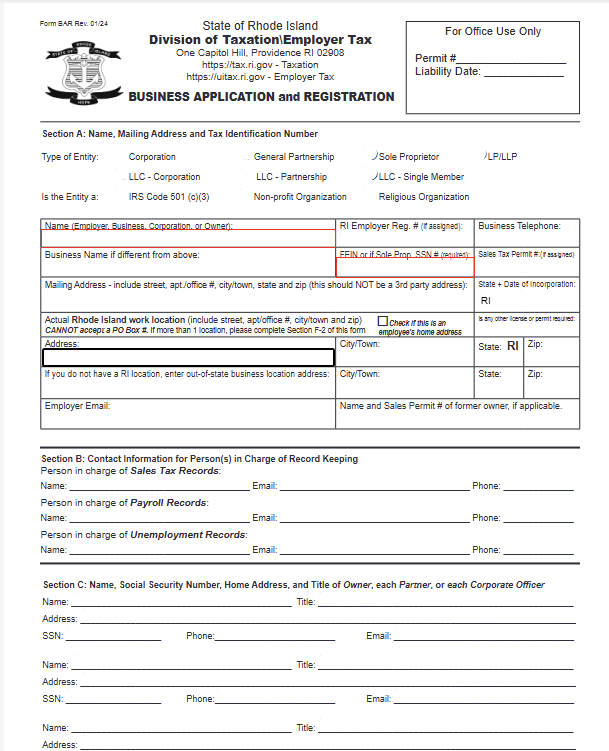
- Apply online via the Rhode Island Division of Taxation’s official website by submitting this form.
- Alternatively, submit a the very same application form by mail.
- Online applications are processed immediately.
4. Display the Permit
- Display the permit in a visible area within your business premises.
- Rhode Island law mandates the display of this permit.
How to Collect Sales Tax in Rhode Island
Collecting sales tax in Rhode Island requires adherence to specific regulations set by the state. First, you must determine if your business has a tax nexus in Rhode Island. If a nexus is established, you must register for a sales tax permit before collecting sales tax.
Here are the key steps to start collecting sales tax in Rhode Island:
- Register for a Sales Tax Permit: Before you can collect sales tax, you must register for a sales tax permit. Registration can be completed online through the Rhode Island Division of Taxation’s online portal or by submitting the Business Application and Registration (BAR) form via email to tax.registration@tax.ri.govl.
- Understand Tax Rates: Rhode Island has a statewide sales tax rate of 7%. It is important to apply this rate correctly and consider the destination-based sales tax system, which means you charge the tax rate based on the buyer’s address.
- Collect the Tax: Add the appropriate sales tax to all taxable sales at the point of sale, ensuring you comply with the rate applicable to the customer’s location.
- File and Pay Sales Tax: You must file sales tax returns and make payments according to the schedule assigned by Rhode Island, which could be monthly, quarterly, or annually. Filing can typically be done online, which is more efficient and secure.
- Maintain Accurate Records: Keep detailed records of all transactions, including sales tax collected and remitted, as these are essential for accurate filing and can serve as documentation in case of an audit.
Tax-Exempt Customers in Rhode Island
In Rhode Island, specific customers are eligible for exemption from sales tax. These customers must provide proper exemption certificates to qualify.
Key tax-exempt entities include:
- Charitable, Religious, and Educational Organizations: These must present a Rhode Island Exempt Organization Exemption Certificate.
- Manufacturers: They must provide a Manufacturers Exemption Certificate.
- Farmers: A Farmer Tax Exemption Certificate is required.
- Government Entities: Purchases by the State of Rhode Island, RI municipalities, or the Federal Government are automatically exempt, and no certificate is needed.
These exemptions help various organizations conduct their operations more cost-effectively by reducing the tax burden on qualifying purchases. For more detailed guidance, you can refer to the Rhode Island Division of Taxation’s resources on sales tax exemptions.
Filing Sales Tax Returns in Rhode Island
Filing sales tax returns in Rhode Island requires identifying your filing frequency, complying with the prescribed filing procedures, and selecting the correct payment methods. Businesses must ensure accurate reporting of all taxable transactions and remit the correct amount of sales tax due. The state offers electronic filing options, which streamline the process and ensure timely submissions.
Filing Frequency
In Rhode Island, the frequency of filing sales tax returns in 2025 is determined by the amount of sales tax a business collects each month. Here’s a concise breakdown of the filing frequencies:
| Filing Frequency | Criteria | Due Date |
|---|---|---|
| Monthly | Collect more than $200 in sales tax. | 20th of the following month |
| Quarterly | Collect less than $200 in sales tax | 20th of April, July, October, and January |
| Annual | Minimal tax liability | January 31st of the following year |
Filing Steps
- Register for a Permit: Obtain a sales tax permit via the Rhode Island Division of Taxation’s online portal before filing.
- Determine Filing Frequency: Identify whether you need to file monthly or quarterly based on your sales volume.
- Calculate Tax Due: Compute the amount of sales tax owed by applying the 7% state rate to taxable sales.
- File Return: Submit your sales tax return through the Rhode Island Taxpayer Portal, detailing sales and taxes collected.
- Make Payment: Pay the tax due using electronic funds transfer, credit card, or check by the due date.
- Keep Records: Maintain accurate records of all sales transactions to support your filings and audit preparations.
How to Pay Your Rhode Island Sales Tax
To pay your Rhode Island sales tax, you can use the following methods:
- Tax Portal: Easily pay online via the Rhode Island Tax Portal using your bank account.
- Electronic Funds Transfer (EFT): Securely transfer funds directly from your bank for various tax types.
- Credit or Debit Card: Conveniently make payments through the Tax Portal.
- Check or Money Order: Traditional payment methods are accepted according to the instructions on your tax form.
Payments must be submitted by the 20th day of the month following the reporting period. You may qualify for quarterly filings if your tax liability is low.
Using Sales Tax Automation Tools
Using sales tax automation tools for Rhode Island sales tax regulations has significant benefits in compliance and efficiency. A prominent tool in this domain is Commenda, which provides comprehensive solutions for sales tax management.
Commenda automates the calculation, reporting, and filing of sales taxes based on real-time data, ensuring accuracy and compliance with state-specific rules. The platform integrates seamlessly with existing SaaS systems, reducing manual effort and minimizing the risk of errors. This is particularly beneficial for businesses operating under the complex sales tax landscape of Rhode Island, where precision in tax handling is crucial.
Book a demo today with our sales tax expert to comply with Rhode Island sales tax.
Rhode Island Sales Tax Compliance Checklist
To ensure compliance with Rhode Island sales tax requirements, businesses should adhere to the following streamlined steps:
- Obtain a Sales Tax Permit: Secure a permit via the Rhode Island Division of Taxation’s online portal before collecting sales tax.
- Determine Taxability: Familiarize yourself with taxable and exempt items. Taxable goods generally include tangible personal property and certain digital products.
- Collect Correct Sales Tax: Apply the appropriate Rhode Island sales tax rate to all taxable transactions.
- File Timely Returns: Submit sales tax returns by their due dates, which vary based on the tax amount collected.
- Maintain Records: Keep detailed records of all taxable and exempt sales and tax collections to aid in accurate filings and audits.
- Stay Informed: Regularly update your tax practices based on new Rhode Island tax legislation.
Also read: US Sales Tax Compliance Basics: Registration, Exemptions, and Filing Made Easy
How Should You Prepare for Rhode Island Sales Tax Audits and Appeals?
To prepare for Rhode Island sales tax audits and appeals, understanding the process and maintaining thorough records are essential. Below, we’ll explore strategies to handle audits effectively and navigate the appeals process confidently.
Understand What Triggers an Audit
- Inaccurate or Missing Sales Tax Filings: Discrepancies or omissions in sales tax returns can alert authorities, signaling potential issues with tax compliance.
- Frequent Late Payments: Habitually missing deadlines for tax payments may also trigger an audit.
- Discrepancies between Reported and Actual Sales: Significant mismatches between what is reported and what the books actually show are a red flag.
- Incorrect Use of Exemption Certificates: Mismanagement or improper application of sales tax exemption certificates is another common audit trigger.
- High Volume of Amendments to Returns: Frequently amending filed returns suggests to tax authorities that the initial filings might have been inaccurate or incomplete, which could lead to increased scrutiny.
- Industry-Specific Risks: Certain industries, like hospitality, entertainment, and service-based businesses, are more prone to audits due to the complexity of their transactions and high volumes of cash handling.
Maintain Proper Documentation
To prepare for Rhode Island sales tax audits and appeals, maintaining proper documentation is essential. Here’s a detailed list of documents you should keep:
- Sales and Purchase Records: Retain all records of taxable and exempt sales and purchases, which help establish the accuracy of your tax returns.
- Tax Returns and Calculations: Keep copies of filed sales tax returns along with calculations and supporting documents.
- Exemption and Resale Certificates: Maintain valid exemption certificates for sales exempt from taxation and resale certificates for items purchased for resale.
- Financial Statements: Prepare and retain detailed financial statements, including income statements and balance sheets.
- Bank Statements and Electronic Payment Records: These documents can verify the transactions recorded in your financial statements and tax returns.
- Audit Trails: Keep logs that detail the sequence of your accounting activities to help auditors trace discrepancies or errors in your tax filings.
- Correspondence with Tax Authorities: Store all written communication between your business and the Rhode Island Division of Taxation, including notices, letters, and emails.
Understanding the Appeals Process
To prepare for Rhode Island sales tax audits and understand the appeals process, it’s essential to familiarize yourself with the following key points:
- Filing an Appeal: If you disagree with the findings of a sales tax audit, you can file an appeal. This must be done by submitting a petition to the Rhode Island Division of Taxation within 30 days of receiving the assessment notice.
- Appeal Process Steps:
- Initially, you should consider requesting an informal conference with the auditor to discuss discrepancies and potentially resolve issues without formal proceedings.
- If unresolved, you can formally appeal to the Division of Taxation. If the outcome from this is still unsatisfactory, you can escalate the matter to the Rhode Island Tax Tribunal or even to the state court.
- Costs and Legal Representation: Be aware that there are fees associated with filing an appeal, which vary based on the tax amount in dispute. It’s also advisable to engage professional legal or accounting representation to navigate the complexities of the appeals process effectively.
- Alternative Dispute Resolution: Before entering a formal appeals process, consider alternative dispute resolutions such as mediation or arbitration, which might offer a quicker and less costly resolution
Conclusion
Rhode Island Sales Tax Rate is crucial for businesses to understand the rules, penalties, and filing requirements in order to operate in the state. Rhode Island mandates timely sales tax collection and remittance by all applicable businesses. The state imposes penalties for non-compliance, which include fines and interest on overdue taxes.
Businesses can improve their compliance and streamline their sales tax processes through robust tools like Commenda. This platform automates tax calculations, ensures accurate filings, and helps manage deadlines efficiently, reducing the risk of errors and penalties.
Book a demo today with our sales experts to stay compliant with Rhode Island sales tax.
FAQs
What kinds of businesses must collect the sales tax in Rhode Island?
Any business selling, renting, or leasing tangible personal property at retail must collect Rhode Island sales tax. This includes businesses dealing in home appliances, craft items, jewelry, and certain services like telecommunications and cable TV services.
How do I register my business for sales tax in Rhode Island?
Businesses can register for sales tax either online through the Rhode Island Division of Taxation’s Taxpayer Portal or by mailing a Business Application and Registration Form to the Division of Taxation. There is a $10 registration fee that must be renewed annually.
What is the sales tax rate in Rhode Island?
The base state sales tax rate in Rhode Island is 7%. There are no additional local sales tax rates imposed by counties or cities within the state.
Are there any items exempt from sales tax in Rhode Island?
Yes, certain items are exempt from sales tax in Rhode Island, including most non-prepared food items, prescription medications, and specific types of clothing.
How often must I file and pay sales tax in Rhode Island?
Filing frequency is typically assigned by the Rhode Island Division of Taxation based on the size or sales volume of your business, with most businesses filing monthly or quarterly.
What if I sell digital products or services?
Rhode Island imposes sales tax on digital products and services such as downloadable music, movies, eBooks, and SaaS (Software as a Service).
What happens if I do not comply with sales tax regulations?
Non-compliance can result in penalties and interest charges. The typical penalty for late payment or filing is 10% of the due tax, plus daily compounded interest.