Do business in France. Without the mess.
France is the sixth-largest economy globally, with deep consumer markets and a strategic position at the center of the EU. Commenda handles SAS incorporation, RCS registration, and ongoing compliance so you can operate without the administrative drag.

Trusted by global businesses

































Why France
Why France is worth the setup
France is the sixth-largest economy in the world and a gateway to EU consumers, enterprise procurement, and regulated industries including financial services, healthcare, and aerospace. The SAS is one of the most flexible corporate structures in Europe: no minimum share capital, a president (CEO equivalent) rather than a board, and broad freedom to structure governance in the articles. The 25% corporate tax rate applies standard, with a reduced 15% rate on the first €42,500 of profit for qualifying SMEs. French compliance is detailed but manageable with the right infrastructure. Commenda provides it.
See how incorporation works- #6Global GDP rankingFrance is the world's sixth-largest economy and one of the EU's two largest markets alongside Germany.
- 25%Standard corporate tax rateFrance's standard corporate income tax rate, with a reduced 15% rate available to qualifying SMEs on the first €42,500 of profit.
- 15%SME corporate tax rateQualifying small and medium-sized enterprises pay 15% on the first €42,500 of taxable profit each fiscal year.
- 1-3 weeksTypical incorporation timelineSAS registration with the Registre du Commerce et des Sociétés (RCS) typically completes within one to three weeks of filing.
Product Suite
One platform
Every jurisdiction, no gaps
Built for finance teams running international operations without a dedicated compliance function. This is the infrastructure you should have had from day one.
- Learn more
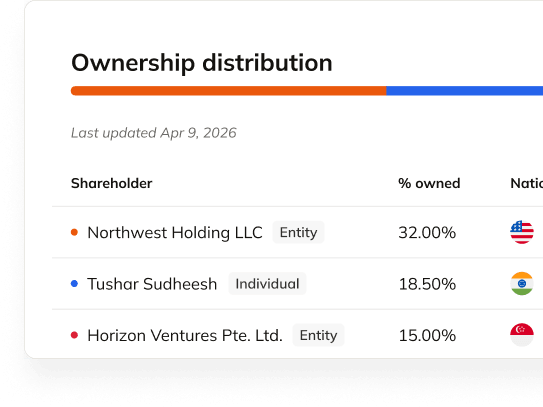
Entity Management
Formation, maintenance, and oversight for subsidiaries across 70+ countries.
- Learn more
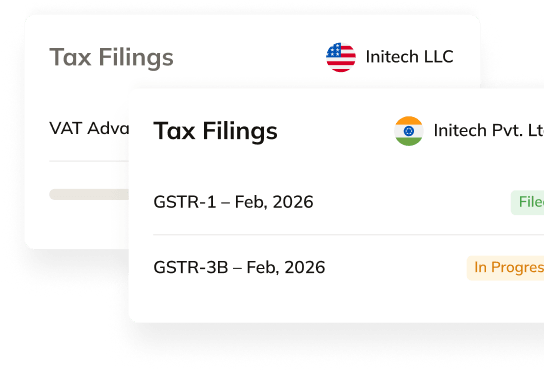
Global Indirect Tax
VAT, GST, and sales tax obligations tracked, filed, and confirmed.
- Learn more
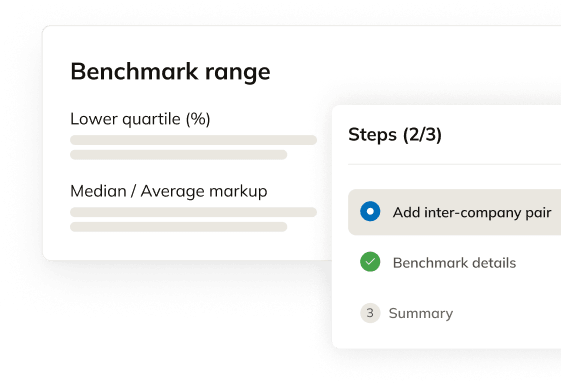
Transfer Pricing
Intercompany policy, documentation, and filing, built to OECD standards.
- Learn more
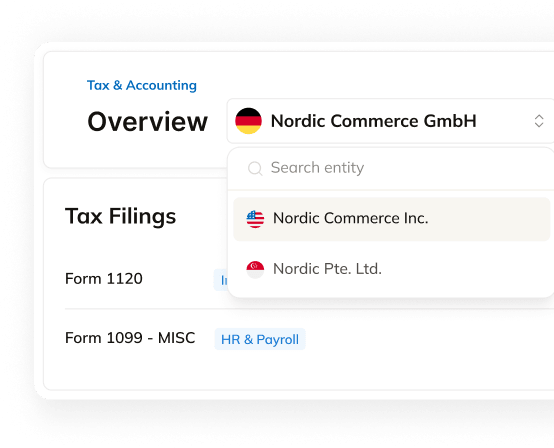
Tax & Accounting
Consolidated financial reporting and local corporate tax filings. One audit trail.
Entity types
Choose the right structure for your business
Recommended
SAS (Société par Actions Simplifiée)
The SAS is the most widely used structure for foreign subsidiaries in France. It offers maximum governance flexibility, no minimum share capital, and straightforward 100% foreign ownership. A president (equivalent to CEO) is required rather than a board of directors.
Benefits
- No minimum share capital requirement
- No French residency requirement for shareholders or the president
- Maximum flexibility to structure governance, voting rights, and profit distribution in the articles
- Simpler management structure than an SA: a single president can run the company
- Eligible for the reduced 15% SME corporate tax rate on the first €42,500 of profit
Key considerations
- A statutory auditor (Commissaire aux comptes) is required once certain thresholds are crossed: balance sheet over €4M, revenue over €8M, or more than 50 employees
- A French registered address is required for RCS registration
- Annual accounts must be filed with the Greffe du Tribunal de Commerce
- 20% VAT applies to most goods and services; registration is required once French taxable activity begins
- Transfer of shares may require approval under the articles, depending on how governance is structured
How it works
From kickoff to open for business in France
Incorporating in a new country means unfamiliar filings, local requirements, and moving parts across multiple vendors.
We handle all of it so you don't have to.
Day 1
Onboarding
Your details submitted once. Entity name checked, documents collected, filings kicked off. No back-and-forth.
Days 1–3
Entity confirmed
Incorporation done. Formation documents, company number, and registered address live in your Commenda dashboard.
Week 1–2
Tax setup
Tax registrations filed, banking guidance underway. Compliance calendar set for your jurisdiction.
Week 2
Open for business
You're operational in a new market. Without a single trip to a government office.

G2 Reviews
Rated by the teams using it
Scores from finance and legal leads handling compliance globally.
Entity Management
#1 Ranked9.6/ 10Set up your entity and keep it in good standing. Filings, records, and renewals tracked in one place.
Corporate Tax & Compliance
Top Rated9.1/ 10Every tax deadline on one calendar. Corporate returns and statutory filings handled without the back-and-forth.
Sales Tax & VAT/GST
Commenda Leads9.4/ 10Handle VAT, GST, and sales tax in every country you operate in, and manage it all in one place.
France resources
Everything you need for your France operations
Detailed guides on tax, compliance, and business structure in France.
- Incorporation
How to Incorporate in France
Guide to SAS and SARL formation in France: RCS registration, registered address, statutory requirements, and tax enrollment.
Read guide - Corporate Tax
France Corporate Tax Guide
France's corporate income tax structure: 25% standard rate, 15% SME rate on first €42,500, and filing deadlines for French entities.
Read guide - Indirect Tax
France VAT Guide
French VAT registration, the 20% standard rate, reduced rates, and periodic filing obligations for French entities.
Read guide - Compliance
France Compliance Calendar
Annual filing deadlines for French corporate tax returns, VAT, and statutory accounts submissions.
Read guide - Transfer Pricing
Transfer Pricing in France
France's transfer pricing documentation rules under Article L13 AA, annual filing requirements, and OECD alignment.
Read guide
FAQ
Common questions
No. There is no residency requirement for shareholders or the president of a French SAS. Foreign nationals and foreign-incorporated entities can fully own and manage a French SAS. A registered address in France is required, but physical presence is not.
Both are limited liability structures, but the SAS offers significantly more governance flexibility. The SAS allows complex share classes, bespoke voting arrangements, and a simpler management structure (a single president). The SARL has more rigid default rules on share transfers and manager roles. For foreign subsidiaries and investor-backed entities, SAS is almost always preferred.
SAS registration with the Registre du Commerce et des Sociétés (RCS) typically takes one to three weeks from the time complete documents are submitted. Timelines can vary depending on the commercial court (Greffe) processing load and whether any document corrections are required.
A Commissaire aux comptes (statutory auditor) is mandatory once a French company exceeds two of the following three thresholds: balance sheet over €4 million, annual revenue over €8 million, or more than 50 employees. Below these thresholds, appointment is optional. Commenda monitors your obligations as your entity grows.
Annual accounts must be filed with the Greffe du Tribunal de Commerce. A corporate income tax return (liasse fiscale) is required annually. VAT returns are filed monthly or quarterly depending on turnover. If applicable, a statutory audit report must be prepared. Commenda manages all of these obligations through the platform.
The 15% rate applies to qualifying SMEs on the first €42,500 of taxable profit per year. To qualify, the company must have annual turnover below €10 million, be at least 75% owned by individuals (or by companies that themselves meet the criteria), and have fully paid-up share capital. Many foreign subsidiaries will not qualify due to corporate ownership, and will pay the standard 25% rate.
Join hundreds of international businesses growing fast with Commenda
Tell us where you're expanding and we'll scope the requirements, handle the filing, and keep your entity compliant, usually within 24 hours of kickoff.

