Do business in the Cayman Islands. Without the mess.
Incorporate a Cayman Exempted Company for your fund, holding structure, or SPV, and stay compliant with CIMA and General Registry requirements, all managed through one platform. The Cayman Islands is the world's premier offshore financial center. Getting the structure right from day one is what Commenda is built for.

Trusted by global businesses

































Why Cayman Islands
Zero tax across the board. The world's default jurisdiction for funds, SPVs, and holding structures.
The Cayman Islands imposes no corporate income tax, no capital gains tax, no withholding tax, and no personal income tax. Combined with no foreign exchange controls, English common law, and a judiciary that global institutional investors trust, it is the jurisdiction of choice for private equity and venture capital funds, hedge funds, structured finance vehicles, and international holding companies.
The Exempted Company is the standard vehicle: it offers broad flexibility for international business activity while being prohibited from trading within the Cayman Islands itself. For regulated entities, the Cayman Islands Monetary Authority (CIMA) provides a credible, internationally recognized regulatory framework. Incorporation through the General Registry takes 1 to 3 business days, and every Exempted Company must maintain a registered office through a licensed service provider. Commenda manages the full setup and ongoing compliance obligations.
Explore Cayman incorporation- 0%Corporate income taxThe Cayman Islands levies no corporate income tax on Exempted Companies. This applies to all income, regardless of source, making it the dominant jurisdiction for international holding and fund structures.
- 0%Capital gains taxNo capital gains tax is levied in the Cayman Islands. Investors in Cayman-domiciled funds and SPVs realize gains without Cayman-level taxation, though home jurisdiction taxes may still apply.
- 0%Withholding taxDividends, interest, royalties, and other payments made from a Cayman entity to non-residents carry no withholding tax, simplifying profit repatriation and investor distributions significantly.
- 1-3Days to incorporateThe Cayman Islands General Registry processes Exempted Company incorporations in 1 to 3 business days, providing one of the fastest formation timelines of any major international financial center.
Product Suite
One platform
Every jurisdiction, no gaps
Built for finance teams running international operations without a dedicated compliance function. This is the infrastructure you should have had from day one.
- Learn more
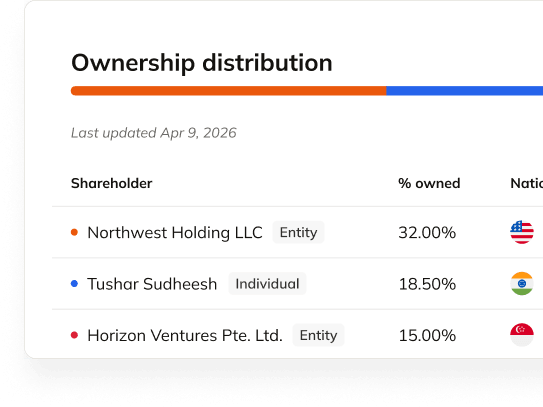
Entity Management
Formation, maintenance, and oversight for subsidiaries across 70+ countries.
- Learn more
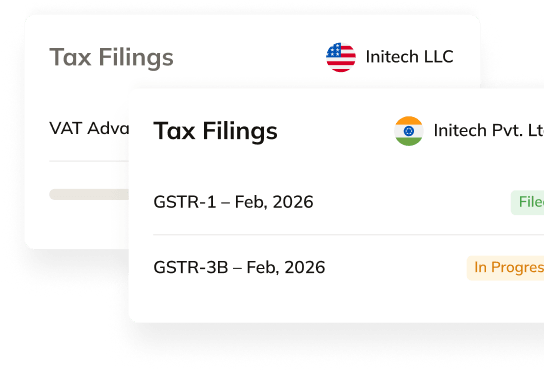
Global Indirect Tax
VAT, GST, and sales tax obligations tracked, filed, and confirmed.
- Learn more
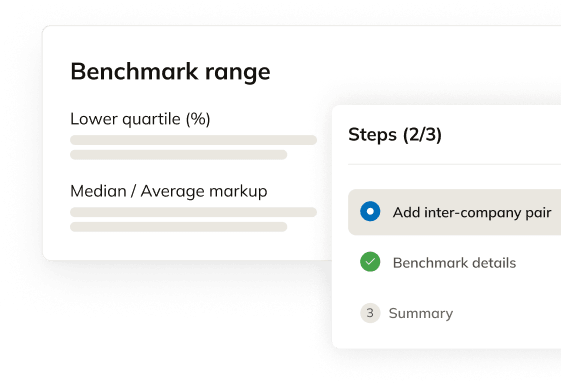
Transfer Pricing
Intercompany policy, documentation, and filing, built to OECD standards.
- Learn more
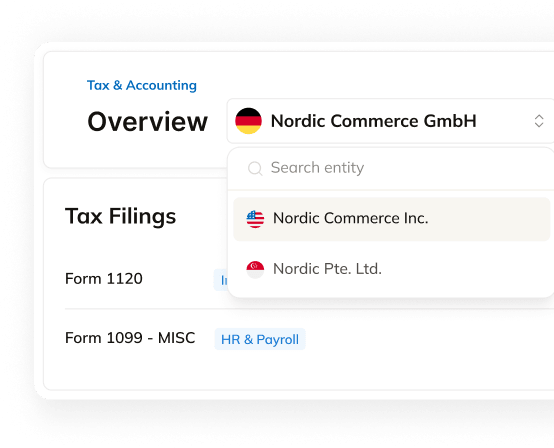
Tax & Accounting
Consolidated financial reporting and local corporate tax filings. One audit trail.
Entity types
Choose the right structure for your business
Recommended
Exempted Company
The standard vehicle for international business activity in the Cayman Islands. An Exempted Company is incorporated under the Companies Act (2023 Revision) and is explicitly designed for companies whose business is conducted outside the Cayman Islands. It is the dominant structure for private equity and venture capital funds, hedge funds, SPVs, and international holding companies.
Benefits
- Zero corporate income tax, capital gains tax, withholding tax, and stamp duty on share transfers
- No foreign exchange controls: funds can be moved freely across borders
- Can issue bearer warrants and different classes of shares with customized economic and voting rights
- No requirement to file annual financial statements with the General Registry for unregulated entities
- English common law system with a highly developed body of corporate and fund law
- Internationally recognized and trusted by institutional investors, LPs, and major global banks
- Exemption from future taxes guaranteed by statute for up to 50 years
Key considerations
- Cannot trade within the Cayman Islands or carry on business with Cayman Islands residents
- Must maintain a registered office through a licensed service provider in the Cayman Islands
- Must file an annual return and pay annual government fees to the General Registry
- Regulated entities including investment funds must register with and be licensed by CIMA
- Beneficial ownership information must be maintained in a private register accessible to Cayman authorities (not publicly disclosed)
- FATCA and CRS reporting obligations apply where financial account holders are US persons or tax residents of participating jurisdictions
How it works
From kickoff to open for business in the Cayman Islands
Incorporating in a new country means unfamiliar filings, local requirements, and moving parts across multiple vendors.
We handle all of it so you don't have to.
Day 1
Onboarding
Your details submitted once. Entity name checked, documents collected, filings kicked off. No back-and-forth.
Days 1–3
Entity confirmed
Incorporation done. Formation documents, company number, and registered address live in your Commenda dashboard.
Week 1–2
Tax setup
Tax registrations filed, banking guidance underway. Compliance calendar set for your jurisdiction.
Week 2
Open for business
You're operational in a new market. Without a single trip to a government office.

G2 Reviews
Rated by the teams using it
Scores from finance and legal leads handling compliance globally.
Entity Management
#1 Ranked9.6/ 10Set up your entity and keep it in good standing. Filings, records, and renewals tracked in one place.
Corporate Tax & Compliance
Top Rated9.1/ 10Every tax deadline on one calendar. Corporate returns and statutory filings handled without the back-and-forth.
Sales Tax & VAT/GST
Commenda Leads9.4/ 10Handle VAT, GST, and sales tax in every country you operate in, and manage it all in one place.
Cayman Islands resources
Everything you need for your Cayman Islands operations
Detailed guides on tax, compliance, and business structure in the Cayman Islands.
- Incorporation
How to Incorporate in the Cayman Islands
Exempted Company vs. Ordinary Resident Company, General Registry process, registered office requirements, and timelines.
Read guide - Tax Guide
Tax in the Cayman Islands
Zero tax explained: what applies, what does not, and how FATCA and CRS reporting obligations work for Cayman entities.
Read guide - Compliance
Annual Compliance Calendar for the Cayman Islands
General Registry annual return deadlines, CIMA filing obligations, and economic substance reporting requirements.
Read guide - Fund Structures
Cayman Islands Fund Structures for PE and VC
How private equity and venture capital funds use Cayman Exempted Companies and Limited Partnerships, and what CIMA registration requires.
Read guide
FAQ
Common questions
The Cayman Islands offers the combination institutional investors require: zero tax at the fund level, English common law with a well-developed body of fund and corporate law, no foreign exchange controls, and a regulatory authority (CIMA) that is accepted by LPs globally. The flexibility of the Exempted Company to issue multiple share classes, carry economic terms, and accommodate offshore and onshore feeder structures makes it the default domicile for private equity, venture capital, and hedge fund managers worldwide.
No. The Cayman Islands levies no corporate income tax, capital gains tax, withholding tax, or stamp duty on share transfers for Exempted Companies. The government provides a statutory guarantee of this tax-free status for up to 50 years from the date of incorporation. Note that investors and founders remain subject to tax in their home jurisdictions on income or gains realized through a Cayman entity.
The Cayman Islands Monetary Authority (CIMA) is the financial services regulator. Any Cayman entity that operates as an investment fund, provides fund administration, manages investments, or conducts other regulated financial services activities must register with or be licensed by CIMA. Most registered funds use the Registered Fund or Licensed Fund categories. CIMA registration is not required for non-regulated holding companies, SPVs, or operating companies.
The Cayman Islands introduced economic substance rules in 2019 in response to international pressure from the OECD and EU. Entities conducting relevant activities, including banking, insurance, fund management, financing and leasing, headquarters, shipping, intellectual property, distribution and service centers, and holding company activities, must demonstrate adequate economic substance in the Cayman Islands. Pure equity holding companies face a reduced substance test. Commenda advises on substance requirements at the outset of any Cayman structure.
Join hundreds of international businesses growing fast with Commenda
Tell us where you're expanding and we'll scope the requirements, handle the filing, and keep your entity compliant, usually within 24 hours of kickoff.

